
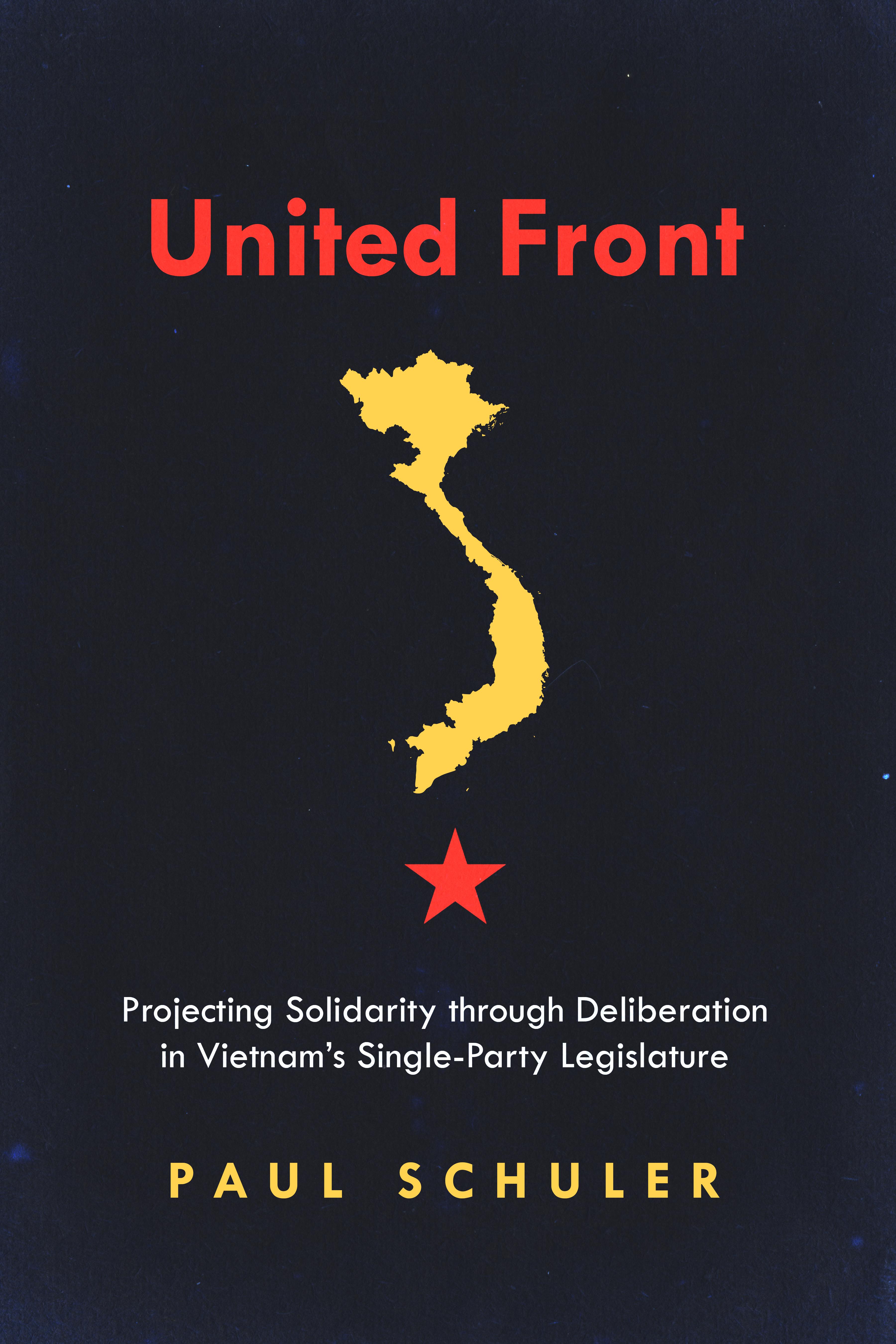
Conventional wisdom emerging from China and other autocracies claims that single-party legislatures and elections are mutually beneficial for citizens and autocrats. This line of thought reasons that these institutions can serve multiple functions, like constraining political leaders or providing information about citizens. In United Front, Paul Schuler challenges these views through his examination of the past and present functioning of the Vietnam National Assembly (VNA), arguing that the legislature's primary role is to signal strength to the public. When active, the critical behavior from delegates in the legislature represents cross fire within the regime rather than genuine citizen feedback. In making these arguments, Schuler counters a growing scholarly trend to see democratic institutions within single-party settings like China and Vietnam as useful for citizens or regime performance. His argument also suggests that there are limits to generating genuinely "consultative authoritarianism" through quasi-democratic institutions. Applying a diverse range of cutting-edge social science methods on a wealth of original data such as legislative speeches, election returns, and surveys, Schuler shows that even in a seemingly vociferous legislature like the VNA, the ultimate purpose of the institution is not to reflect the views of citizens, but rather to signal the regime's preferences while taking down rivals.
Paga facilmente con carta, Klarna, Apple Pay o Google Pay. Non sei soddisfatto? Hai sempre 14 giorni per il rimborso. Leggi di più nei nostri termini. Per qualsiasi domanda, scrivici a hello@memmo.org.
Memmo rende lo studio più facile, ovunque tu sia nel mondo. Qui trovi i tuoi libri di testo e strumenti di studio intelligenti, tutto in un unico posto: riassunti, quiz, podcast e flashcard. E poi c'è Ted, il tuo compagno di studio che risponde a ogni tua domanda. Oltre 50.000 studenti studiano già qui: è stato creato per aiutarti a imparare più velocemente e a stressarti meno.