
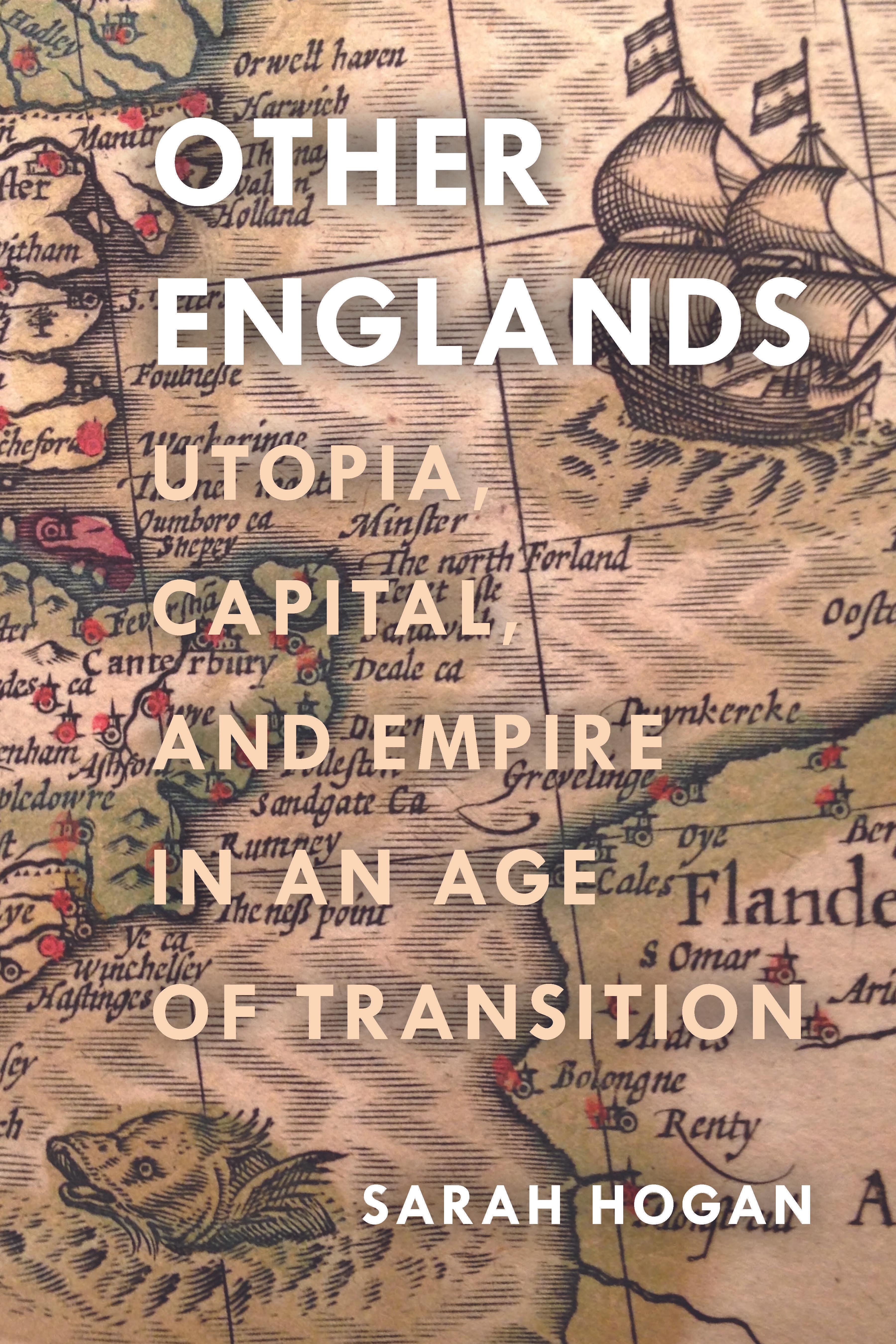
Other Englands examines the rise of the early English utopia in the context of emergent capitalism. Above all, it asserts that this literary genre was always already an expression of social crisis and economic transition, a context refracted in the origin stories and imagined geographies common to its early modern form. Beginning with the paradigmatic popular utopias of Thomas More and Francis Bacon but attentive to non-canonical examples from the margins of the tradition, the study charts a shifting and, by the time of the English Revolution, self-critical effort to think communities in dynamic socio-spatial forms.
Arguing that early utopias have been widely misunderstood and maligned as static, finished polities, Sarah Hogan makes the case that utopian literature offered readers and writers a transformational and transitional social imaginary. She shows how a genre associated with imagining systemic alternatives both contested and contributed to the ideological construction of capitalist imperialism. In the early English utopia, she finds both a precursor to the Enlightenment discourse of political economy and another historical perspective on the beginnings and enduring conflicts of global capital.
Paga facilmente con carta, Klarna, Apple Pay o Google Pay. Non sei soddisfatto? Hai sempre 14 giorni per il rimborso. Leggi di più nei nostri termini. Per qualsiasi domanda, scrivici a hello@memmo.org.
Memmo rende lo studio più facile, ovunque tu sia nel mondo. Qui trovi i tuoi libri di testo e strumenti di studio intelligenti, tutto in un unico posto: riassunti, quiz, podcast e flashcard. E poi c'è Ted, il tuo compagno di studio che risponde a ogni tua domanda. Oltre 50.000 studenti studiano già qui: è stato creato per aiutarti a imparare più velocemente e a stressarti meno.