
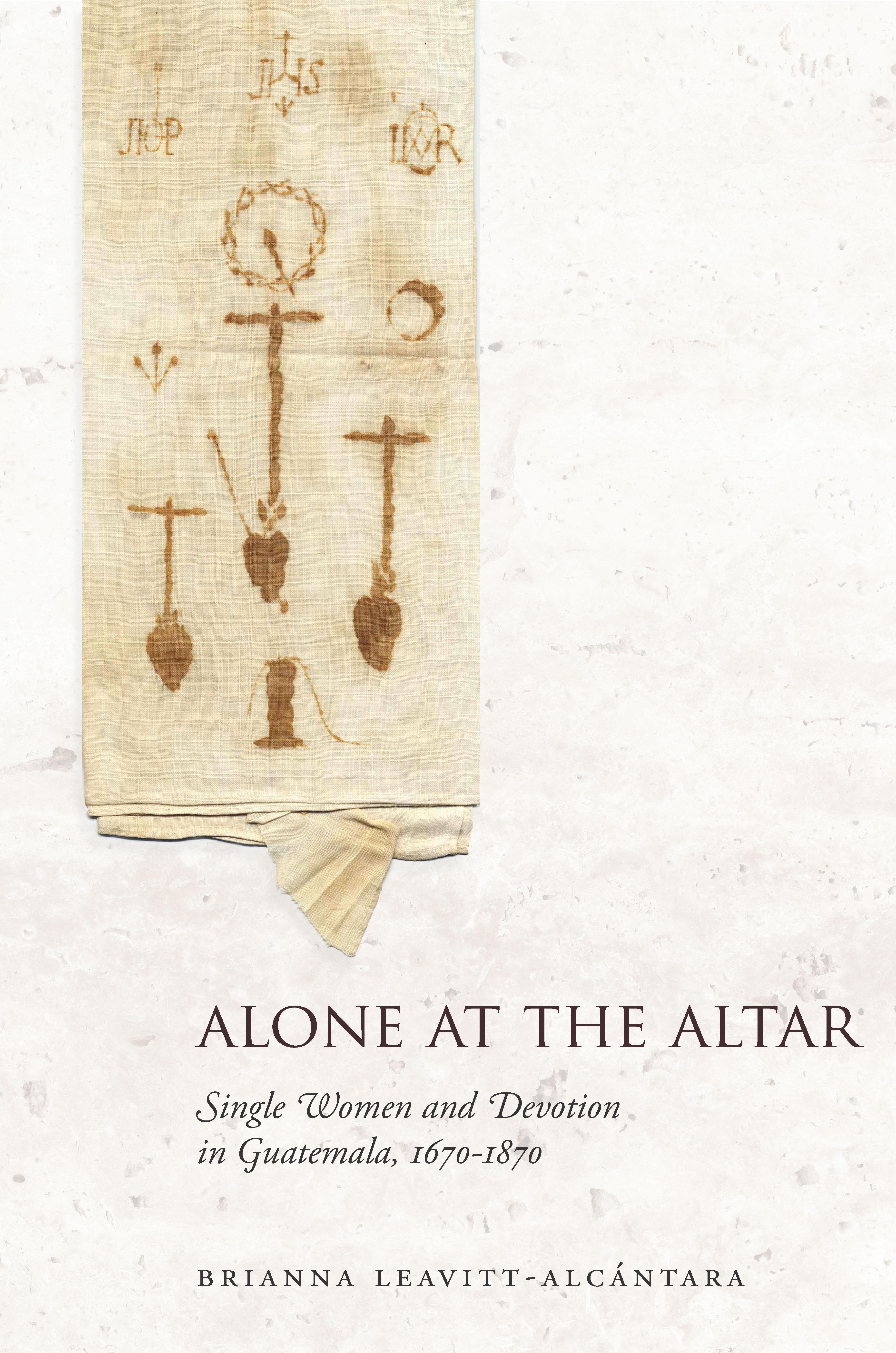
By 1700, Guatemala's capital was a mixed-race "city of women." As in many other cities across colonial Spanish America, labor and migration patterns in Guatemala produced an urban female majority and high numbers of single women, widows, and female household heads. In this history of religious and spiritual life in the Guatemalan capital, Brianna Leavitt-Alcántara focuses on the sizeable population of ordinary, non-elite women living outside of both marriage and convent. Although officials often expressed outright hostility towards poor unmarried women, many of these women managed to position themselves at the forefront of religious life in the city.
Through an analysis of over 500 wills, hagiographies, religious chronicles, and ecclesiastical records, Alone at the Altar examines how laboring women forged complex alliances with Catholic priests and missionaries and how those alliances significantly shaped local religion, the spiritual economy, and late colonial reform efforts. It considers the local circumstances and global Catholic missionary movements that fueled official collaboration with poor single women and support for diverse models of feminine piety. Extending its analysis past Guatemalan Independence to 1870, this book also illuminates how women's alliances with the Catholic Church became politicized in the Independence era and influenced the rise of popular conservatism in Guatemala.
Paga facilmente con carta, Klarna, Apple Pay o Google Pay. Non sei soddisfatto? Hai sempre 14 giorni per il rimborso. Leggi di più nei nostri termini. Per qualsiasi domanda, scrivici a hello@memmo.org.
Memmo rende lo studio più facile, ovunque tu sia nel mondo. Qui trovi i tuoi libri di testo e strumenti di studio intelligenti, tutto in un unico posto: riassunti, quiz, podcast e flashcard. E poi c'è Ted, il tuo compagno di studio che risponde a ogni tua domanda. Oltre 50.000 studenti studiano già qui: è stato creato per aiutarti a imparare più velocemente e a stressarti meno.