
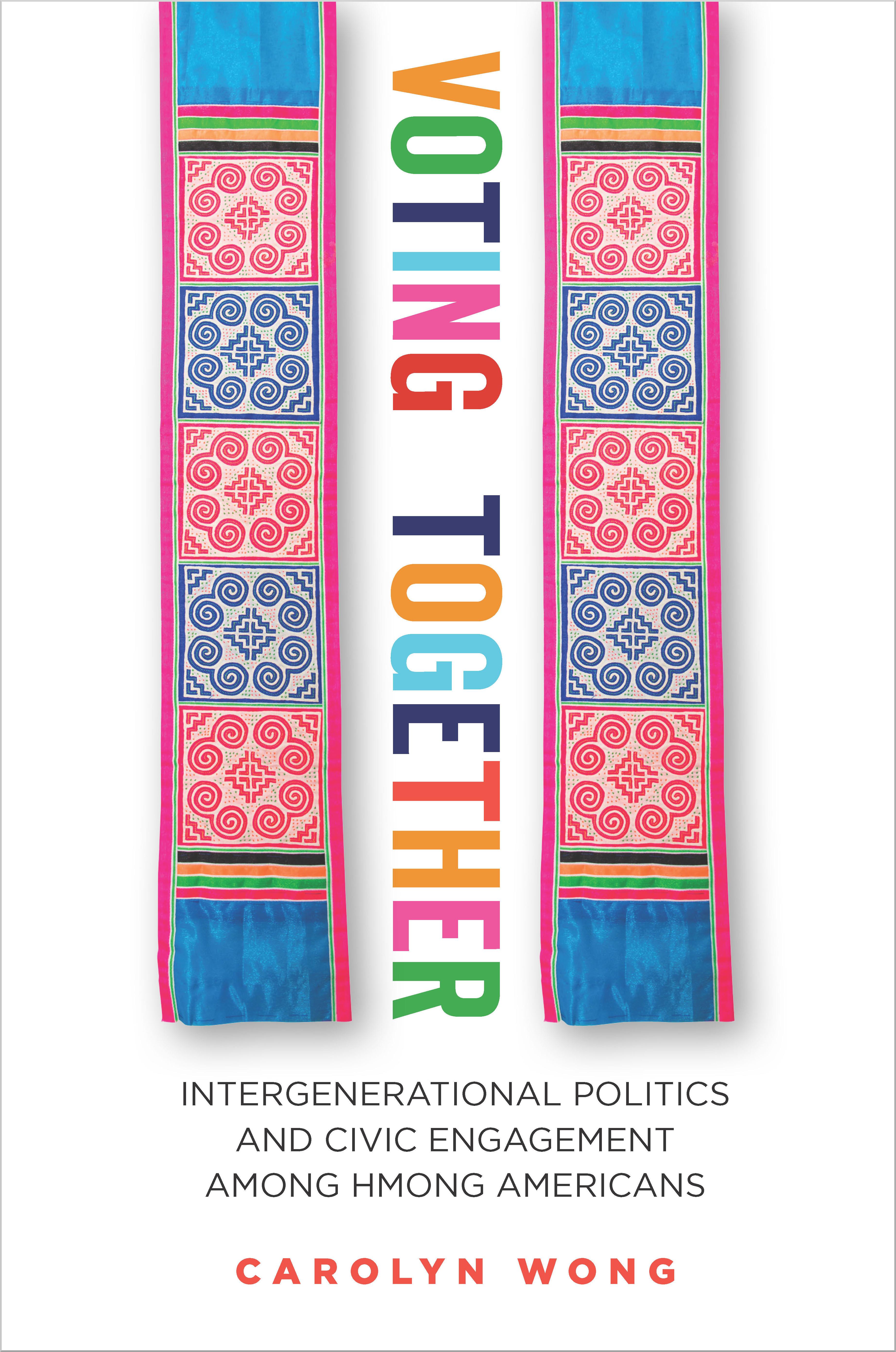
Hmong American immigrants first came to the United States as refugees of the Vietnam War. Forty years on, they have made a notable impact in American political life. They have voter participation rates higher than most other Asian American ethnic groups, and they have won seats in local and state legislative bodies. Yet the average level of education among Hmong Americans still lags behind that of the general U.S. population and high rates of poverty persist in their community, highlighting a curious disparity across the typical benchmarks of immigrant incorporation.
Carolyn Wong analyzes how the Hmong came to pursue politics as a key path to advancement and inclusion in the United States. Drawing on interviews with community leaders, refugees, and the second-generation children of immigrants, Wong shows that intergenerational mechanisms of social voting underlie the political participation of Hmong Americans. Younger Hmong Americans engage older community residents in grassroots elections and conversation about public affairs. And in turn, within families and communities, elders often transmit stories that draw connections between ancient Hmong aspirations for freedom and contemporary American egalitarian projects.
Paga facilmente con carta, Klarna, Apple Pay o Google Pay. Non sei soddisfatto? Hai sempre 14 giorni per il rimborso. Leggi di più nei nostri termini. Per qualsiasi domanda, scrivici a hello@memmo.org.
Memmo rende lo studio più facile, ovunque tu sia nel mondo. Qui trovi i tuoi libri di testo e strumenti di studio intelligenti, tutto in un unico posto: riassunti, quiz, podcast e flashcard. E poi c'è Ted, il tuo compagno di studio che risponde a ogni tua domanda. Oltre 50.000 studenti studiano già qui: è stato creato per aiutarti a imparare più velocemente e a stressarti meno.