
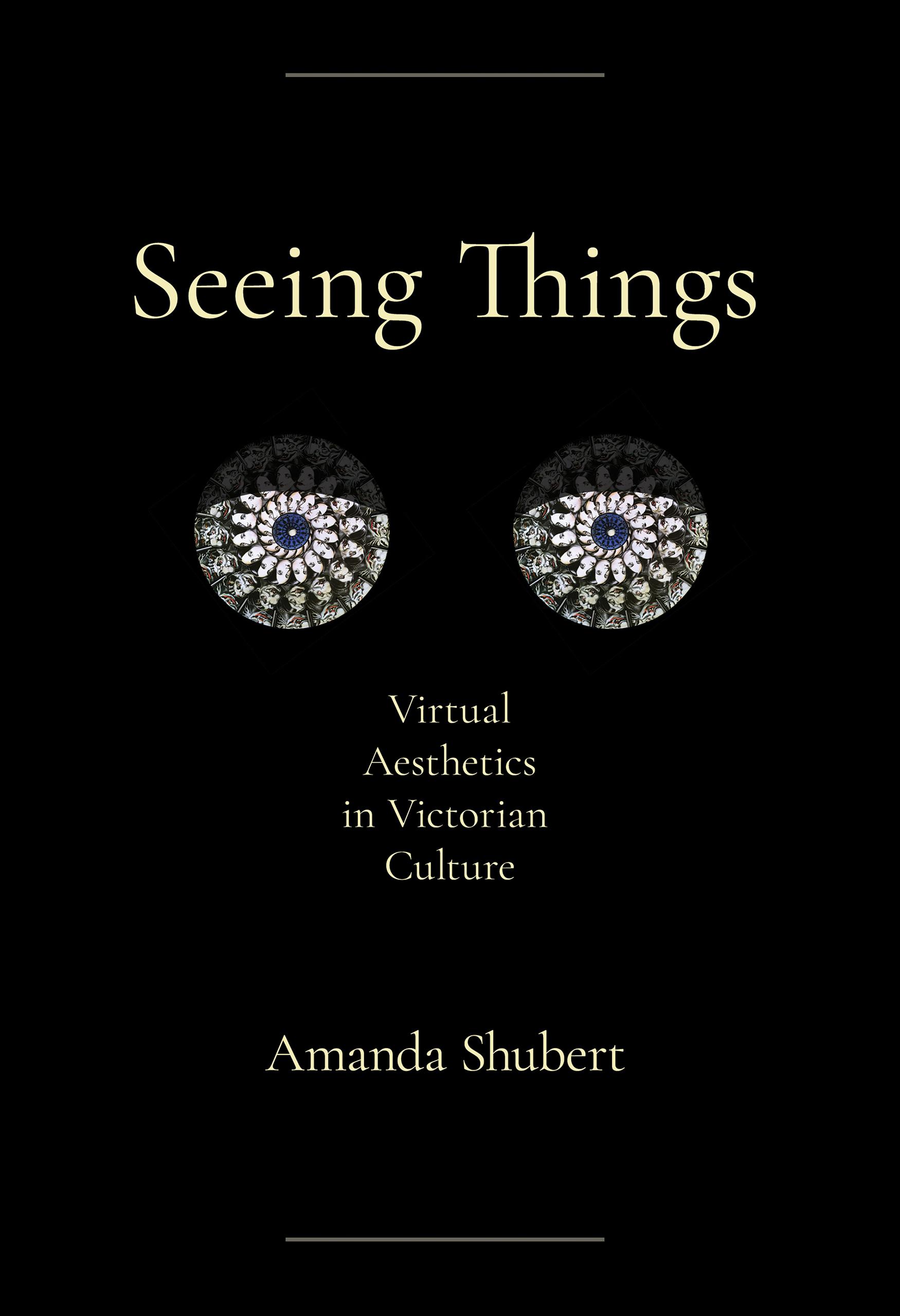
A cultural history of nineteenth-century media imaginaries, Seeing Things tells the story of how Victorians experienced the virtual images created by modern optical technologies—magic lanterns, stereoscopes, phenakistoscopes, museum displays, and illusionistic stage magic. Amanda Shubert argues that interactions with these devices gave rise to a new virtual aesthetics—an understanding of visual and perceptual encounters with things that are not really there.
The popularization of Victorian optical media redefined virtuality as a rational mode of spectatorship that taught audiences to distinguish illusion from reality. As an aesthetic expression of a civilizational ideal that defined the capacity to see but not believe, to be entertained without being deceived, it became a sign of western supremacy. By tracing the development of virtual aesthetics through nineteenth-century writings, from the novels of George Eliot and Charles Dickens to popular science writing and imperial travelogues, Seeing Things recovers a formative period of technological and literary innovation to explain how optical media not only anticipated cinema but became a paradigmatic media aesthetic of western modernity.
Paga facilmente con carta, Klarna, Apple Pay o Google Pay. Non sei soddisfatto? Hai sempre 14 giorni per il rimborso. Leggi di più nei nostri termini. Per qualsiasi domanda, scrivici a hello@memmo.org.
Memmo rende lo studio più facile, ovunque tu sia nel mondo. Qui trovi i tuoi libri di testo e strumenti di studio intelligenti, tutto in un unico posto: riassunti, quiz, podcast e flashcard. E poi c'è Ted, il tuo compagno di studio che risponde a ogni tua domanda. Oltre 50.000 studenti studiano già qui: è stato creato per aiutarti a imparare più velocemente e a stressarti meno.