
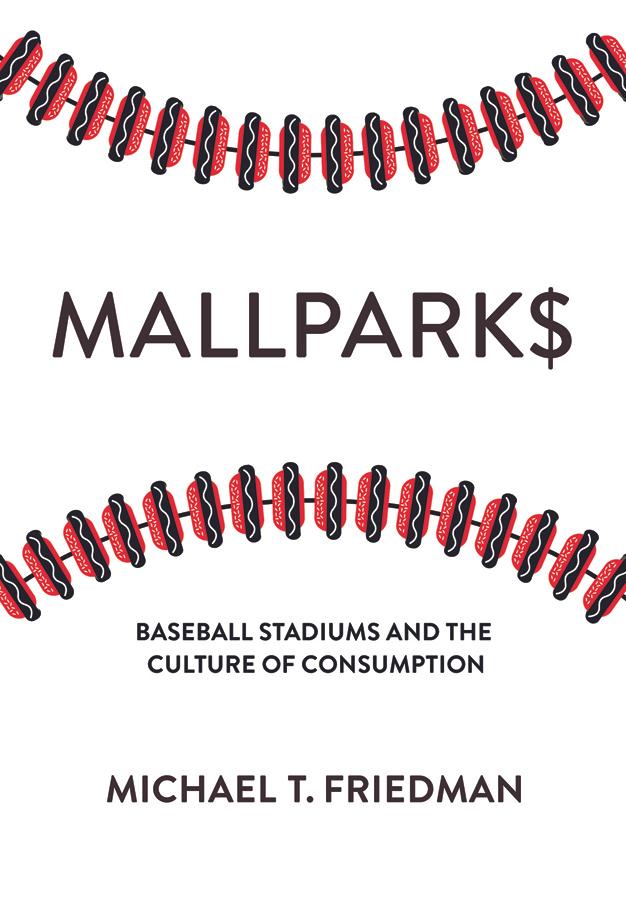
In Mallparks, Michael T. Friedman observes that as cathedrals represented power relations in medieval towns and skyscrapers epitomized those within industrial cities, sports stadiums exemplify urban American consumption at the turn of the twenty-first century. Grounded in Henri Lefebvre and George Ritzer's spatial theories in their analyses of consumption spaces, Mallparks examines how the designers of this generation of baseball stadiums follow the principles of theme park and shopping mall design to create highly effective and efficient consumption sites.
In his exploration of these contemporary cathedrals of sport and consumption, Friedman discusses the history of stadium design, the amenities and aesthetics of stadium spaces, and the intentions and conceptions of architects, team officials, and civic leaders. He grounds his analysis in case studies of Oriole Park at Camden Yards in Baltimore; Fenway Park in Boston; Dodger Stadium in Los Angeles; Nationals Park in Washington, DC; Target Field in Minneapolis; and Truist Park in Atlanta.
Paga facilmente con carta, Klarna, Apple Pay o Google Pay. Non sei soddisfatto? Hai sempre 14 giorni per il rimborso. Leggi di più nei nostri termini. Per qualsiasi domanda, scrivici a hello@memmo.org.
Memmo rende lo studio più facile, ovunque tu sia nel mondo. Qui trovi i tuoi libri di testo e strumenti di studio intelligenti, tutto in un unico posto: riassunti, quiz, podcast e flashcard. E poi c'è Ted, il tuo compagno di studio che risponde a ogni tua domanda. Oltre 50.000 studenti studiano già qui: è stato creato per aiutarti a imparare più velocemente e a stressarti meno.