
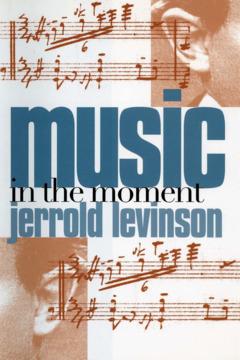
What is required for a listener to understand a piece of music? Does aural understanding depend upon reflective awareness of musical architecture or large-scale musical structure? Jerrold Levinson thinks not. In contrast to what is commonly assumed, Levinson argues that basic understanding of music only requires properly grounded, present-focused attention, and that virtually everything in the comprehension of extended pieces of music that suggests explicit architectonic awareness can be explained without positing conscious grasp of relationships across broad spans.
Levinson rejects the notion that keeping music's large-scale form before the mind is somehow essential to fundamental understanding of it. As evidence, he describes in detail the experience of listening to a wide range of music. He defends, with some qualifications, the views of nineteenth-century musician and psychologist Edmund Gurney, author of The Power of Sound, who argued that musical comprehension requires only attention to the evolution of music from moment to moment.
Music theory standardly misapprehends the experience and mindset of most who know and love classical music, concludes Levinson. His book is a defense of the passionate and attentive, though architectonically unconcerned, music listener.
Paga facilmente con carta, Klarna, Apple Pay o Google Pay. Non sei soddisfatto? Hai sempre 14 giorni per il rimborso. Leggi di più nei nostri termini. Per qualsiasi domanda, scrivici a hello@memmo.org.
Memmo rende lo studio più facile, ovunque tu sia nel mondo. Qui trovi i tuoi libri di testo e strumenti di studio intelligenti, tutto in un unico posto: riassunti, quiz, podcast e flashcard. E poi c'è Ted, il tuo compagno di studio che risponde a ogni tua domanda. Oltre 50.000 studenti studiano già qui: è stato creato per aiutarti a imparare più velocemente e a stressarti meno.