
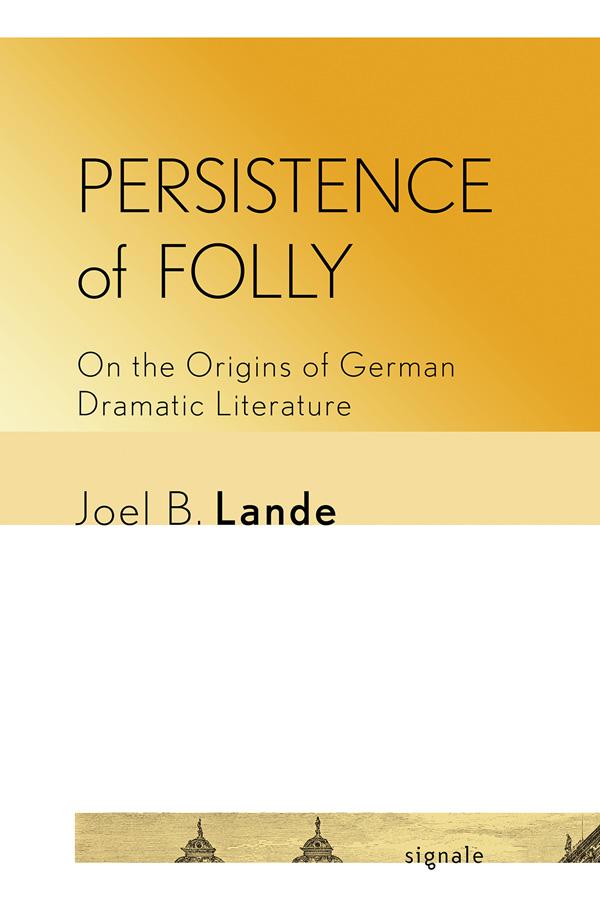
Joel B. Lande's Persistence of Folly challenges the accepted account of the origins of German theater by focusing on the misunderstood figure of the fool, whose spontaneous and impish jest captivated audiences, critics, and playwrights from the late sixteenth through the early nineteenth century. Lande radically expands the scope of literary historical inquiry, showing that the fool was not a distraction from attempts to establish a serious dramatic tradition in the German language. Instead, the fool was both a fixture on the stage and a nearly ubiquitous theme in an array of literary critical, governmental, moral-philosophical, and medical discourses, figuring centrally in broad-based efforts to assign laughter a proper time, place, and proportion in society.
Persistence of Folly reveals the fool as a cornerstone of the dynamic process that culminated in the works of Lessing, Goethe, and Kleist. By reorienting the history of German theater, Lande's work conclusively shows that the highpoint of German literature around 1800 did not eliminate irreverent jest in the name of serious drama, but instead developed highly refined techniques for integrating the comic tradition of the stage fool.
Paga facilmente con carta, Klarna, Apple Pay o Google Pay. Non sei soddisfatto? Hai sempre 14 giorni per il rimborso. Leggi di più nei nostri termini. Per qualsiasi domanda, scrivici a hello@memmo.org.
Memmo rende lo studio più facile, ovunque tu sia nel mondo. Qui trovi i tuoi libri di testo e strumenti di studio intelligenti, tutto in un unico posto: riassunti, quiz, podcast e flashcard. E poi c'è Ted, il tuo compagno di studio che risponde a ogni tua domanda. Oltre 50.000 studenti studiano già qui: è stato creato per aiutarti a imparare più velocemente e a stressarti meno.