
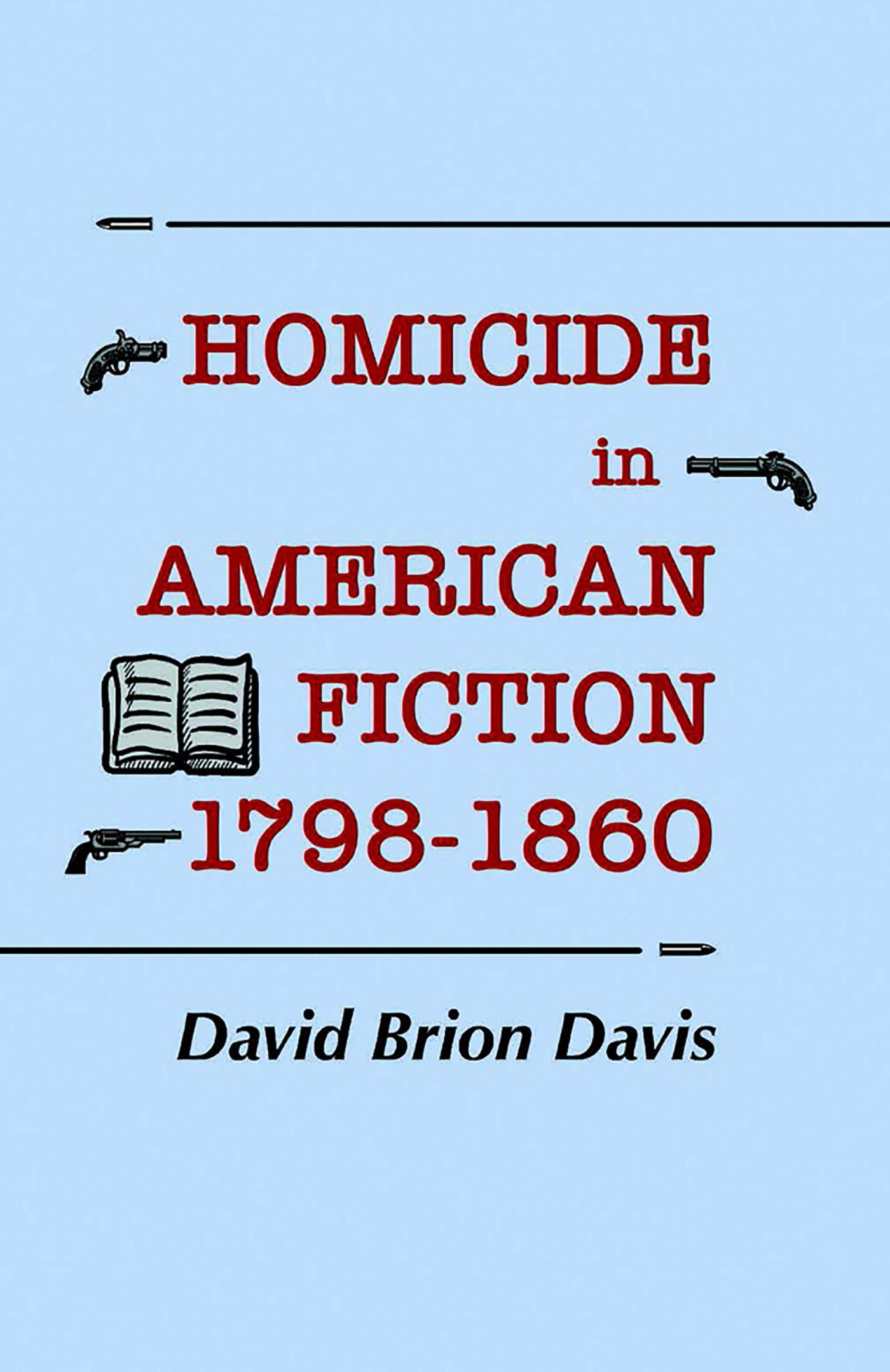
Homicide has many social and psychological implications that vary from culture to culture and which change as people accept new ideas concerning guilt, responsibility, and the causes of crime. A study of attitudes toward homicide is therefore a method of examining social values in a specific setting. Homicide in American Fiction, 1798–1860 is the first book to contrast psychological assumptions of imaginative writers with certain social and intellectual currents in an attempt to integrate social attitudes toward such diverse subjects as human evil, moral responsibility, criminal insanity, social causes of crime, dueling, lynching, the "unwritten law" of a husband's revenge, and capital punishment. In addition to works of literary distinction by Cooper, Hawthorne, Irving, and Poe, among others, Davis considers a large body of cheap popular fiction generally ignored in previous studies of the literature of this period. This is an engrossing study of fiction as a reflection of and a commentary on social problems and as an influence shaping general beliefs and opinions.
Paga facilmente con carta, Klarna, Apple Pay o Google Pay. Non sei soddisfatto? Hai sempre 14 giorni per il rimborso. Leggi di più nei nostri termini. Per qualsiasi domanda, scrivici a hello@memmo.org.
Memmo rende lo studio più facile, ovunque tu sia nel mondo. Qui trovi i tuoi libri di testo e strumenti di studio intelligenti, tutto in un unico posto: riassunti, quiz, podcast e flashcard. E poi c'è Ted, il tuo compagno di studio che risponde a ogni tua domanda. Oltre 50.000 studenti studiano già qui: è stato creato per aiutarti a imparare più velocemente e a stressarti meno.