
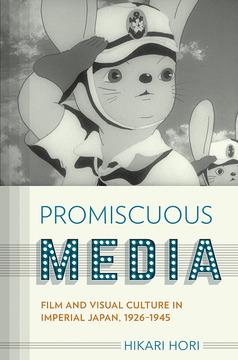
In Promiscuous Media, Hikari Hori makes a compelling case that the visual culture of Showa-era Japan articulated urgent issues of modernity rather than serving as a simple expression of nationalism. Hori makes clear that the Japanese cinema of the time was in fact almost wholly built on a foundation of Russian and British film theory as well as American film genres and techniques. Hori provides a range of examples that illustrate how maternal melodrama and animated features, akin to those popularized by Disney, were adopted wholesale by Japanese filmmakers.
Emperor Hirohito's image, Hori argues, was inseparable from the development of mass media; he was the first emperor whose public appearances were covered by media ranging from postcards to radio broadcasts. Worship of the emperor through viewing his image, Hori shows, taught the Japanese people how to look at images and primed their enjoyment of early animation and documentary films alike. Promiscuous Media links the political and the cultural closely in a way that illuminates the nature of twentieth-century Japanese society.
Paga facilmente con carta, Klarna, Apple Pay o Google Pay. Non sei soddisfatto? Hai sempre 14 giorni per il rimborso. Leggi di più nei nostri termini. Per qualsiasi domanda, scrivici a hello@memmo.org.
Memmo rende lo studio più facile, ovunque tu sia nel mondo. Qui trovi i tuoi libri di testo e strumenti di studio intelligenti, tutto in un unico posto: riassunti, quiz, podcast e flashcard. E poi c'è Ted, il tuo compagno di studio che risponde a ogni tua domanda. Oltre 50.000 studenti studiano già qui: è stato creato per aiutarti a imparare più velocemente e a stressarti meno.