
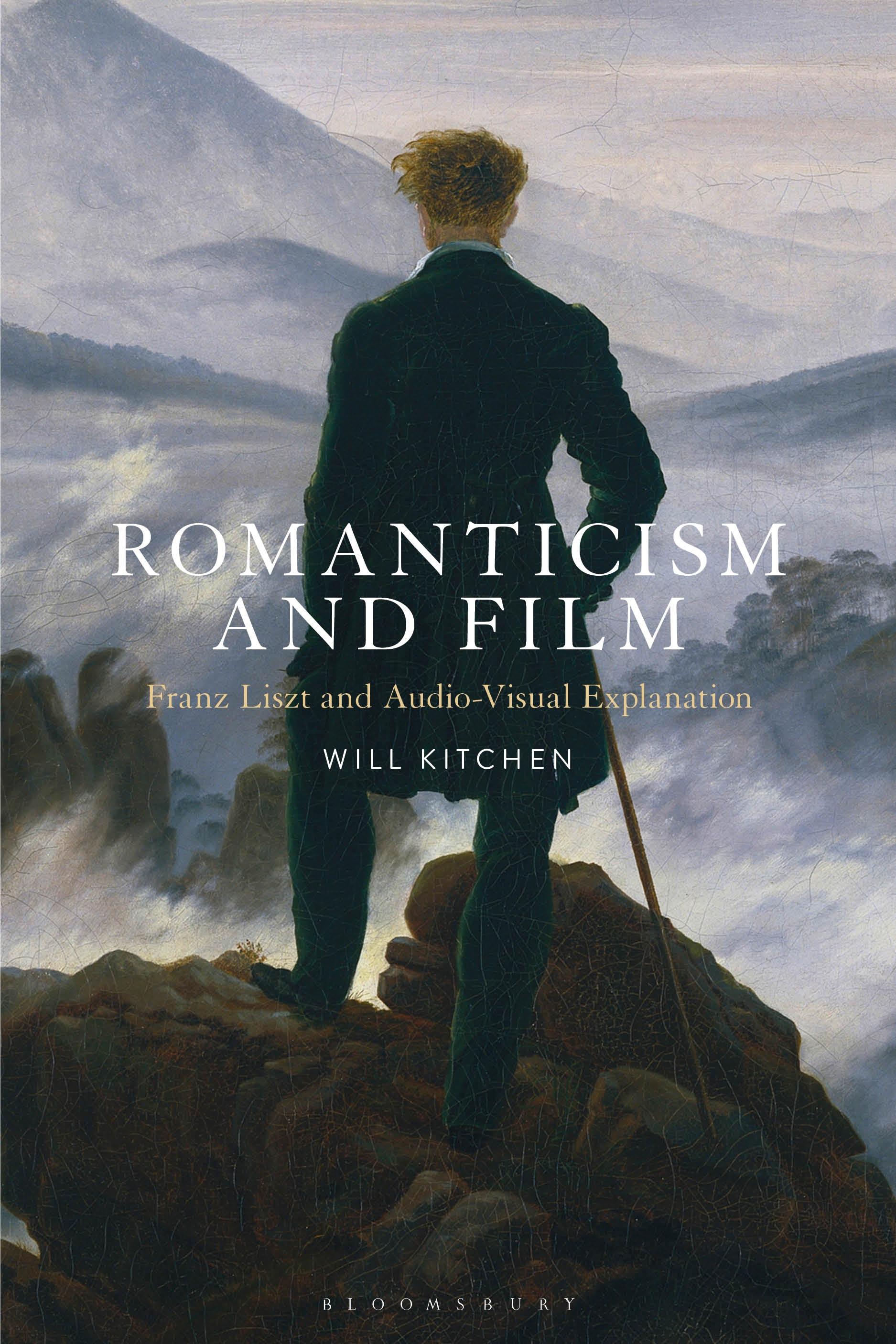
The relationship between Romanticism and film remains one of the most neglected topics in film theory and history, with analysis often focusing on the proto-cinematic significance of Richard Wagner's music-dramas. One new and interesting way of examining this relationship is by looking beyond Wagner, and developing a concept of audio-visual explanation rooted in Romantic philosophical aesthetics, and employing it in the analysis of film discourse and representation.
Using this concept of audio-visual explanation, the cultural image of the Hungarian pianist and composer Franz Liszt, a contemporary of Wagner and another significant practitioner of Romantic audio-visual aesthetics, is examined in reference to specific case studies, including the rarely-explored films Song Without End (1960) and Lisztomania (1975).
This multifaceted study of film discourse and representation employs Liszt as a guiding-thread, structuring a general exploration of the concept of Romanticism and its relationship with film more generally. This exploration is supported by new theories of representation based on schematic cognition, the philosophy of explanation, and the recently-developed film theory of Jacques Rancière.
Individual chapters address the historical background of audio-visual explanation in Romantic philosophical aesthetics, Liszt's role in the historical discourses of film and film music, and various filmic representations of Liszt and his compositions. Throughout these investigations, Will Kitchen explores the various ways that films explain, or 'make sense' of things, through a 'Romantic' aesthetic combination of sound and vision.
Using this concept of audio-visual explanation, the cultural image of the Hungarian pianist and composer Franz Liszt, a contemporary of Wagner and another significant practitioner of Romantic audio-visual aesthetics, is examined in reference to specific case studies, including the rarely-explored films Song Without End (1960) and Lisztomania (1975).
This multifaceted study of film discourse and representation employs Liszt as a guiding-thread, structuring a general exploration of the concept of Romanticism and its relationship with film more generally. This exploration is supported by new theories of representation based on schematic cognition, the philosophy of explanation, and the recently-developed film theory of Jacques Rancière.
Individual chapters address the historical background of audio-visual explanation in Romantic philosophical aesthetics, Liszt's role in the historical discourses of film and film music, and various filmic representations of Liszt and his compositions. Throughout these investigations, Will Kitchen explores the various ways that films explain, or 'make sense' of things, through a 'Romantic' aesthetic combination of sound and vision.
Pagine: 264
Categoria: Film- & Medievetenskap
e-ISBN: 9781501361357
Peso di spedizione: 1.2 kg
Spedito in: 1-2 giorni
Paga facilmente con carta, Klarna, Apple Pay o Google Pay. Non sei soddisfatto? Hai sempre 14 giorni per il rimborso. Leggi di più nei nostri termini. Per qualsiasi domanda, scrivici a hello@memmo.org.
Memmo rende lo studio più facile, ovunque tu sia nel mondo. Qui trovi i tuoi libri di testo e strumenti di studio intelligenti, tutto in un unico posto: riassunti, quiz, podcast e flashcard. E poi c'è Ted, il tuo compagno di studio che risponde a ogni tua domanda. Oltre 50.000 studenti studiano già qui: è stato creato per aiutarti a imparare più velocemente e a stressarti meno.