
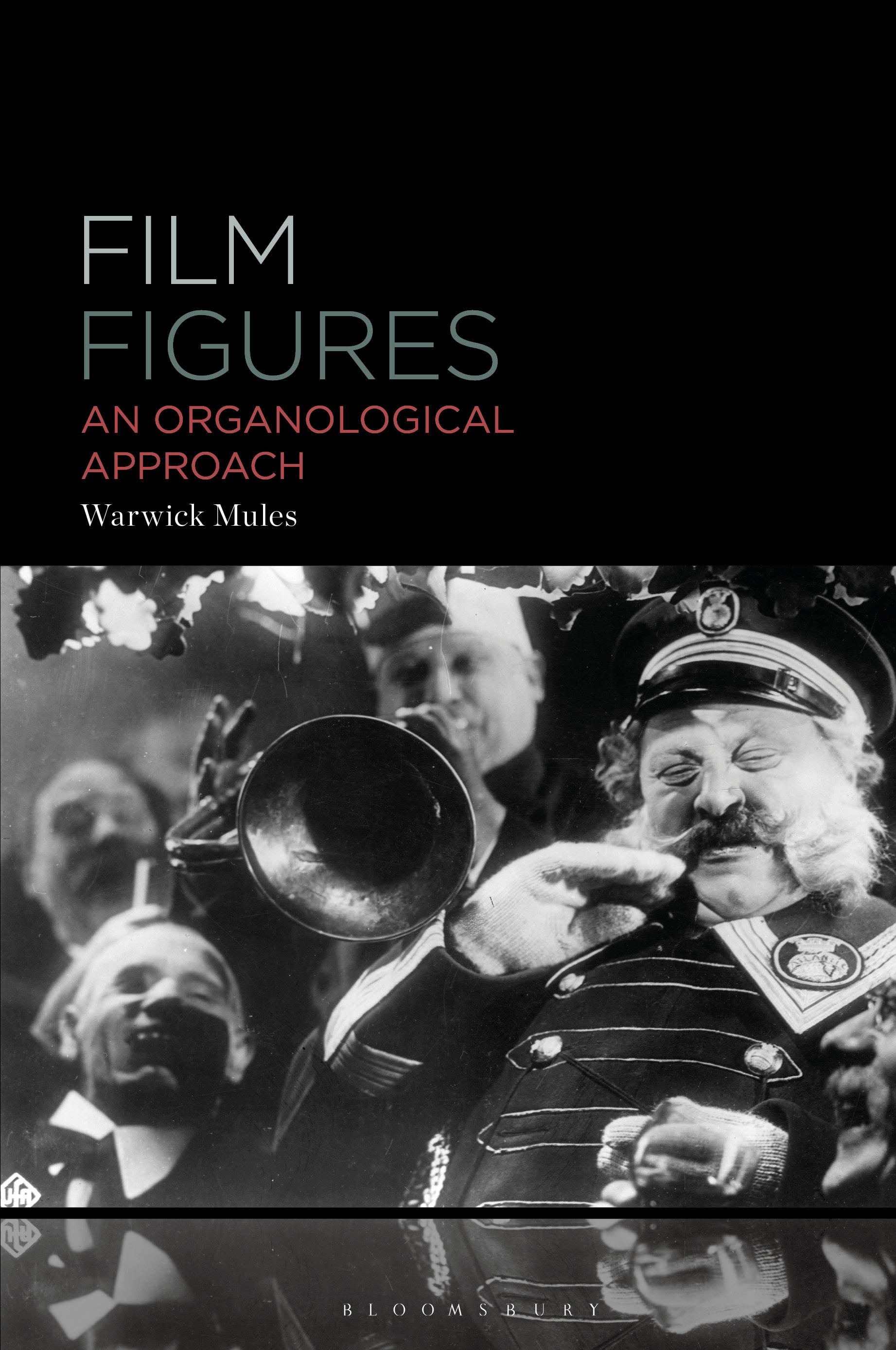
Film Figures develops a figural account of the memory structure of films.
Employing theoretical concepts drawn from a range of sources, including French post-humanist philosophy and German Idealism, the book undertakes an organology of film guided by the work of Bernard Stiegler whose philosophy of mnemotechnesis provides the framework of analysis. Situating films in the quantum field of spacetime relativity as a field of cosmic views, inquiry into film figures begins with disturbances in the experience of films themselves, posing questions of the relation between the dead past and the living future in film story-telling. By breaking the façade of the continuing present through self-questioning, we open films to their figural dimensions in the counter-movement of drive as negentropic resistance. Following the back-movement of drive switches our perception to the figural register in which characters become figures probing blindly for what the film will have been in another time – a time yet to be lived. By following the anterior possibilities of this other time, we open films to the archival future in which a new future comes forth.
This book provides theoretical and analytical concepts as well as strategies for taking a step into this future, guided by questions of the right path to take given the relativity of views in which the film can be experienced. Films analysed include Murnau's The Last Laugh, Capra's It's a Wonderful Life, Hitchcock's Rear Window, Welles's The Lady from Shanghai, Fellini's Intervista, Antonioni's L'Eclisse, Bresson's Une Femme Douce, and Zeller's The Father.
Employing theoretical concepts drawn from a range of sources, including French post-humanist philosophy and German Idealism, the book undertakes an organology of film guided by the work of Bernard Stiegler whose philosophy of mnemotechnesis provides the framework of analysis. Situating films in the quantum field of spacetime relativity as a field of cosmic views, inquiry into film figures begins with disturbances in the experience of films themselves, posing questions of the relation between the dead past and the living future in film story-telling. By breaking the façade of the continuing present through self-questioning, we open films to their figural dimensions in the counter-movement of drive as negentropic resistance. Following the back-movement of drive switches our perception to the figural register in which characters become figures probing blindly for what the film will have been in another time – a time yet to be lived. By following the anterior possibilities of this other time, we open films to the archival future in which a new future comes forth.
This book provides theoretical and analytical concepts as well as strategies for taking a step into this future, guided by questions of the right path to take given the relativity of views in which the film can be experienced. Films analysed include Murnau's The Last Laugh, Capra's It's a Wonderful Life, Hitchcock's Rear Window, Welles's The Lady from Shanghai, Fellini's Intervista, Antonioni's L'Eclisse, Bresson's Une Femme Douce, and Zeller's The Father.
Paga facilmente con carta, Klarna, Apple Pay o Google Pay. Non sei soddisfatto? Hai sempre 14 giorni per il rimborso. Leggi di più nei nostri termini. Per qualsiasi domanda, scrivici a hello@memmo.org.
Memmo rende lo studio più facile, ovunque tu sia nel mondo. Qui trovi i tuoi libri di testo e strumenti di studio intelligenti, tutto in un unico posto: riassunti, quiz, podcast e flashcard. E poi c'è Ted, il tuo compagno di studio che risponde a ogni tua domanda. Oltre 50.000 studenti studiano già qui: è stato creato per aiutarti a imparare più velocemente e a stressarti meno.