
Shortlisted for the AATSEEL 2022 Award for Best Edited Multi-Author Scholarly Volume (AATSEEL is The American Association of Teachers of Slavic and East European Languages)
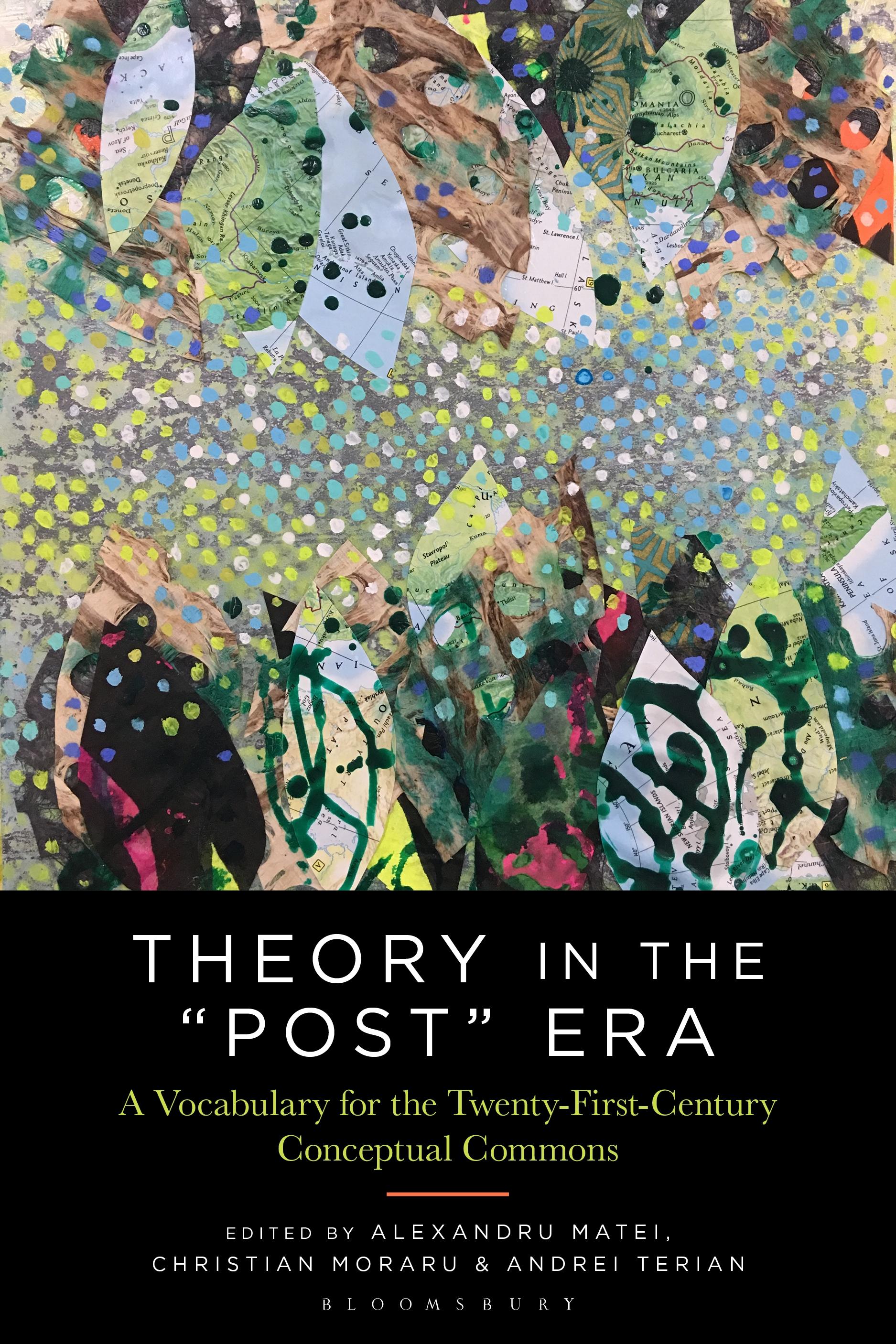
Theory in the "Post" Era brings together the work and perspectives of a group of Romanian theorists who discuss the morphings of contemporary theory in what the editors call the “post” era. Since the Cold War's end and especially in the third millennium, theorists have been exploring the aftermath - and sometimes just the “after” - of whole paradigms, the crisis or “passing” of anthropocentrism, the twilight of an entire ontological and cultural “condition,” as well as the corresponding rise of an antagonist model, of an “anti,” “meta,” or “neo” alternative, with examples ranging from “posthumanism” and “post-postmodernism” to “post-aesthetics,” “postanalog” interpretation or “digicriticism,” “post-presentism,” “post-memory,” “post-“ or “neo-critique,” and so forth.
It is no coincidence, the contributors to this volume argue, that this “post” moment is also a time when theory is practiced as a world genre. If theory has always been a “worlded” enterprise, a quintessentially communal, cross-cultural and international project, this is truer at present than ever. Perhaps more than other humanist constituencies, today's theorists work and belong in a theory commons that is transnational if still uneven economically, politically, and otherwise. Theory in the "Post" Era reports the results of Romanian theory experiments that join efforts made in other places to foster a theory for the “post” age.
Theory in the "Post" Era brings together the work and perspectives of a group of Romanian theorists who discuss the morphings of contemporary theory in what the editors call the “post” era. Since the Cold War's end and especially in the third millennium, theorists have been exploring the aftermath - and sometimes just the “after” - of whole paradigms, the crisis or “passing” of anthropocentrism, the twilight of an entire ontological and cultural “condition,” as well as the corresponding rise of an antagonist model, of an “anti,” “meta,” or “neo” alternative, with examples ranging from “posthumanism” and “post-postmodernism” to “post-aesthetics,” “postanalog” interpretation or “digicriticism,” “post-presentism,” “post-memory,” “post-“ or “neo-critique,” and so forth.
It is no coincidence, the contributors to this volume argue, that this “post” moment is also a time when theory is practiced as a world genre. If theory has always been a “worlded” enterprise, a quintessentially communal, cross-cultural and international project, this is truer at present than ever. Perhaps more than other humanist constituencies, today's theorists work and belong in a theory commons that is transnational if still uneven economically, politically, and otherwise. Theory in the "Post" Era reports the results of Romanian theory experiments that join efforts made in other places to foster a theory for the “post” age.
Pagine: 376
Categoria: Litteraturvetenskap & Teori
e-ISBN: 9781501358968
Peso di spedizione: 1.2 kg
Spedito in: 1-2 giorni
Paga facilmente con carta, Klarna, Apple Pay o Google Pay. Non sei soddisfatto? Hai sempre 14 giorni per il rimborso. Leggi di più nei nostri termini. Per qualsiasi domanda, scrivici a hello@memmo.org.
Memmo rende lo studio più facile, ovunque tu sia nel mondo. Qui trovi i tuoi libri di testo e strumenti di studio intelligenti, tutto in un unico posto: riassunti, quiz, podcast e flashcard. E poi c'è Ted, il tuo compagno di studio che risponde a ogni tua domanda. Oltre 50.000 studenti studiano già qui: è stato creato per aiutarti a imparare più velocemente e a stressarti meno.