
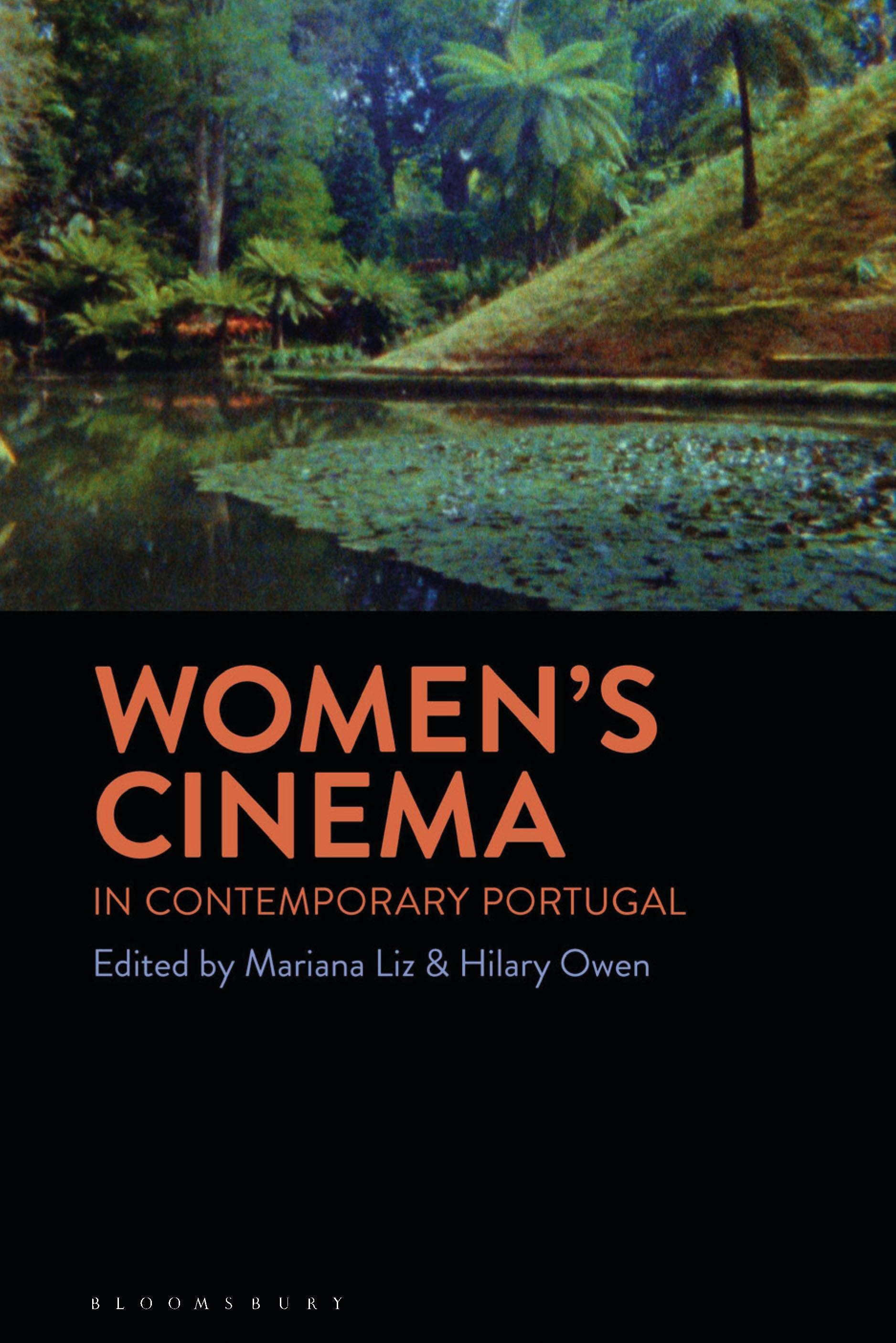
Women's Cinema in Contemporary Portugal brings together scholars from Portugal, UK and the USA, to discuss 14 women film directors in Portugal, focussing on their production in both feature film and documentary genres over the last half-century. It charts the specific cinematic visions that these women have brought to the re-emergence of Portuguese national cinema in the wake of the 1974 Revolution and African decolonisation, and to the growing internationalisation of Portugal's arguably 'minor' or 'small nation' cinema, with significant young women directors such as Leonor Teles achieving prominence abroad.
The history of Portuguese women's cinema only begins systematically after the 1974 revolution and democratisation. This collection shows how female auteurs made their mark on Portugal's post-revolutionary conceptualisation of a differently 'national' cinema, through the ethnographic output of the late 1970s. It goes on to explore women's decisively gendered interventions in the cinematic memory practices that opened up around the masculine domain of the Colonial Wars in Africa. Feminist political issues such as Portugal's 30-year abortion campaign and LGBT status have become more visible since the 1990s, alongside preoccupations with global concerns relating to immigration, transit and minority status communities. The book also demonstrates how women have contributed to the evolution of soundscapes, the genre of essay cinema, film's relationship to the archive, and the adaptation of the written word. The result is a powerful, provocative and definitive challenge to the marginalisation of Portuguese female-directed film in terms of 'double minority'.
The history of Portuguese women's cinema only begins systematically after the 1974 revolution and democratisation. This collection shows how female auteurs made their mark on Portugal's post-revolutionary conceptualisation of a differently 'national' cinema, through the ethnographic output of the late 1970s. It goes on to explore women's decisively gendered interventions in the cinematic memory practices that opened up around the masculine domain of the Colonial Wars in Africa. Feminist political issues such as Portugal's 30-year abortion campaign and LGBT status have become more visible since the 1990s, alongside preoccupations with global concerns relating to immigration, transit and minority status communities. The book also demonstrates how women have contributed to the evolution of soundscapes, the genre of essay cinema, film's relationship to the archive, and the adaptation of the written word. The result is a powerful, provocative and definitive challenge to the marginalisation of Portuguese female-directed film in terms of 'double minority'.
Pagine: 272
Categoria: Film- & Medievetenskap
e-ISBN: 9781501349737
Peso di spedizione: 1.2 kg
Spedito in: 1-2 giorni
Paga facilmente con carta, Klarna, Apple Pay o Google Pay. Non sei soddisfatto? Hai sempre 14 giorni per il rimborso. Leggi di più nei nostri termini. Per qualsiasi domanda, scrivici a hello@memmo.org.
Memmo rende lo studio più facile, ovunque tu sia nel mondo. Qui trovi i tuoi libri di testo e strumenti di studio intelligenti, tutto in un unico posto: riassunti, quiz, podcast e flashcard. E poi c'è Ted, il tuo compagno di studio che risponde a ogni tua domanda. Oltre 50.000 studenti studiano già qui: è stato creato per aiutarti a imparare più velocemente e a stressarti meno.