
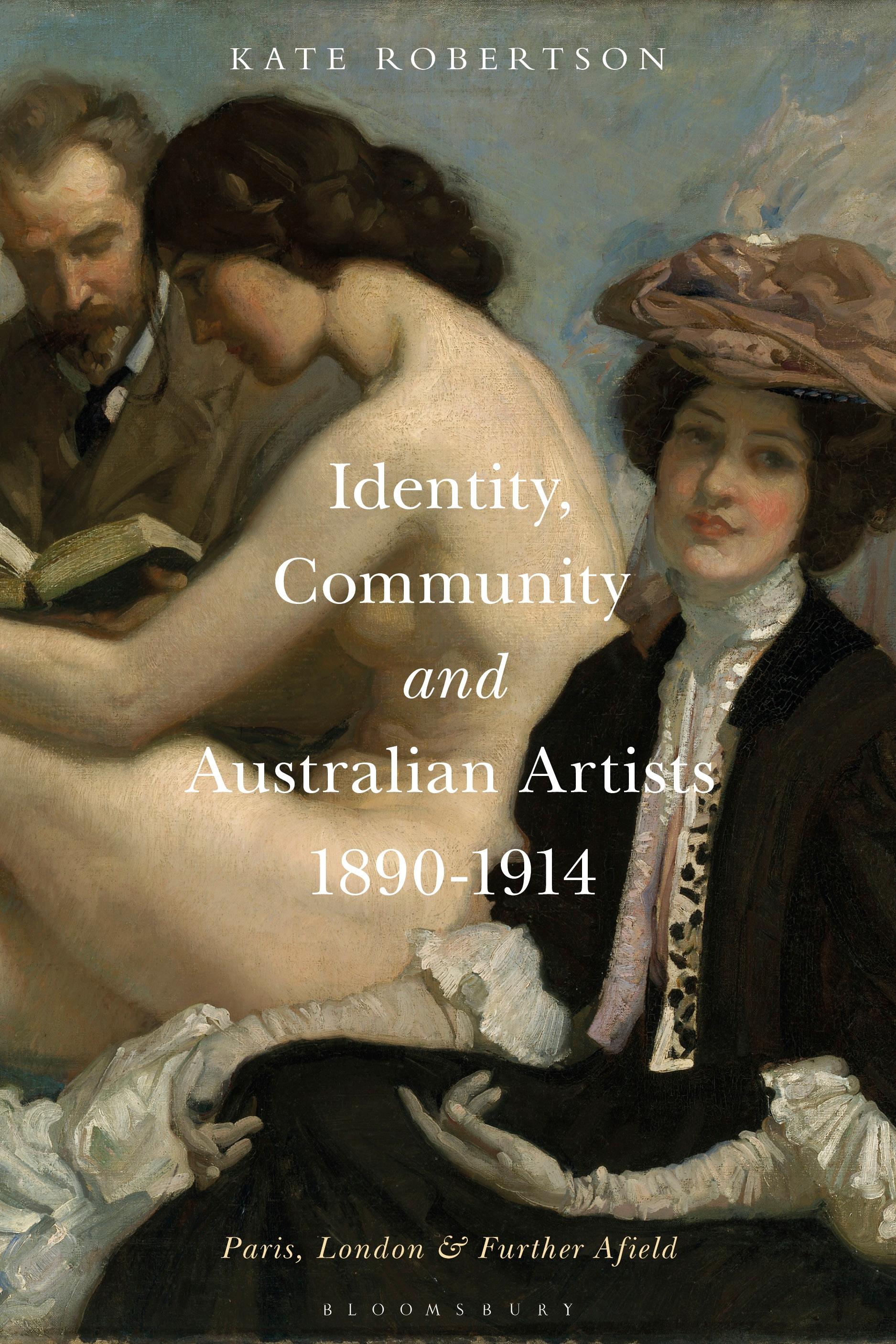
An irresistible call lured Australian artists abroad between 1890 and 1914, a transitional period immediately pre- and post-federation. Travelling enabled an extension of artistic frontiers, and Paris – the centre of art – and London – the heart of the Empire – promised wondrous opportunities. These expatriate artists formed communities based on their common bond to Australia, enacting their Australian-ness in private and public settings.
Yet, they also interacted with the broader creative community, fashioning a network of social and professional relationships. They joined ateliers in Paris such as the Académie Julian, clubs like the Chelsea Arts Club in London and visited artist colonies including St Ives in England and Étaples in France. Australian artists persistently sought a sense of belonging, negotiating their identity through activities such as plays, balls, tableaux, parties, dressing-up and, of course, the creation of art. While individual biographies are integral to this study, it is through exploring the connections between them that it offers new insights.
Through utilising extensive archival material, much of which has limited or no publication history, this book fills a gap in existing scholarship. It offers a vital exploration re-consideration of the fluidity of identity, place and belonging in the lives and work of Australian artists in this juncture in British-Australian history.
Yet, they also interacted with the broader creative community, fashioning a network of social and professional relationships. They joined ateliers in Paris such as the Académie Julian, clubs like the Chelsea Arts Club in London and visited artist colonies including St Ives in England and Étaples in France. Australian artists persistently sought a sense of belonging, negotiating their identity through activities such as plays, balls, tableaux, parties, dressing-up and, of course, the creation of art. While individual biographies are integral to this study, it is through exploring the connections between them that it offers new insights.
Through utilising extensive archival material, much of which has limited or no publication history, this book fills a gap in existing scholarship. It offers a vital exploration re-consideration of the fluidity of identity, place and belonging in the lives and work of Australian artists in this juncture in British-Australian history.
Paga facilmente con carta, Klarna, Apple Pay o Google Pay. Non sei soddisfatto? Hai sempre 14 giorni per il rimborso. Leggi di più nei nostri termini. Per qualsiasi domanda, scrivici a hello@memmo.org.
Memmo rende lo studio più facile, ovunque tu sia nel mondo. Qui trovi i tuoi libri di testo e strumenti di studio intelligenti, tutto in un unico posto: riassunti, quiz, podcast e flashcard. E poi c'è Ted, il tuo compagno di studio che risponde a ogni tua domanda. Oltre 50.000 studenti studiano già qui: è stato creato per aiutarti a imparare più velocemente e a stressarti meno.