
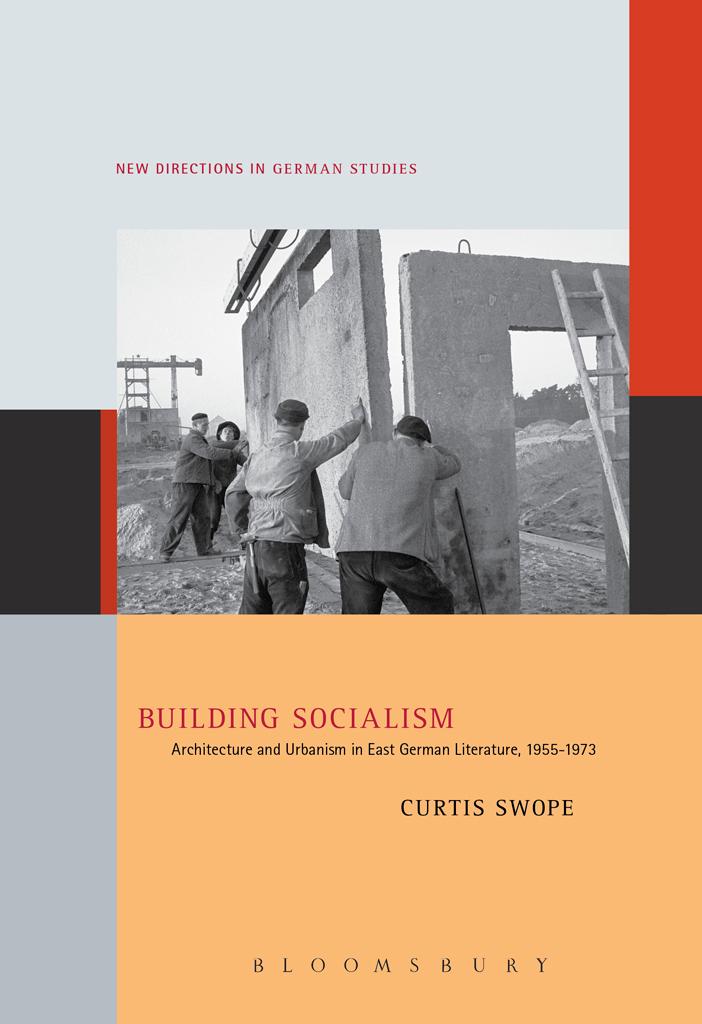
Building Socialism reveals how East German writers' engagement with the rapidly changing built environment from the mid-1950s to the early 1970s constitutes an untold story about the emergence of literary experimentation in the post-War period. It breaks new ground by exploring the centrality of architecture to a mid-century modernist literature in dialogue with multiple literary and left-wing theoretical traditions and in tune with international assessments of modernist architecture and urban planning.
Design and construction were a central part of politics and everyday life in East Germany during this time as buildings old and new were asked to bear heavy ideological and social burdens. In their novels, stories, and plays, Heiner Müller, Christa Wolf, Günter Kunert, Volker Braun, Günter de Bruyn, and Brigitte Reimann responded to enormous new factory complexes, experimental new towns, the demolition of Berlin's tenements, and the propagation of a pared-down modernist aesthetic in interior design. Writers' representation of the design, construction, and use of architecture formed part of a turn to modernist literary devices, including montage, metaphor, and shifting narrative perspectives. East Germany's literary architecture also represents a sophisticated theoretical reflection on the intractable problems of East Germany's socialist modernity, including the alliance between state socialism and technological modernization, competing commitments to working-class self-organization and the power of specialist planners and designers, and the attempt to create an alternative to fascism.
Design and construction were a central part of politics and everyday life in East Germany during this time as buildings old and new were asked to bear heavy ideological and social burdens. In their novels, stories, and plays, Heiner Müller, Christa Wolf, Günter Kunert, Volker Braun, Günter de Bruyn, and Brigitte Reimann responded to enormous new factory complexes, experimental new towns, the demolition of Berlin's tenements, and the propagation of a pared-down modernist aesthetic in interior design. Writers' representation of the design, construction, and use of architecture formed part of a turn to modernist literary devices, including montage, metaphor, and shifting narrative perspectives. East Germany's literary architecture also represents a sophisticated theoretical reflection on the intractable problems of East Germany's socialist modernity, including the alliance between state socialism and technological modernization, competing commitments to working-class self-organization and the power of specialist planners and designers, and the attempt to create an alternative to fascism.
Pagine: 256
Categoria: Litteraturvetenskap & Teori
e-ISBN: 9781501328121
Peso di spedizione: 1.2 kg
Spedito in: 1-2 giorni
Paga facilmente con carta, Klarna, Apple Pay o Google Pay. Non sei soddisfatto? Hai sempre 14 giorni per il rimborso. Leggi di più nei nostri termini. Per qualsiasi domanda, scrivici a hello@memmo.org.
Memmo rende lo studio più facile, ovunque tu sia nel mondo. Qui trovi i tuoi libri di testo e strumenti di studio intelligenti, tutto in un unico posto: riassunti, quiz, podcast e flashcard. E poi c'è Ted, il tuo compagno di studio che risponde a ogni tua domanda. Oltre 50.000 studenti studiano già qui: è stato creato per aiutarti a imparare più velocemente e a stressarti meno.