
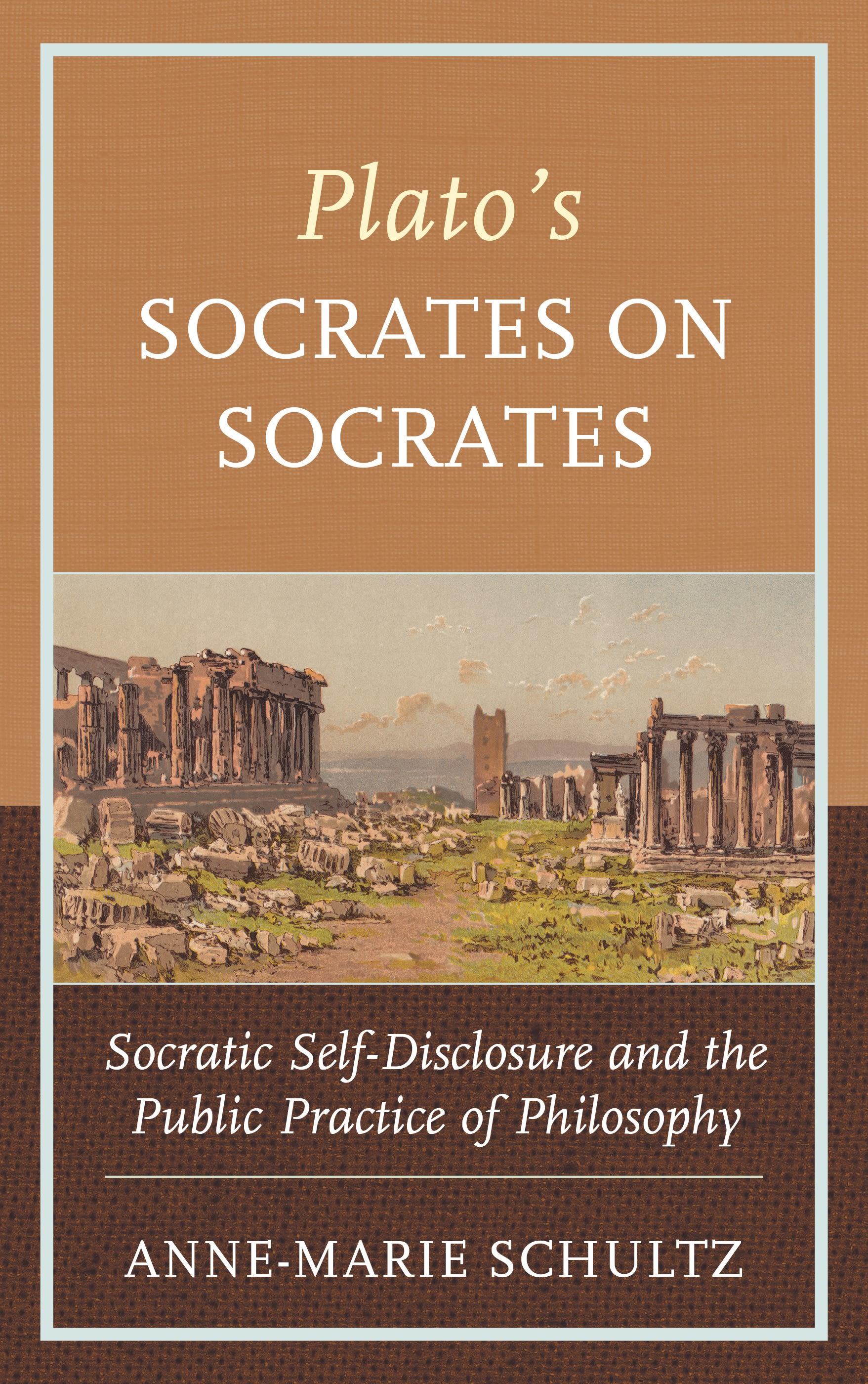
In Plato's Socrates on Socrates: Socratic Self-Disclosure and the Public Practice of Philosophy, Anne-Marie Schultz analyzes the philosophical and political implications of Plato’s presentation of Socrates’ self-disclosive speech in four dialogues: Theaetetus, Symposium, Apology, and Phaedo. Schultz argues that these moments of Socratic self-disclosure show that Plato’s presentation of “Socrates the narrator” is much more pervasive than the secondary literature typically acknowledges. Despite the pervasive appearance of a Socrates who describes his own experience throughout the dialogues, Socratic autobiographical self-disclosure has received surprisingly little scholarly attention. Plato’s use of narrative, particularly his trope of “Socrates the narrator,” is often subsumed into discussions of the dramatic nature of the dialogues more generally rather than studied in its own right. Schultz shows how these carefully crafted narrative remarks add to the richness and profundity of the Platonic texts on multiple levels. To illustrate how these embedded Socratic narratives contribute to the portrait of Socrates as a public philosopher in Plato’s dialogues, the author also examines Socratic self-disclosive practices in the works of bell hooks, Kathy Khang, and Ta-Neishi Coates, and even practices the art of Socratic self-disclosure herself.
Paga facilmente con carta, Klarna, Apple Pay o Google Pay. Non sei soddisfatto? Hai sempre 14 giorni per il rimborso. Leggi di più nei nostri termini. Per qualsiasi domanda, scrivici a hello@memmo.org.
Memmo rende lo studio più facile, ovunque tu sia nel mondo. Qui trovi i tuoi libri di testo e strumenti di studio intelligenti, tutto in un unico posto: riassunti, quiz, podcast e flashcard. E poi c'è Ted, il tuo compagno di studio che risponde a ogni tua domanda. Oltre 50.000 studenti studiano già qui: è stato creato per aiutarti a imparare più velocemente e a stressarti meno.