
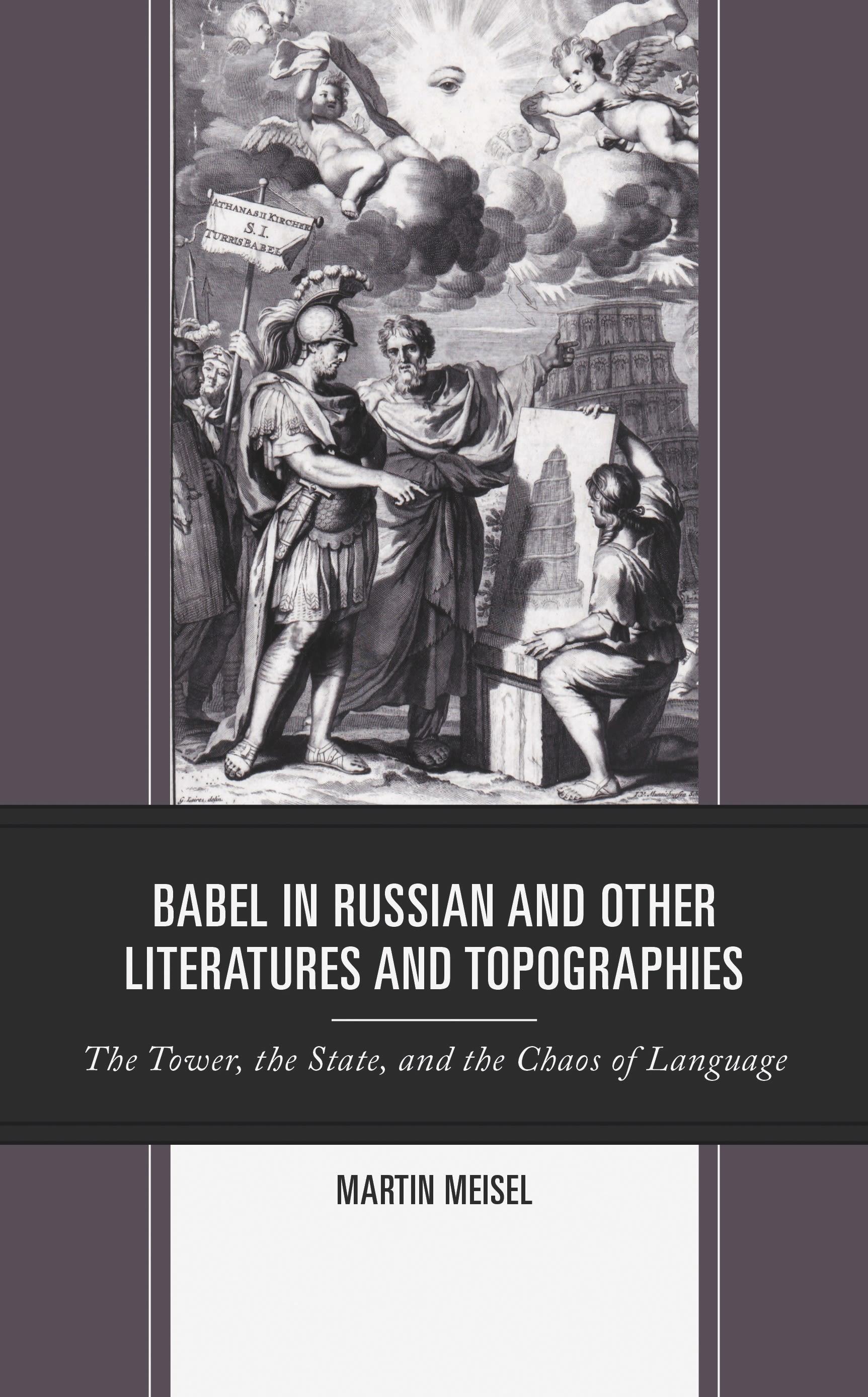
This study analyzes the biblical Tower of Babel story, a cautionary tale that accounts for the diversity of languages and peoples, in Russian literature and other topographies. The author pursues its linking of language, architecture, and society as well as its relevance in art and literature over centuries. To come to terms with a perceived disorder in the realm of language, alternative explanations and projects for remediation abound. The disorder and diversity themselves find expression in art, literature, and philosophical reflection and caused the emergence of a historical linguistics. The ambition of the builders—with its social and organizational premise—reemerges in both political and material form as cities, states, and monumental constructions. Utopian aspirations and linguistic claims permeate both revolutionary notions of universality and the romantic essentialism of the nation state. These in turn provoke dystopian critique in literature and film. As Martin Meisel reveals in this study, the wrestle with language in its recalcitrant instability and imperfect social function enters into dialogue with the celebration of its diversity, elasticity, and creativity.
Paga facilmente con carta, Klarna, Apple Pay o Google Pay. Non sei soddisfatto? Hai sempre 14 giorni per il rimborso. Leggi di più nei nostri termini. Per qualsiasi domanda, scrivici a hello@memmo.org.
Memmo rende lo studio più facile, ovunque tu sia nel mondo. Qui trovi i tuoi libri di testo e strumenti di studio intelligenti, tutto in un unico posto: riassunti, quiz, podcast e flashcard. E poi c'è Ted, il tuo compagno di studio che risponde a ogni tua domanda. Oltre 50.000 studenti studiano già qui: è stato creato per aiutarti a imparare più velocemente e a stressarti meno.