
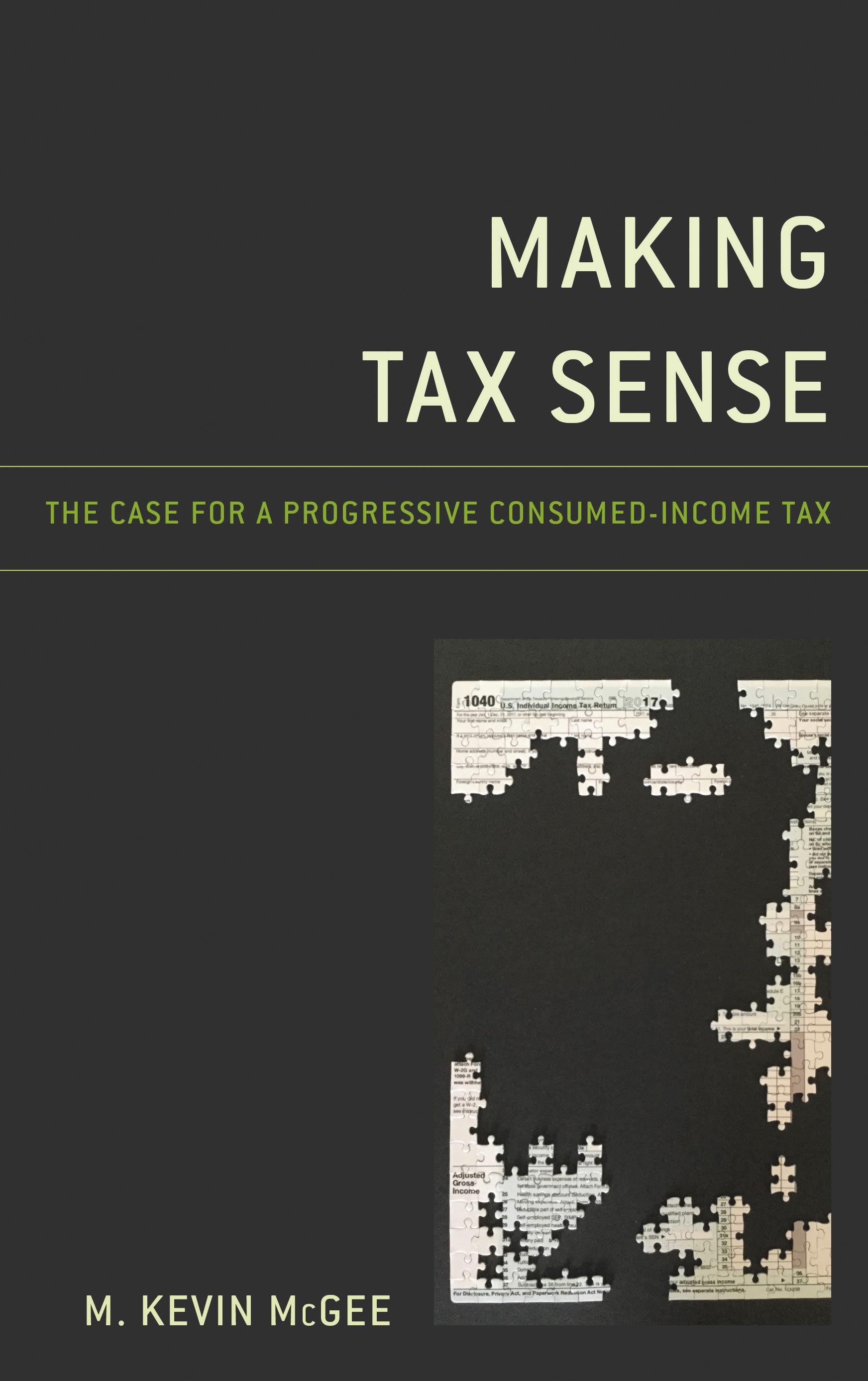
Our tax system is a mess. And the reason for that mess is, our tax system is incoherent. A well-designed tax system is like a good jigsaw puzzle: all the pieces fit together snugly, so when the whole thing is fully assembled, it forms a coherent picture. But our current tax system is disjointed, with parts that don't logically fit together. That results in inconsistencies, complexity, loopholes, and distorted incentives.
We need a tax system that make sense. As this book shows however, making a traditional income tax coherent is an impossible goal. But coherence is achievable if we adjust our target, and complete the switch to a consumed-income tax -- a system that taxes all income, not when it is earned, but when that income is consumed. The move towards a consumed-income tax was begun decades ago, when we first adopted IRAs and other tax-deferred savings accounts. We just needed to complete the evolution.
The book explores a variety of tax issues -- among them savings, small businesses, owner-occupied houses, and corporations -- and develops seven groups of recommended changes. These changes would result in a tax system that would be pro-growth, by eliminating the existing disincentives to saving and investment. But the tax system would also remain progressive, with the wealthy taxed as much as and perhaps even more than currently. That combination could make the recommended changes attractive to members of both parties, and might bring to a close the political seesaw in tax policy that we've experienced over that last several decades.
We need a tax system that make sense. As this book shows however, making a traditional income tax coherent is an impossible goal. But coherence is achievable if we adjust our target, and complete the switch to a consumed-income tax -- a system that taxes all income, not when it is earned, but when that income is consumed. The move towards a consumed-income tax was begun decades ago, when we first adopted IRAs and other tax-deferred savings accounts. We just needed to complete the evolution.
The book explores a variety of tax issues -- among them savings, small businesses, owner-occupied houses, and corporations -- and develops seven groups of recommended changes. These changes would result in a tax system that would be pro-growth, by eliminating the existing disincentives to saving and investment. But the tax system would also remain progressive, with the wealthy taxed as much as and perhaps even more than currently. That combination could make the recommended changes attractive to members of both parties, and might bring to a close the political seesaw in tax policy that we've experienced over that last several decades.
Pagine: 174
Categoria: Ekonomi & Utveckling
e-ISBN: 9781498587181
Peso di spedizione: 1.2 kg
Spedito in: 1-2 giorni
Paga facilmente con carta, Klarna, Apple Pay o Google Pay. Non sei soddisfatto? Hai sempre 14 giorni per il rimborso. Leggi di più nei nostri termini. Per qualsiasi domanda, scrivici a hello@memmo.org.
Memmo rende lo studio più facile, ovunque tu sia nel mondo. Qui trovi i tuoi libri di testo e strumenti di studio intelligenti, tutto in un unico posto: riassunti, quiz, podcast e flashcard. E poi c'è Ted, il tuo compagno di studio che risponde a ogni tua domanda. Oltre 50.000 studenti studiano già qui: è stato creato per aiutarti a imparare più velocemente e a stressarti meno.