
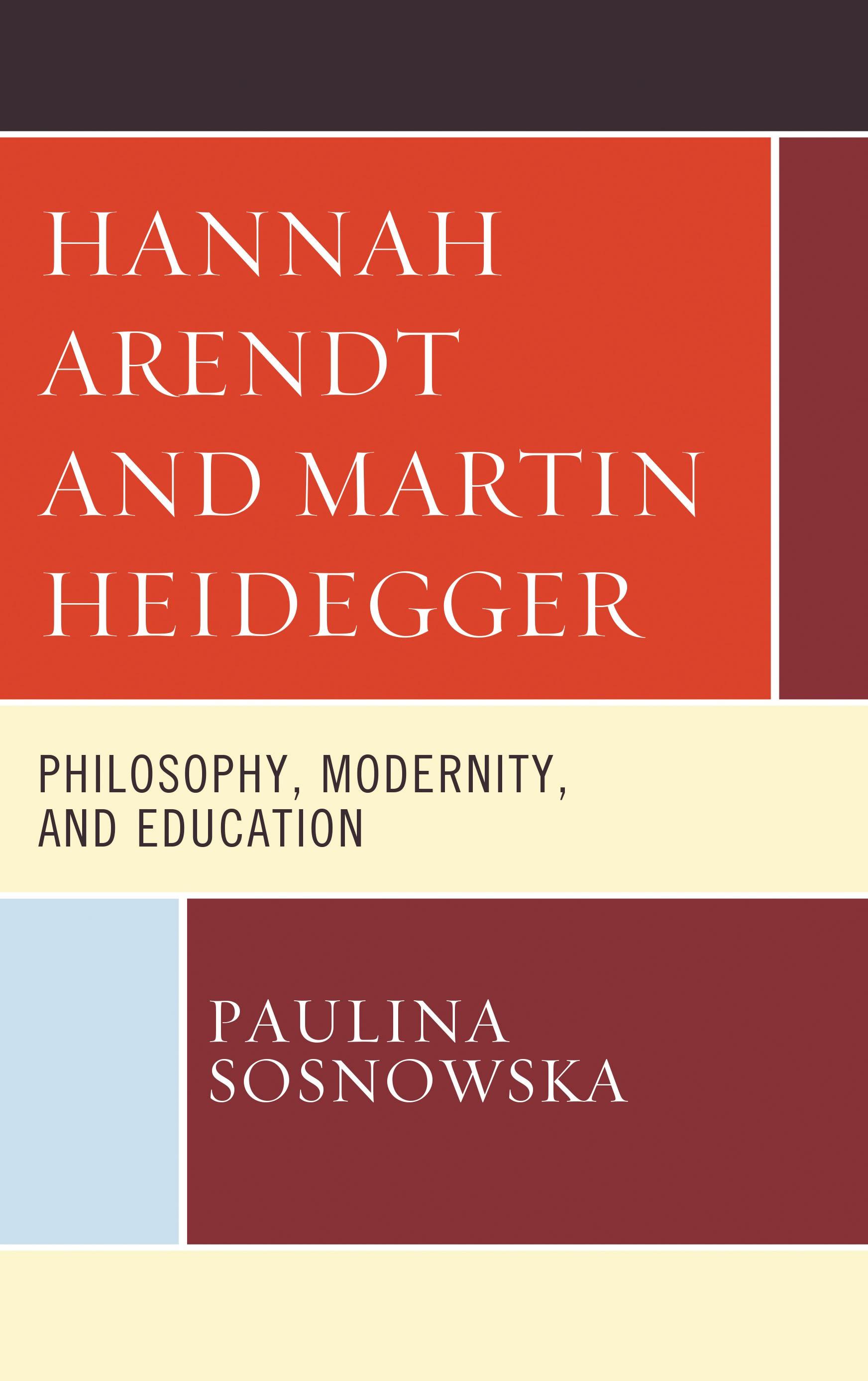
The tragedy of totalitarianism, one of the most important turns in the modern philosophy and history of the West undergirds the intellectual relationship between Martin Heidegger and Hannah Arendt. The rise of totalitarianism caused the disruption of traditional metaphysical and political categories and the necessity of a painstaking forging of new languages for the description of reality.
This book argues that Arendt’s answer to Heidegger’s philosophy, intelligible only within the wider context of both thinkers’ struggles with the philosophical tradition of the West, also opens up a new horizon of conceptualizing the relationship between philosophy and education. Paulina Sosnowska develops Arendt's thesis of the broken thread of tradition and situates it in the wider context of Heideggerian philosophy and his entanglement with Nazism, and consequently, questions the traditional relationship between philosophy and education. The final parts of this book return to the problem of dialogue between philosophy, thinking, and university education in times when the political and ethical framework is no longer determined by the continuity of tradition, but the caesura of twentieth-century totalitarianism.
This book argues that Arendt’s answer to Heidegger’s philosophy, intelligible only within the wider context of both thinkers’ struggles with the philosophical tradition of the West, also opens up a new horizon of conceptualizing the relationship between philosophy and education. Paulina Sosnowska develops Arendt's thesis of the broken thread of tradition and situates it in the wider context of Heideggerian philosophy and his entanglement with Nazism, and consequently, questions the traditional relationship between philosophy and education. The final parts of this book return to the problem of dialogue between philosophy, thinking, and university education in times when the political and ethical framework is no longer determined by the continuity of tradition, but the caesura of twentieth-century totalitarianism.
Paga facilmente con carta, Klarna, Apple Pay o Google Pay. Non sei soddisfatto? Hai sempre 14 giorni per il rimborso. Leggi di più nei nostri termini. Per qualsiasi domanda, scrivici a hello@memmo.org.
Memmo rende lo studio più facile, ovunque tu sia nel mondo. Qui trovi i tuoi libri di testo e strumenti di studio intelligenti, tutto in un unico posto: riassunti, quiz, podcast e flashcard. E poi c'è Ted, il tuo compagno di studio che risponde a ogni tua domanda. Oltre 50.000 studenti studiano già qui: è stato creato per aiutarti a imparare più velocemente e a stressarti meno.