
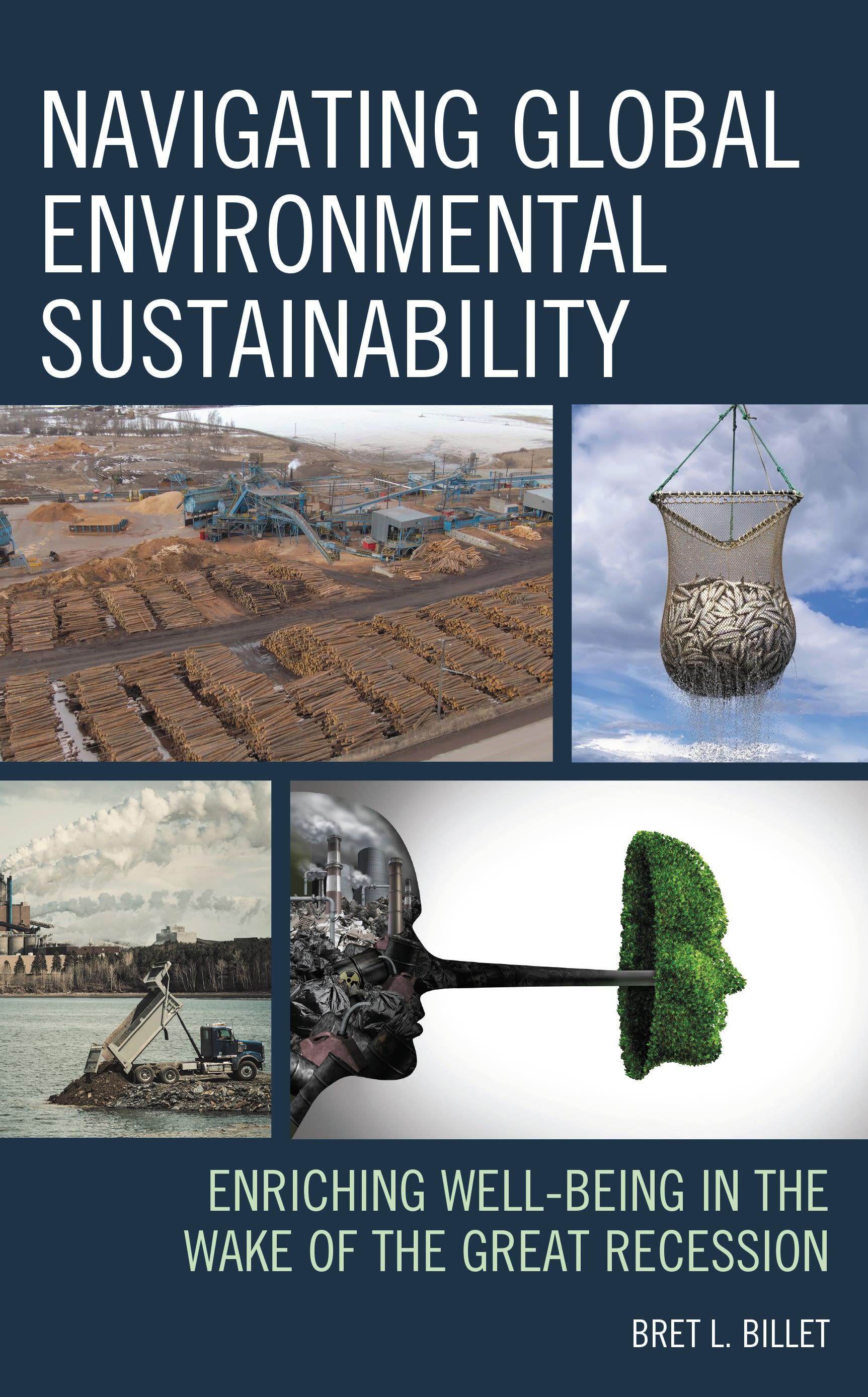
The Great Recession provided an opportunity to reconsider how to simultaneously enhance the well-being of individuals, corporations, countries, and the global environment. A half-century of vital environmental data demands examining several questions pertaining to the impact of a recession on sustainable environmental consumption. Does a recession provide an occasion for productive dialogue that might reconcile the ostensible incompatibility of economic and ecological rationales? Does it constitute an artificial “turning point” whereby appropriate incentives may induce productive change? Are post-recession environmental consumption patterns indicative of government encouragement, and corporate willingness, to pursue transformative environmental technologies? Alternatively, are the patterns illustrative of countries transferring their environmental consumption to other countries via international trade?
Bret L. Billet argues that the simultaneous investigation of both the Ecological Modernization theory and the Ecological Unequal Exchange theory strengthens the present quantitative analysis, enhancing understanding of the recession, well-being, sustainable environment nexus. Each ecological theory is rooted in the politicized evolution of traditional theories of economic development. The introduction of an Aristotelean conception of development as well-being, an exceptionally large number of cases, and the analysis of multiple country subsets, results in a more robust inquiry as to the impact of the Great Recession on the global sustainable environment.
Bret L. Billet argues that the simultaneous investigation of both the Ecological Modernization theory and the Ecological Unequal Exchange theory strengthens the present quantitative analysis, enhancing understanding of the recession, well-being, sustainable environment nexus. Each ecological theory is rooted in the politicized evolution of traditional theories of economic development. The introduction of an Aristotelean conception of development as well-being, an exceptionally large number of cases, and the analysis of multiple country subsets, results in a more robust inquiry as to the impact of the Great Recession on the global sustainable environment.
Pagine: 276
Categoria: Miljövetenskap & Klimat
e-ISBN: 9781498579582
Peso di spedizione: 1.2 kg
Spedito in: 1-2 giorni
Paga facilmente con carta, Klarna, Apple Pay o Google Pay. Non sei soddisfatto? Hai sempre 14 giorni per il rimborso. Leggi di più nei nostri termini. Per qualsiasi domanda, scrivici a hello@memmo.org.
Memmo rende lo studio più facile, ovunque tu sia nel mondo. Qui trovi i tuoi libri di testo e strumenti di studio intelligenti, tutto in un unico posto: riassunti, quiz, podcast e flashcard. E poi c'è Ted, il tuo compagno di studio che risponde a ogni tua domanda. Oltre 50.000 studenti studiano già qui: è stato creato per aiutarti a imparare più velocemente e a stressarti meno.