
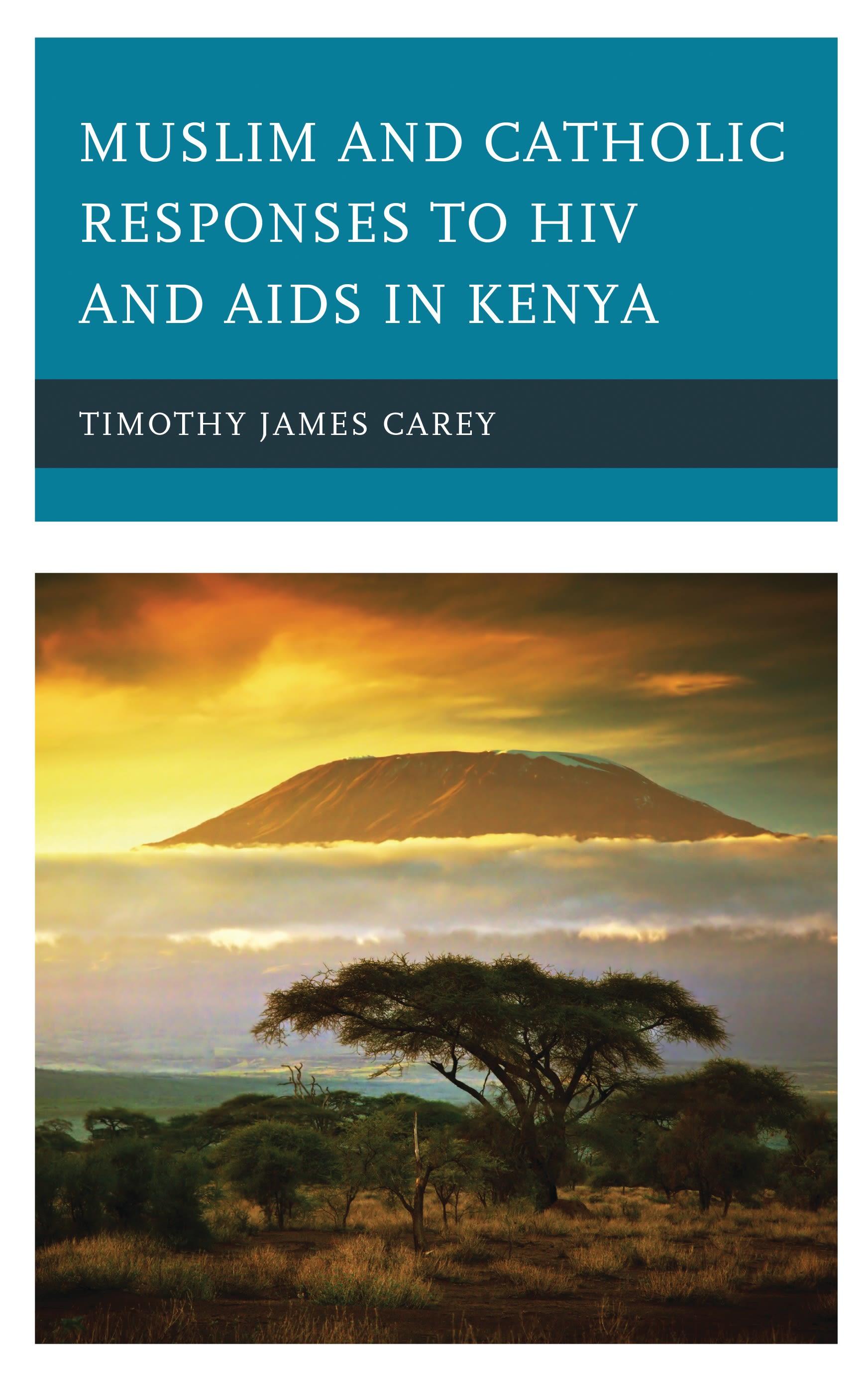
In the capital city of Nairobi, Kenya, African Catholic and Sunni Muslim leaders addressing HIV and AIDS are faced with a unique challenge. On the one hand, they are called to attend to the spiritual wellbeing of the infected individual; on the other hand, they are increasingly charged with serving as the stewards of the physical bodies of those negatively affected by such a physiologically debilitating and social stigmatized disease through certain identifiable interreligious traditions common to both faiths.
This book explores this development firsthand. While conducting fieldwork in Nairobi, Carey interviewed Muslim and Catholic leaders working in three areas—HIV and AIDS prevention, education, and destigmatization. These recorded observations and accounts help to illustrate that religious officials from within African Catholicism and Sunni Islam are attempting to provide the common inter-religious traditions of mercy, hospitality, and justice in a holistic manner for those living with the virus in the city.
The research that produced this book involved six weeks of fieldwork during the summer of 2014 to help fill in the interstices between anthropological, sociological, and ethnographic accounts provided by other leading academics in their respective fields. It presumed that religious traditions in Kenya exhibit a susceptibility to culture and context and a practical openness to its social environment which then affords this particular work a unique theological perspective in its attempt to identify and analyze patterns of social behavior and religious organization.
This book explores this development firsthand. While conducting fieldwork in Nairobi, Carey interviewed Muslim and Catholic leaders working in three areas—HIV and AIDS prevention, education, and destigmatization. These recorded observations and accounts help to illustrate that religious officials from within African Catholicism and Sunni Islam are attempting to provide the common inter-religious traditions of mercy, hospitality, and justice in a holistic manner for those living with the virus in the city.
The research that produced this book involved six weeks of fieldwork during the summer of 2014 to help fill in the interstices between anthropological, sociological, and ethnographic accounts provided by other leading academics in their respective fields. It presumed that religious traditions in Kenya exhibit a susceptibility to culture and context and a practical openness to its social environment which then affords this particular work a unique theological perspective in its attempt to identify and analyze patterns of social behavior and religious organization.
Pagine: 228
Categoria: Religion & Teologi
e-ISBN: 9781498578295
Peso di spedizione: 1.2 kg
Spedito in: 1-2 giorni
Paga facilmente con carta, Klarna, Apple Pay o Google Pay. Non sei soddisfatto? Hai sempre 14 giorni per il rimborso. Leggi di più nei nostri termini. Per qualsiasi domanda, scrivici a hello@memmo.org.
Memmo rende lo studio più facile, ovunque tu sia nel mondo. Qui trovi i tuoi libri di testo e strumenti di studio intelligenti, tutto in un unico posto: riassunti, quiz, podcast e flashcard. E poi c'è Ted, il tuo compagno di studio che risponde a ogni tua domanda. Oltre 50.000 studenti studiano già qui: è stato creato per aiutarti a imparare più velocemente e a stressarti meno.