
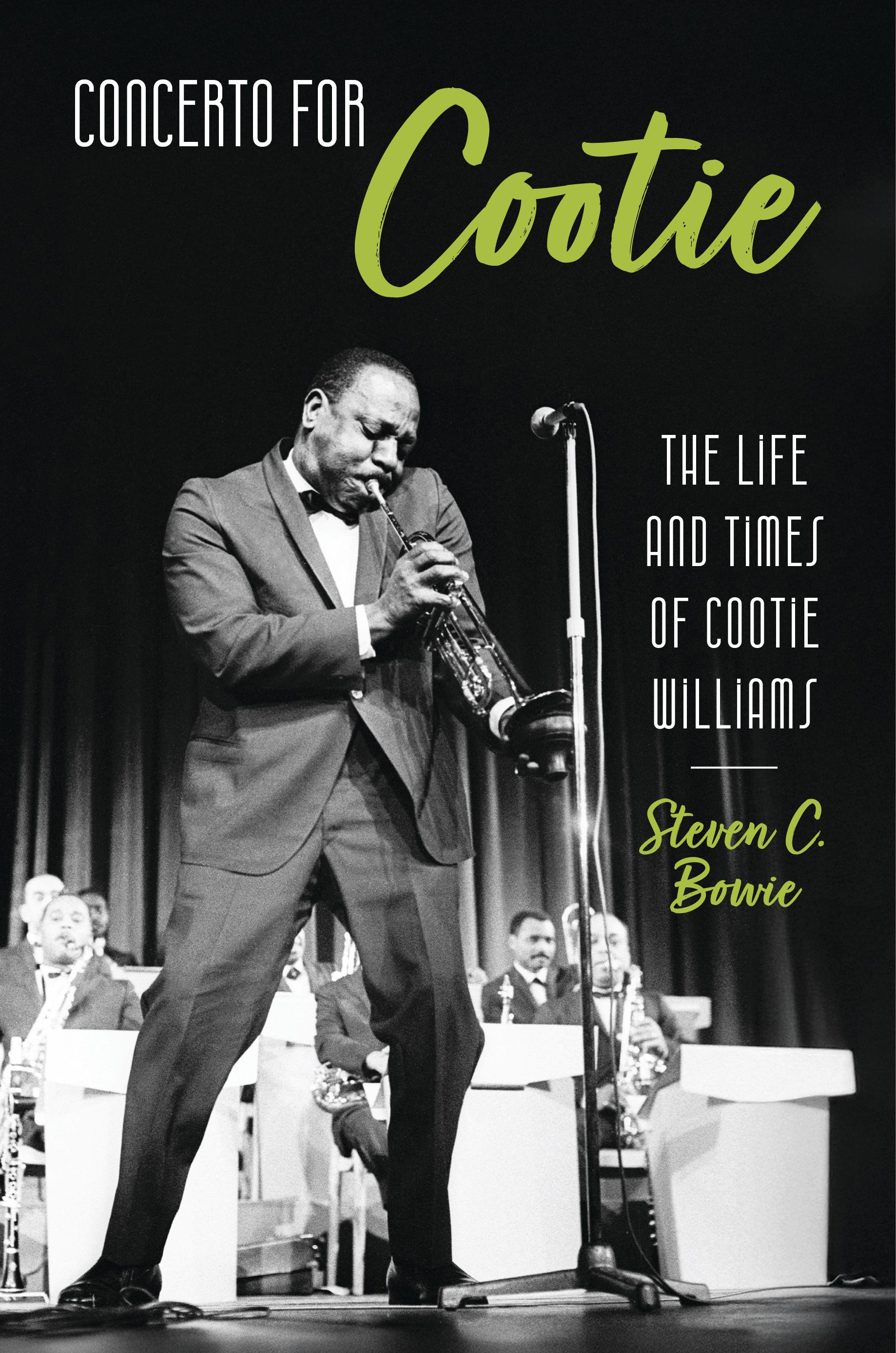
Finalist for the 2026 Jazz Book of the Year in Biography or Autobiography from the Jazz Journalists Association
Jazz legend Cootie Williams left home to start his career as a professional musician at the age of fifteen. In 1940, after eleven years as one of the major soloists with the Duke Ellington orchestra, Williams was lured away to the band of Benny Goodman, one of the most popular bands in the country. At the time, it was a controversial move—it was still taboo for African Americans to share the bandstand with white people. Current references reduce it to a song written by Raymond Scott, "When Cootie Left the Duke." In reality, it was a seismic event. The Black press predicted Black bands would collapse from raids on their ranks. White musicians were afraid they would be put out of work. And the white press stirred up visions of Black musicians mixing with white women in the new landscape of integrated orchestras.
The twenty years trumpeter Williams spent as a band leader (1942-1962) have been covered in only the barest of details. His involvement in politics and the civil rights movement have not been detailed before. An astute talent scout, Williams and his band launched the careers of Eddie “Cleanhead” Vinson, Earl “Bud” Powell, Eddie “Lockjaw” Davis, and Pearl Bailey. He also was the first to record the music of a young Thelonious Monk, using two of Monk's compositions (“Epistrophy” and “‘Round Midnight”) as theme songs for his band.
Steven C. Bowie respectfully tells Williams’s story, from his Alabama ancestry onward, including many new details rediscovered from the historical archives of the African American press and those gleaned from the author’s interviews with his friends and colleagues.
Jazz legend Cootie Williams left home to start his career as a professional musician at the age of fifteen. In 1940, after eleven years as one of the major soloists with the Duke Ellington orchestra, Williams was lured away to the band of Benny Goodman, one of the most popular bands in the country. At the time, it was a controversial move—it was still taboo for African Americans to share the bandstand with white people. Current references reduce it to a song written by Raymond Scott, "When Cootie Left the Duke." In reality, it was a seismic event. The Black press predicted Black bands would collapse from raids on their ranks. White musicians were afraid they would be put out of work. And the white press stirred up visions of Black musicians mixing with white women in the new landscape of integrated orchestras.
The twenty years trumpeter Williams spent as a band leader (1942-1962) have been covered in only the barest of details. His involvement in politics and the civil rights movement have not been detailed before. An astute talent scout, Williams and his band launched the careers of Eddie “Cleanhead” Vinson, Earl “Bud” Powell, Eddie “Lockjaw” Davis, and Pearl Bailey. He also was the first to record the music of a young Thelonious Monk, using two of Monk's compositions (“Epistrophy” and “‘Round Midnight”) as theme songs for his band.
Steven C. Bowie respectfully tells Williams’s story, from his Alabama ancestry onward, including many new details rediscovered from the historical archives of the African American press and those gleaned from the author’s interviews with his friends and colleagues.
Pagine: 456
Categoria: Musikvetenskap
e-ISBN: 9781496859457
Peso di spedizione: 1.2 kg
Spedito in: 1-2 giorni
Paga facilmente con carta, Klarna, Apple Pay o Google Pay. Non sei soddisfatto? Hai sempre 14 giorni per il rimborso. Leggi di più nei nostri termini. Per qualsiasi domanda, scrivici a hello@memmo.org.
Memmo rende lo studio più facile, ovunque tu sia nel mondo. Qui trovi i tuoi libri di testo e strumenti di studio intelligenti, tutto in un unico posto: riassunti, quiz, podcast e flashcard. E poi c'è Ted, il tuo compagno di studio che risponde a ogni tua domanda. Oltre 50.000 studenti studiano già qui: è stato creato per aiutarti a imparare più velocemente e a stressarti meno.
Potrebbe interessarti anche
Acquista il libro0