
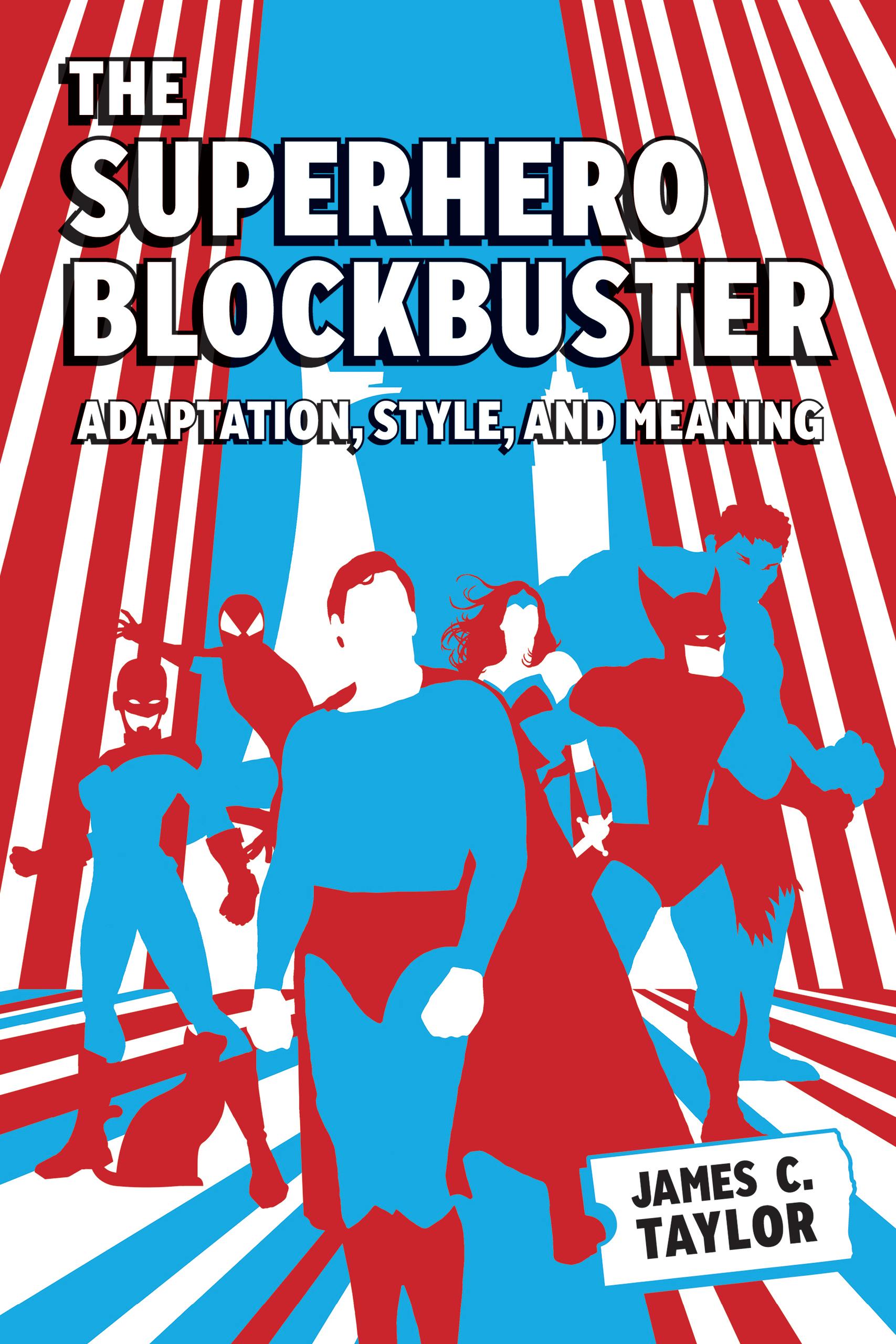
The Superhero Blockbuster: Adaptation, Style, and Meaning builds an innovative framework for analyzing one of the most prominent genres in twenty-first-century Hollywood. In combining theories of adaptation with close textual analysis, James C. Taylor provides a set of analytical tools with which to undertake nuanced exploration of superhero blockbusters’ meanings. This deep understanding of the films attends to historical, sociopolitical, and industrial contexts and also illuminates key ways in which the superhero genre has contributed to the development of the Hollywood blockbuster.
Each chapter focuses on a different superhero or superhero team, covering some of the most popular superhero blockbusters based on DC and Marvel superheroes. The chapters cover different aspects of the films’ adaptive practices, exploring the adaptation of stylistic strategies, narrative models, and modes of seriality from superhero comic books, while being attentive to the ways in which the films engage with the wider networks of texts in various media that comprise a given superhero franchise. Chapter 1 looks back to the first superhero blockbuster, 1978’s Superman: The Movie, examining its cinematic re-envisioning of the quintessential superhero and role in establishing Hollywood’s emerging model of blockbuster filmmaking. Subsequent chapters analyze the twenty-first-century boom in superhero blockbusters and examine digital imaging and nostalgia in Spider-Man films, Marvel Studios’ adaptation of a shared universe model of seriality in the Marvel Cinematic Universe, and the use of alternate timeline narratives in X-Men films. The book concludes by turning its analytical toolkit to analysis of DC Studios’ cinematic universe, the DC Extended Universe.
Each chapter focuses on a different superhero or superhero team, covering some of the most popular superhero blockbusters based on DC and Marvel superheroes. The chapters cover different aspects of the films’ adaptive practices, exploring the adaptation of stylistic strategies, narrative models, and modes of seriality from superhero comic books, while being attentive to the ways in which the films engage with the wider networks of texts in various media that comprise a given superhero franchise. Chapter 1 looks back to the first superhero blockbuster, 1978’s Superman: The Movie, examining its cinematic re-envisioning of the quintessential superhero and role in establishing Hollywood’s emerging model of blockbuster filmmaking. Subsequent chapters analyze the twenty-first-century boom in superhero blockbusters and examine digital imaging and nostalgia in Spider-Man films, Marvel Studios’ adaptation of a shared universe model of seriality in the Marvel Cinematic Universe, and the use of alternate timeline narratives in X-Men films. The book concludes by turning its analytical toolkit to analysis of DC Studios’ cinematic universe, the DC Extended Universe.
Paga facilmente con carta, Klarna, Apple Pay o Google Pay. Non sei soddisfatto? Hai sempre 14 giorni per il rimborso. Leggi di più nei nostri termini. Per qualsiasi domanda, scrivici a hello@memmo.org.
Memmo rende lo studio più facile, ovunque tu sia nel mondo. Qui trovi i tuoi libri di testo e strumenti di studio intelligenti, tutto in un unico posto: riassunti, quiz, podcast e flashcard. E poi c'è Ted, il tuo compagno di studio che risponde a ogni tua domanda. Oltre 50.000 studenti studiano già qui: è stato creato per aiutarti a imparare più velocemente e a stressarti meno.
Potrebbe interessarti anche
Acquista il libro0