
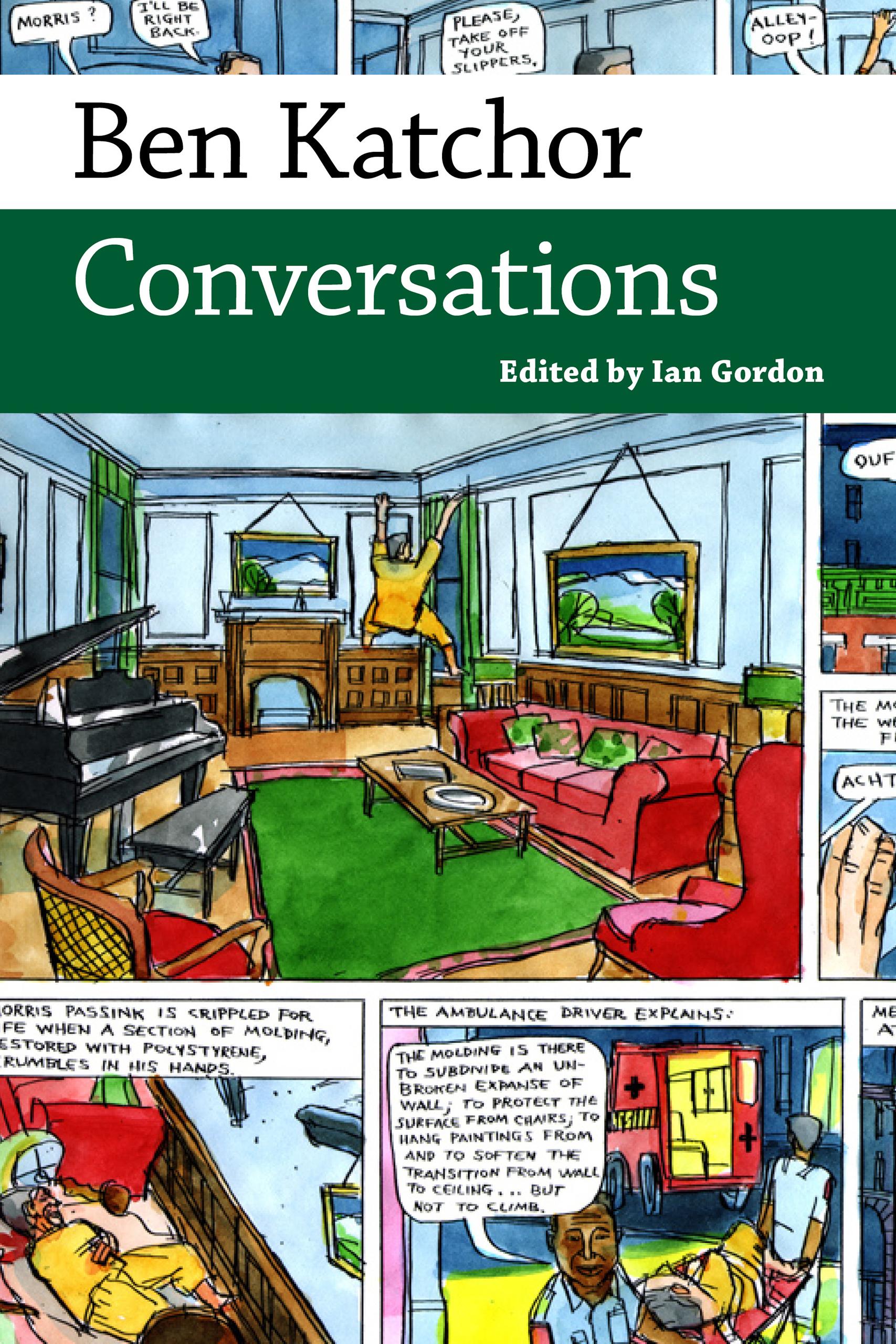
Author Michael Chabon described Ben Katchor (b. 1951) as “the creator of the last great American comic strip.” Katchor’s comic strip Julius Knipl, Real Estate Photographer, which began in 1988, brought him to the attention of the readers of alternative weekly newspapers along with a coterie of artists who have gone on to public acclaim. In the mid-1990s, NPR ran audio versions of several Julius Knipl stories, narrated by Katchor and starring Jerry Stiller in the title role.
An early contributor to RAW, Katchor also contributed to Forward, the New Yorker, Slate, and weekly newspapers. He edited and published two issues of Picture Story, which featured his own work, with articles and stories by Peter Blegvad, Jerry Moriarty, and Mark Beyer. In addition to being a dramatist, Katchor has been the subject of profiles in the New Yorker, a recipient of a MacArthur “Genius Grant” and a Guggenheim Fellowship, and a fellow at both the American Academy in Berlin and the New York Public Library.
Katchor’s work is often described as zany or bizarre, and author Douglas Wolk has characterized his work as “one or two notches too far” beyond an absurdist reality. And yet the work resonates with its audience because, as was the case with Knipl’s journey through the wilderness of a decaying city, absurdity was only what was usefully available; absurdity was the reality. Julius Knipl, Real Estate Photographer presaged the themes of Katchor’s work: a concern with the past, an interest in the intersection of Jewish identity and a secular commercial culture, and the limits and possibilities of urban life.
An early contributor to RAW, Katchor also contributed to Forward, the New Yorker, Slate, and weekly newspapers. He edited and published two issues of Picture Story, which featured his own work, with articles and stories by Peter Blegvad, Jerry Moriarty, and Mark Beyer. In addition to being a dramatist, Katchor has been the subject of profiles in the New Yorker, a recipient of a MacArthur “Genius Grant” and a Guggenheim Fellowship, and a fellow at both the American Academy in Berlin and the New York Public Library.
Katchor’s work is often described as zany or bizarre, and author Douglas Wolk has characterized his work as “one or two notches too far” beyond an absurdist reality. And yet the work resonates with its audience because, as was the case with Knipl’s journey through the wilderness of a decaying city, absurdity was only what was usefully available; absurdity was the reality. Julius Knipl, Real Estate Photographer presaged the themes of Katchor’s work: a concern with the past, an interest in the intersection of Jewish identity and a secular commercial culture, and the limits and possibilities of urban life.
Paga facilmente con carta, Klarna, Apple Pay o Google Pay. Non sei soddisfatto? Hai sempre 14 giorni per il rimborso. Leggi di più nei nostri termini. Per qualsiasi domanda, scrivici a hello@memmo.org.
Memmo rende lo studio più facile, ovunque tu sia nel mondo. Qui trovi i tuoi libri di testo e strumenti di studio intelligenti, tutto in un unico posto: riassunti, quiz, podcast e flashcard. E poi c'è Ted, il tuo compagno di studio che risponde a ogni tua domanda. Oltre 50.000 studenti studiano già qui: è stato creato per aiutarti a imparare più velocemente e a stressarti meno.
Potrebbe interessarti anche
Acquista il libro0