
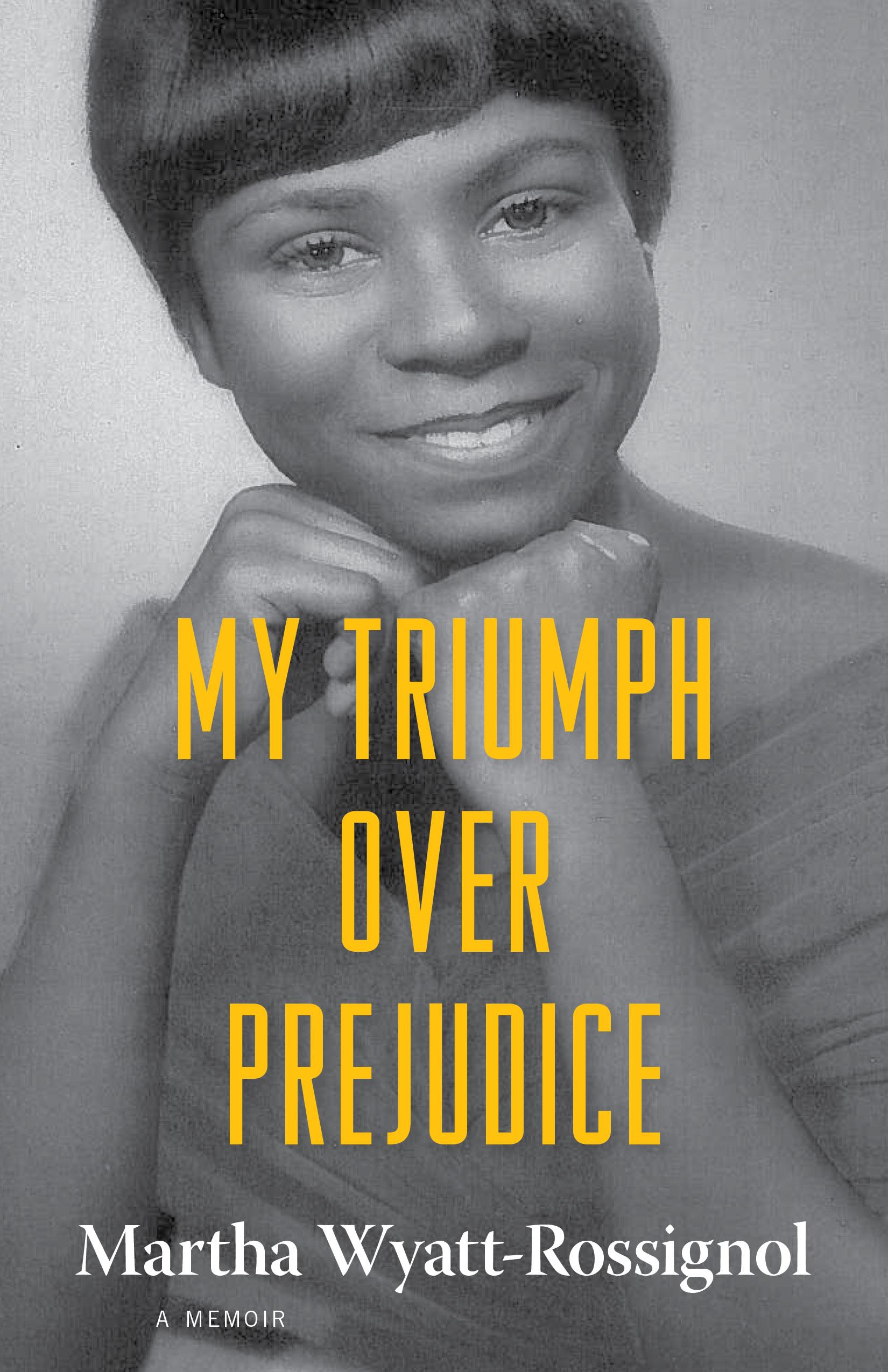
My Triumph over Prejudice is the autobiography of a black girl growing up in Mississippi during the civil rights era. Born in 1949, Martha Wyatt-Rossignol came of age during some of the most crucial and dangerous years of the civil rights movement. She examines those years and what happened when the movement upended her small town of Fayette. She describes the conditions under which blacks lived during segregation and how those oppressive rules changed, despite massive resistance from whites.
Wyatt-Rossignol faced racial hatred when she was chosen for an early school desegregation program. Her failed marriage to an African American led to her dating and later wedding a white man, a civil rights worker from the North, to whom she is still married. That union sparked disapproval from both the white and black communities, revealing entrenched complexities of race and racism in her hometown.
Her story also follows the politics of that volatile era in a local context. Black politicians, helped by national civil rights figures, assumed more power and began improving life for all races in this rural area. Then came a betrayal felt by many blacks as these key figures overreached their authority and started pursuing their own selfish agendas. An intimate, revealing portrait of Charles Evers, the first black mayor of Fayette and brother of Medgar Evers, is included in this section. The memoir goes on to portray how the author learned to hate whites as a result of her experiences and how she later overcame that animosity. Wyatt-Rossignol's story concludes with her move out of Mississippi to the island of Bermuda, where she encountered a very different racial environment.
Wyatt-Rossignol faced racial hatred when she was chosen for an early school desegregation program. Her failed marriage to an African American led to her dating and later wedding a white man, a civil rights worker from the North, to whom she is still married. That union sparked disapproval from both the white and black communities, revealing entrenched complexities of race and racism in her hometown.
Her story also follows the politics of that volatile era in a local context. Black politicians, helped by national civil rights figures, assumed more power and began improving life for all races in this rural area. Then came a betrayal felt by many blacks as these key figures overreached their authority and started pursuing their own selfish agendas. An intimate, revealing portrait of Charles Evers, the first black mayor of Fayette and brother of Medgar Evers, is included in this section. The memoir goes on to portray how the author learned to hate whites as a result of her experiences and how she later overcame that animosity. Wyatt-Rossignol's story concludes with her move out of Mississippi to the island of Bermuda, where she encountered a very different racial environment.
Paga facilmente con carta, Klarna, Apple Pay o Google Pay. Non sei soddisfatto? Hai sempre 14 giorni per il rimborso. Leggi di più nei nostri termini. Per qualsiasi domanda, scrivici a hello@memmo.org.
Memmo rende lo studio più facile, ovunque tu sia nel mondo. Qui trovi i tuoi libri di testo e strumenti di studio intelligenti, tutto in un unico posto: riassunti, quiz, podcast e flashcard. E poi c'è Ted, il tuo compagno di studio che risponde a ogni tua domanda. Oltre 50.000 studenti studiano già qui: è stato creato per aiutarti a imparare più velocemente e a stressarti meno.
Potrebbe interessarti anche
Acquista il libro0