
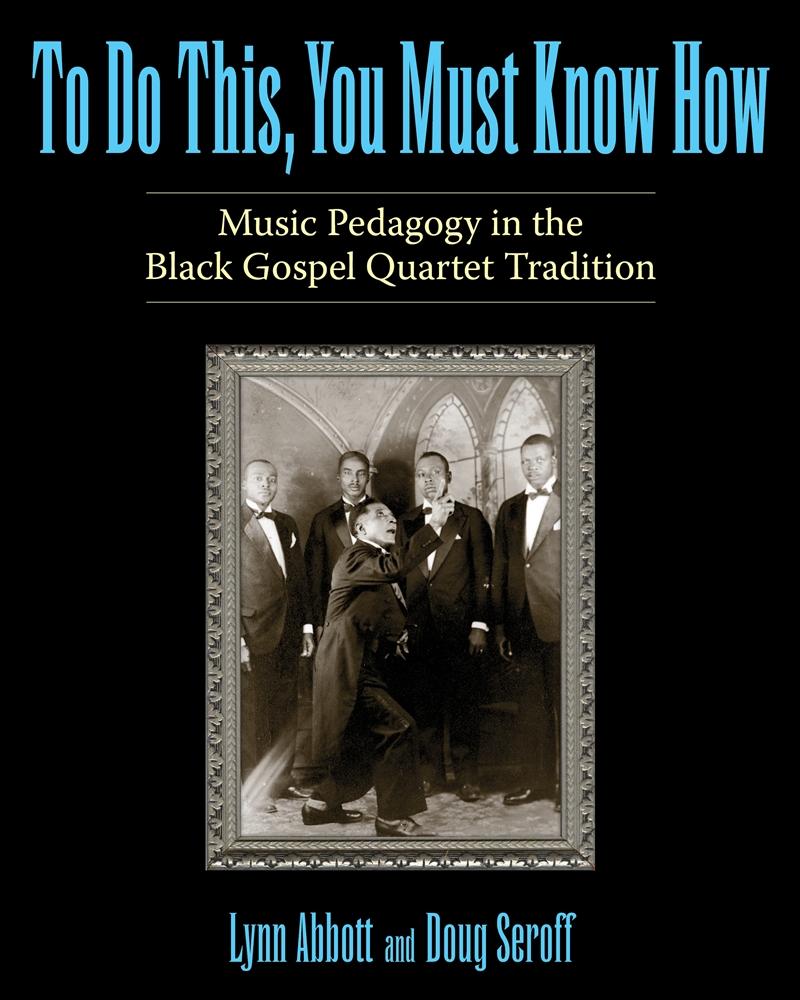
To Do This, You Must Know How traces black vocal music instruction and inspiration from the halls of Fisk University to the mining camps of Birmingham and Bessemer, Alabama, and on to Chicago and New Orleans. In the 1870s, the Original Fisk University Jubilee Singers successfully combined Negro spirituals with formal choral music disciplines and established a permanent bond between spiritual singing and music education. Early in the twentieth century there were countless initiatives in support of black vocal music training conducted on both national and local levels. The surge in black religious quartet singing that occurred in the 1920s owed much to this vocal music education movement.
In Bessemer, Alabama, the effect of school music instruction was magnified by the emergence of community-based quartet trainers who translated the spirit and substance of the music education movement for the inhabitants of working-class neighborhoods. These trainers adapted standard musical precepts, traditional folk practices, and popular music conventions to create something new and vital
Bessemer's musical values directly influenced the early development of gospel quartet singing in Chicago and New Orleans through the authority of emigrant trainers whose efforts bear witness to the effectiveness of “trickle down” black music education. A cappella gospel quartets remained prominent well into the 1950s, but by the end of the century the close harmony aesthetic had fallen out of practice, and the community-based trainers who were its champions had virtually disappeared, foreshadowing the end of this remarkable musical tradition.
In Bessemer, Alabama, the effect of school music instruction was magnified by the emergence of community-based quartet trainers who translated the spirit and substance of the music education movement for the inhabitants of working-class neighborhoods. These trainers adapted standard musical precepts, traditional folk practices, and popular music conventions to create something new and vital
Bessemer's musical values directly influenced the early development of gospel quartet singing in Chicago and New Orleans through the authority of emigrant trainers whose efforts bear witness to the effectiveness of “trickle down” black music education. A cappella gospel quartets remained prominent well into the 1950s, but by the end of the century the close harmony aesthetic had fallen out of practice, and the community-based trainers who were its champions had virtually disappeared, foreshadowing the end of this remarkable musical tradition.
Pagine: 480
Categoria: Musikvetenskap
e-ISBN: 9781496801623
Peso di spedizione: 1.2 kg
Spedito in: 1-2 giorni
Paga facilmente con carta, Klarna, Apple Pay o Google Pay. Non sei soddisfatto? Hai sempre 14 giorni per il rimborso. Leggi di più nei nostri termini. Per qualsiasi domanda, scrivici a hello@memmo.org.
Memmo rende lo studio più facile, ovunque tu sia nel mondo. Qui trovi i tuoi libri di testo e strumenti di studio intelligenti, tutto in un unico posto: riassunti, quiz, podcast e flashcard. E poi c'è Ted, il tuo compagno di studio che risponde a ogni tua domanda. Oltre 50.000 studenti studiano già qui: è stato creato per aiutarti a imparare più velocemente e a stressarti meno.
Potrebbe interessarti anche
Acquista il libro0