
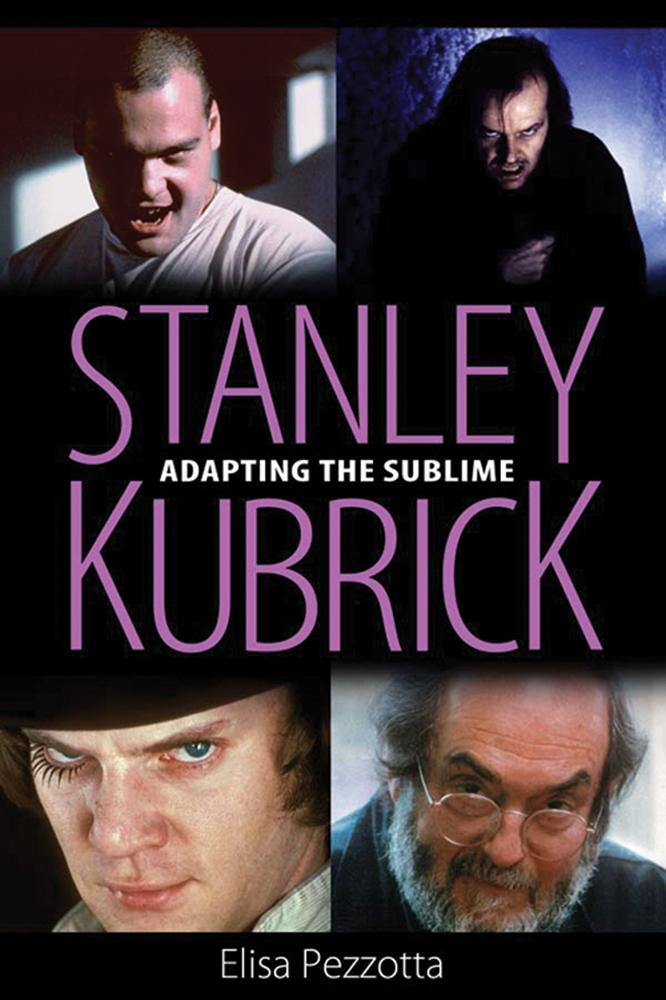
Although Stanley Kubrick adapted novels and short stories, his films deviate in notable ways from the source material. In particular, since 2001: A Space Odyssey (1968), his films seem to definitively exploit all cinematic techniques, embodying a compelling visual and aural experience. But, as author Elisa Pezzotta contends, it is for these reasons that his cinema becomes the supreme embodiment of the sublime, fruitful encounter between the two arts and, simultaneously, of their independence.
Stanley Kubrick's last six adaptations—2001: A Space Odyssey, A Clockwork Orange (1971), Barry Lyndon (1975), The Shining (1980), Full Metal Jacket (1987), and Eyes Wide Shut (1999)—are characterized by certain structural and stylistic patterns. These features help to draw conclusions about the role of Kubrick in the history of cinema, about his role as an adapter, and, more generally, about the art of cinematic adaptations. The structural and stylistic patterns that characterize Kubrick adaptations seem to criticize scientific reasoning, causality, and traditional semantics. In the history of cinema, Kubrick can be considered a modernist auteur. In particular, he can be regarded as an heir of the modernist avant-garde of the 1920s. However, author Elisa Pezzotta concludes that, unlike his predecessors, Kubrick creates a cinema not only centered on the ontology of the medium, but on the staging of sublime, new experiences.
Stanley Kubrick's last six adaptations—2001: A Space Odyssey, A Clockwork Orange (1971), Barry Lyndon (1975), The Shining (1980), Full Metal Jacket (1987), and Eyes Wide Shut (1999)—are characterized by certain structural and stylistic patterns. These features help to draw conclusions about the role of Kubrick in the history of cinema, about his role as an adapter, and, more generally, about the art of cinematic adaptations. The structural and stylistic patterns that characterize Kubrick adaptations seem to criticize scientific reasoning, causality, and traditional semantics. In the history of cinema, Kubrick can be considered a modernist auteur. In particular, he can be regarded as an heir of the modernist avant-garde of the 1920s. However, author Elisa Pezzotta concludes that, unlike his predecessors, Kubrick creates a cinema not only centered on the ontology of the medium, but on the staging of sublime, new experiences.
Pagine: 208
Categoria: Film- & Medievetenskap
e-ISBN: 9781496800763
Peso di spedizione: 1.2 kg
Spedito in: 1-2 giorni
Paga facilmente con carta, Klarna, Apple Pay o Google Pay. Non sei soddisfatto? Hai sempre 14 giorni per il rimborso. Leggi di più nei nostri termini. Per qualsiasi domanda, scrivici a hello@memmo.org.
Memmo rende lo studio più facile, ovunque tu sia nel mondo. Qui trovi i tuoi libri di testo e strumenti di studio intelligenti, tutto in un unico posto: riassunti, quiz, podcast e flashcard. E poi c'è Ted, il tuo compagno di studio che risponde a ogni tua domanda. Oltre 50.000 studenti studiano già qui: è stato creato per aiutarti a imparare più velocemente e a stressarti meno.
Potrebbe interessarti anche
Acquista il libro0