
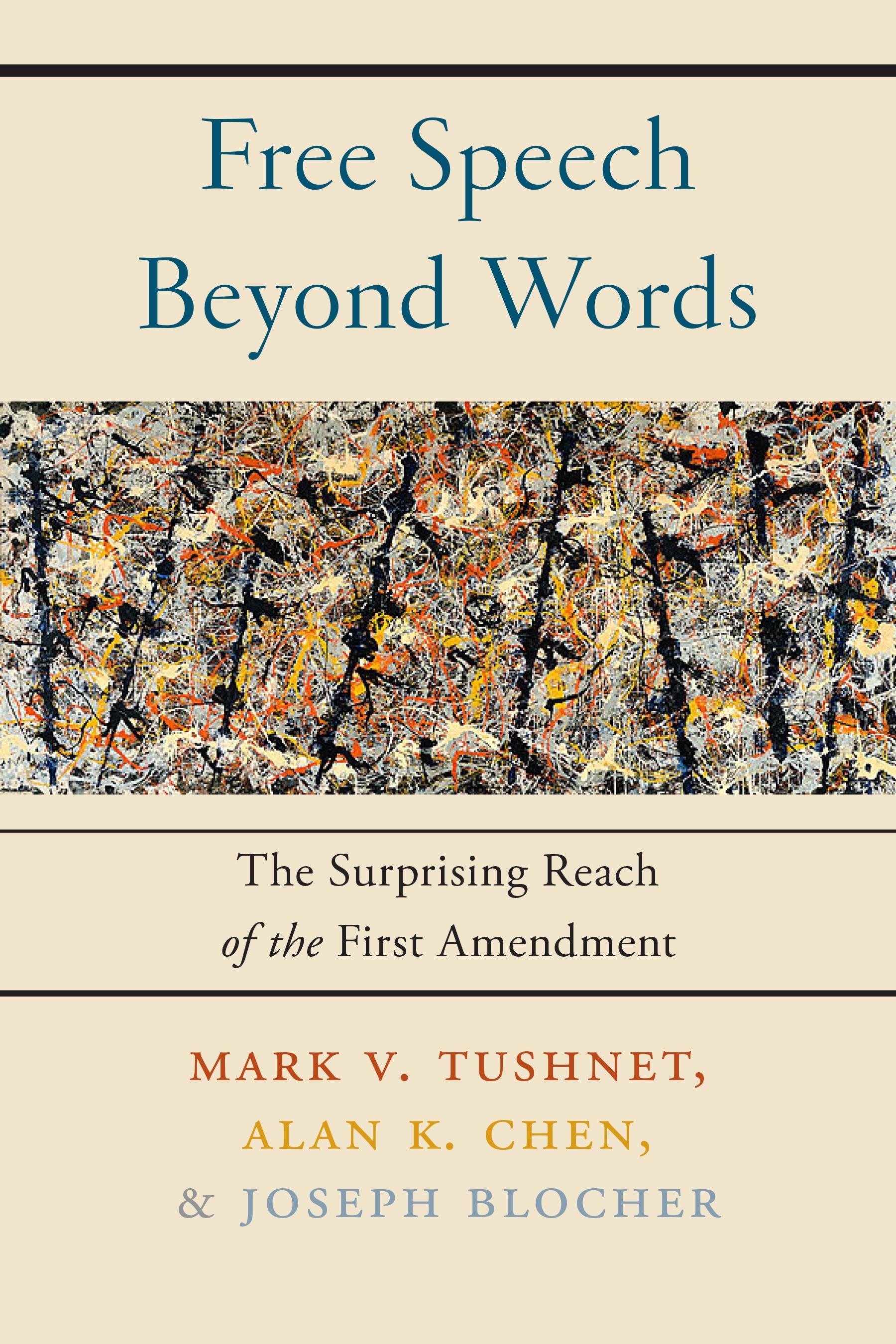
A look at First Amendment coverage of music, non-representational art, and nonsense
The Supreme Court has unanimously held that Jackson Pollock’s paintings, Arnold Schöenberg’s music, and Lewis Carroll’s poem “Jabberwocky” are “unquestionably shielded” by the First Amendment. Nonrepresentational art, instrumental music, and nonsense: all receive constitutional coverage under an amendment protecting “the freedom of speech,” even though none involves what we typically think of as speech—the use of words to convey meaning.
As a legal matter, the Court’s conclusion is clearly correct, but its premises are murky, and they raise difficult questions about the possibilities and limitations of law and expression. Nonrepresentational art, instrumental music, and nonsense do not employ language in any traditional sense, and sometimes do not even involve the transmission of articulable ideas. How, then, can they be treated as “speech” for constitutional purposes? What does the difficulty of that question suggest for First Amendment law and theory? And can law resolve such inquiries without relying on aesthetics, ethics, and philosophy?
Comprehensive and compelling, this book represents a sustained effort to account, constitutionally, for these modes of “speech.” While it is firmly centered in debates about First Amendment issues, it addresses them in a novel way, using subject matter that is uniquely well suited to the task, and whose constitutional salience has been under-explored. Drawing on existing legal doctrine, aesthetics, and analytical philosophy, three celebrated law scholars show us how and why speech beyond words should be fundamental to our understanding of the First Amendment.
Paga facilmente con carta, Klarna, Apple Pay o Google Pay. Non sei soddisfatto? Hai sempre 14 giorni per il rimborso. Leggi di più nei nostri termini. Per qualsiasi domanda, scrivici a hello@memmo.org.
Memmo rende lo studio più facile, ovunque tu sia nel mondo. Qui trovi i tuoi libri di testo e strumenti di studio intelligenti, tutto in un unico posto: riassunti, quiz, podcast e flashcard. E poi c'è Ted, il tuo compagno di studio che risponde a ogni tua domanda. Oltre 50.000 studenti studiano già qui: è stato creato per aiutarti a imparare più velocemente e a stressarti meno.