
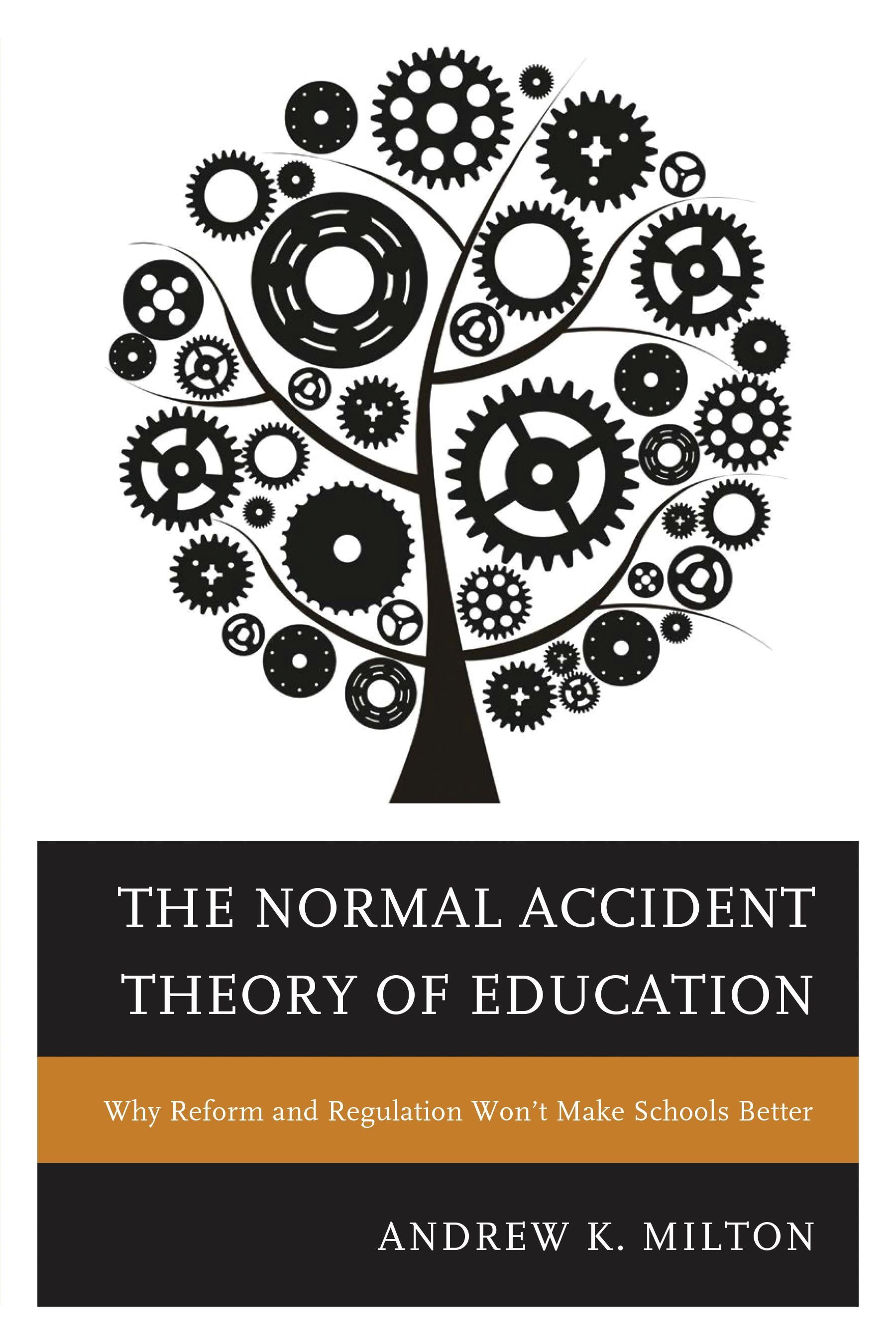
Much of the current debate about education too often resembles the blind men describing an elephant--apprehending only a particular part of the situation or the process, many analysts tell an evocative but incomplete story. The so-called ‘reform’ discussion proceeds with a lack of depth about the nuances and realistic limitations in the institutional order of school.
This book argues that as regulation of schools moves further up the bureaucratic hierarchy (first to state departments of education then to the national department of education) the legal and institutional requirements get more intensive but less concretely useful in class rooms. This bureaucratization serves to ‘tighten’ the organizational environment, thereby increasing the risk of normal accidents. The increasing governmental management, in other words, makes it more likely that schools will ‘fail’ to meet their goals.
Analyses of education are too often developed for public consumption in a fast-moving political world. This book examines some of the deeper organizational reasons why things don’t work so well in school, as well as a look at some of things that do work. Most importantly, the book will explain how the social and cultural expectations of what schools can do may create unrealistic hopes. We, as a society, and schools, as institutions, embrace these unreasonably high hopes at our collective peril.
Check out Andrew's latest interview with Seattle Radio- http://kiroradio.com/listen/9972862/
This book argues that as regulation of schools moves further up the bureaucratic hierarchy (first to state departments of education then to the national department of education) the legal and institutional requirements get more intensive but less concretely useful in class rooms. This bureaucratization serves to ‘tighten’ the organizational environment, thereby increasing the risk of normal accidents. The increasing governmental management, in other words, makes it more likely that schools will ‘fail’ to meet their goals.
Analyses of education are too often developed for public consumption in a fast-moving political world. This book examines some of the deeper organizational reasons why things don’t work so well in school, as well as a look at some of things that do work. Most importantly, the book will explain how the social and cultural expectations of what schools can do may create unrealistic hopes. We, as a society, and schools, as institutions, embrace these unreasonably high hopes at our collective peril.
Check out Andrew's latest interview with Seattle Radio- http://kiroradio.com/listen/9972862/
Paga facilmente con carta, Klarna, Apple Pay o Google Pay. Non sei soddisfatto? Hai sempre 14 giorni per il rimborso. Leggi di più nei nostri termini. Per qualsiasi domanda, scrivici a hello@memmo.org.
Memmo rende lo studio più facile, ovunque tu sia nel mondo. Qui trovi i tuoi libri di testo e strumenti di studio intelligenti, tutto in un unico posto: riassunti, quiz, podcast e flashcard. E poi c'è Ted, il tuo compagno di studio che risponde a ogni tua domanda. Oltre 50.000 studenti studiano già qui: è stato creato per aiutarti a imparare più velocemente e a stressarti meno.