
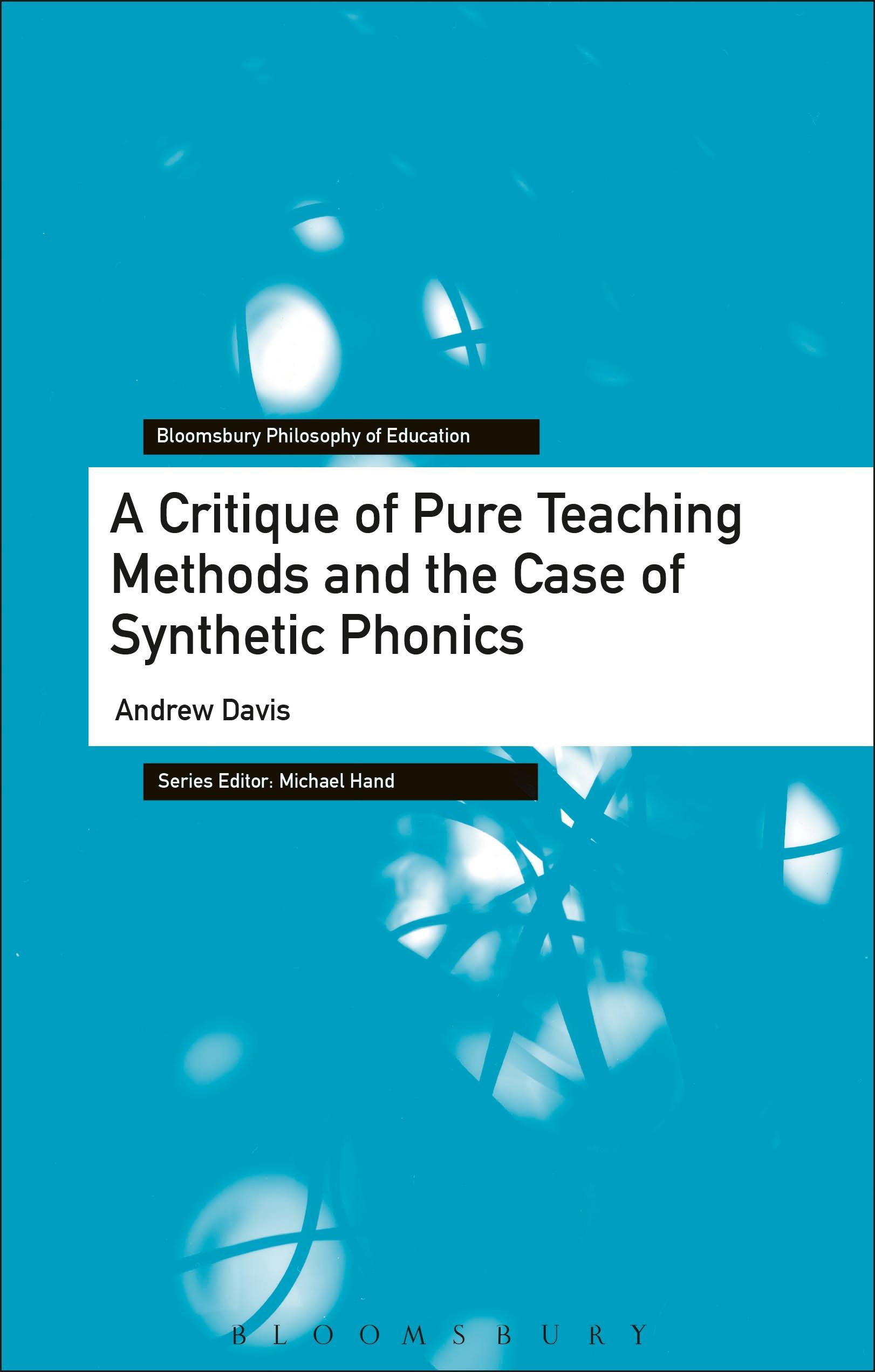
A Critique of Pure Teaching Methods and the Case of Synthetic Phonics examines how research into the effectiveness of teaching methods can and should relate to what takes place in the classroom. The discussion brings to light some important features of the way we classify teaching activities. The classifications are unlike those we use in natural science – for instance, how we classify drug dosages. This point has very important implications for what should be considered the appropriate relationships between educational research and classroom practice.
Andrew Davis applies the results of this discussion to the teaching of early reading, focussing in particular on the approach known as synthetic phonics. He provides a philosophical investigation into the nature of reading, and into the concepts that feature in approaches to teaching it, such as the idea of building words from letter sounds, the nature of words themselves and reading for meaning. He concludes with a discussion of why this matters so much, reflecting on how stories and books can be part of a child's emerging identity within the family. He explores how values of family life should be weighed against the importance of achievements in school, and argues for the claim that school reading policies of certain kinds may have a destructive impact if they are felt to trump the private interests of children and their families.
Andrew Davis applies the results of this discussion to the teaching of early reading, focussing in particular on the approach known as synthetic phonics. He provides a philosophical investigation into the nature of reading, and into the concepts that feature in approaches to teaching it, such as the idea of building words from letter sounds, the nature of words themselves and reading for meaning. He concludes with a discussion of why this matters so much, reflecting on how stories and books can be part of a child's emerging identity within the family. He explores how values of family life should be weighed against the importance of achievements in school, and argues for the claim that school reading policies of certain kinds may have a destructive impact if they are felt to trump the private interests of children and their families.
Paga facilmente con carta, Klarna, Apple Pay o Google Pay. Non sei soddisfatto? Hai sempre 14 giorni per il rimborso. Leggi di più nei nostri termini. Per qualsiasi domanda, scrivici a hello@memmo.org.
Memmo rende lo studio più facile, ovunque tu sia nel mondo. Qui trovi i tuoi libri di testo e strumenti di studio intelligenti, tutto in un unico posto: riassunti, quiz, podcast e flashcard. E poi c'è Ted, il tuo compagno di studio che risponde a ogni tua domanda. Oltre 50.000 studenti studiano già qui: è stato creato per aiutarti a imparare più velocemente e a stressarti meno.