
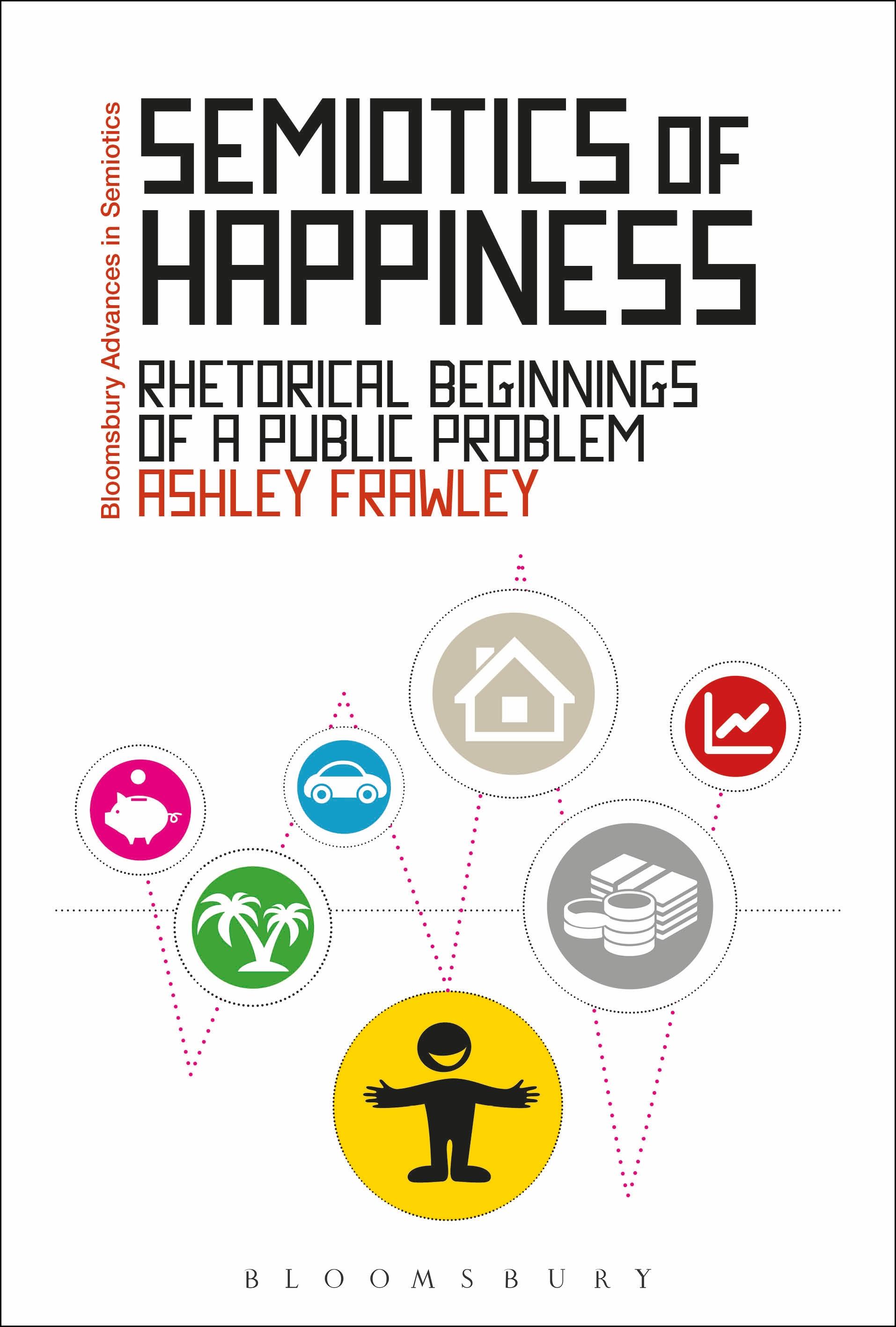
The Semiotics of Happiness examines the rise of 'happiness' (and its various satellite terminologies) as a social and political semiotic, exploring its origins in the US and subsequent spread into the UK and across the globe.
The research takes as its starting point the development of discussions about happiness in UK newspapers in which dedicated advocates began to claim that a new 'science of happiness' had been discovered and argued for social and political change on its behalf. Through an in-depth analysis of the written and visual rhetoric and subsequent activities of these influential 'claims-makers', Frawley argues that happiness became a serious political issue not because of a growing unhappiness in society nor a demand 'on the ground' for new knowledge about it, but rather because influential and dedicated 'insiders' took the issue on at a cultural moment when problems cast in emotional terms were particularly likely to make an impact.
Emerging from the analysis is the observation that, while apparently positive and light-hearted, the concern with happiness implicitly affirms a 'vulnerability' model of human functioning, encourages a morality of low expectations, and in spite of the radical language used to describe it, is ultimately conservative and ideally suited to an era of 'no alternative' (to capitalism).
The research takes as its starting point the development of discussions about happiness in UK newspapers in which dedicated advocates began to claim that a new 'science of happiness' had been discovered and argued for social and political change on its behalf. Through an in-depth analysis of the written and visual rhetoric and subsequent activities of these influential 'claims-makers', Frawley argues that happiness became a serious political issue not because of a growing unhappiness in society nor a demand 'on the ground' for new knowledge about it, but rather because influential and dedicated 'insiders' took the issue on at a cultural moment when problems cast in emotional terms were particularly likely to make an impact.
Emerging from the analysis is the observation that, while apparently positive and light-hearted, the concern with happiness implicitly affirms a 'vulnerability' model of human functioning, encourages a morality of low expectations, and in spite of the radical language used to describe it, is ultimately conservative and ideally suited to an era of 'no alternative' (to capitalism).
Pagine: 240
Categoria: Samhällsvetenskap
e-ISBN: 9781472523303
Peso di spedizione: 1.2 kg
Spedito in: 1-2 giorni
Paga facilmente con carta, Klarna, Apple Pay o Google Pay. Non sei soddisfatto? Hai sempre 14 giorni per il rimborso. Leggi di più nei nostri termini. Per qualsiasi domanda, scrivici a hello@memmo.org.
Memmo rende lo studio più facile, ovunque tu sia nel mondo. Qui trovi i tuoi libri di testo e strumenti di studio intelligenti, tutto in un unico posto: riassunti, quiz, podcast e flashcard. E poi c'è Ted, il tuo compagno di studio che risponde a ogni tua domanda. Oltre 50.000 studenti studiano già qui: è stato creato per aiutarti a imparare più velocemente e a stressarti meno.