
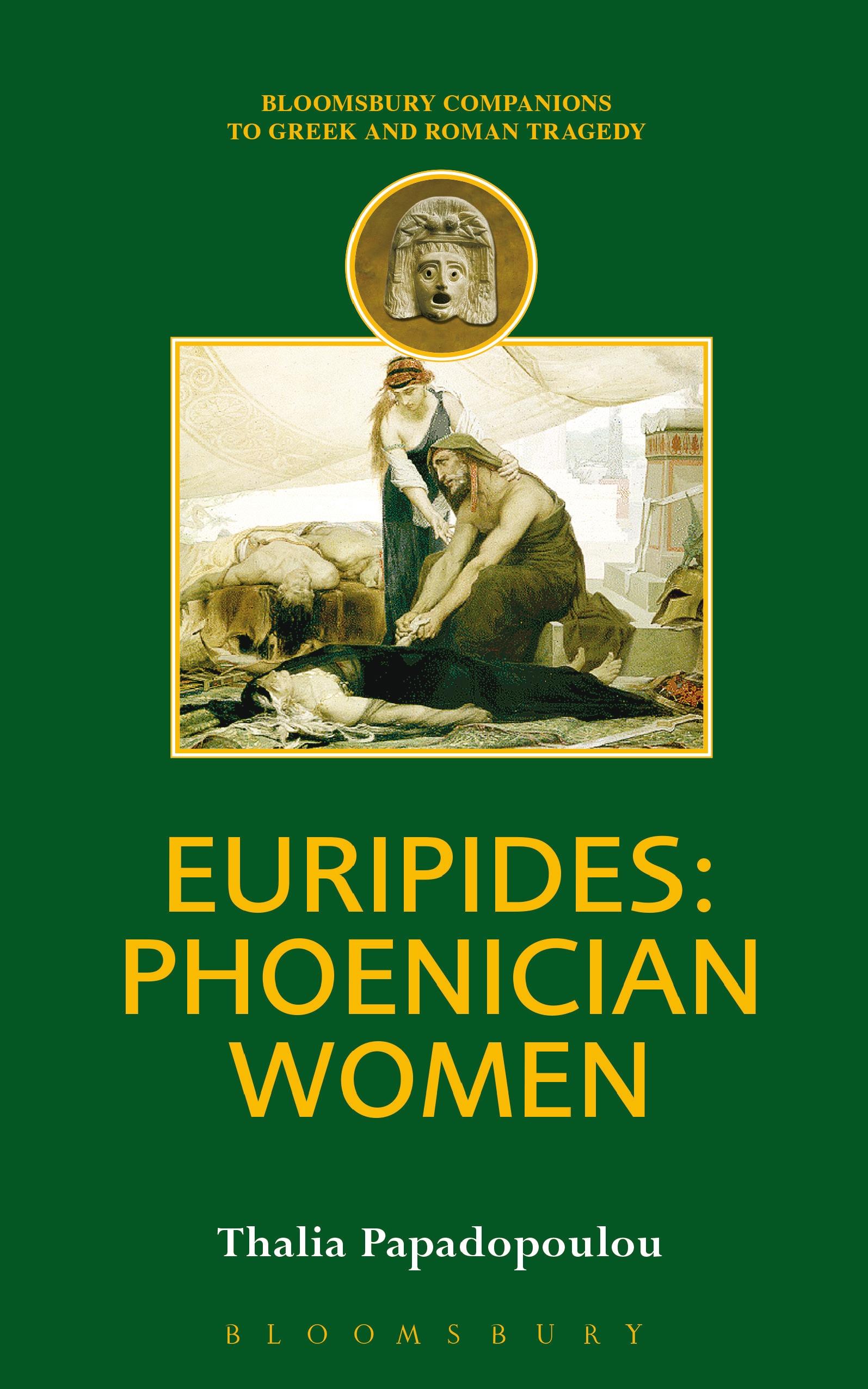
"Phoenician Women", one of Euripides' later tragedies, is an intriguing play that arguably displays some of his finest dramatic technique. Rich in cast and varied in incident, it is an example of Euripides' experimentation with structure. It dramatises the most fertile mythical tradition of the city of Thebes and its doomed royal family, focusing in particular on the conflict between Eteocles and Polyneices as a result of their father Oedipus' curse, which eventually leads to mutual fratricide. The play was very popular throughout antiquity, and became part of the so-called "Byzantine Triad" (along with "Hecuba" and "Orestes"), of plays studied in the school curriculum.Thalia Papadopoulou here offers a thorough survey of the play in its historical context, against the background of Athenian tragedy and Euripidean dramaturgy. Employing various critical approaches, she investigates the literary tradition and the dynamics of intertextuality, Euripidean dramatic technique, the use of rhetoric, characterisation, gender, the function of the Chorus, aspects of performance and the reception of the play from antiquity to modern times.
Paga facilmente con carta, Klarna, Apple Pay o Google Pay. Non sei soddisfatto? Hai sempre 14 giorni per il rimborso. Leggi di più nei nostri termini. Per qualsiasi domanda, scrivici a hello@memmo.org.
Memmo rende lo studio più facile, ovunque tu sia nel mondo. Qui trovi i tuoi libri di testo e strumenti di studio intelligenti, tutto in un unico posto: riassunti, quiz, podcast e flashcard. E poi c'è Ted, il tuo compagno di studio che risponde a ogni tua domanda. Oltre 50.000 studenti studiano già qui: è stato creato per aiutarti a imparare più velocemente e a stressarti meno.