
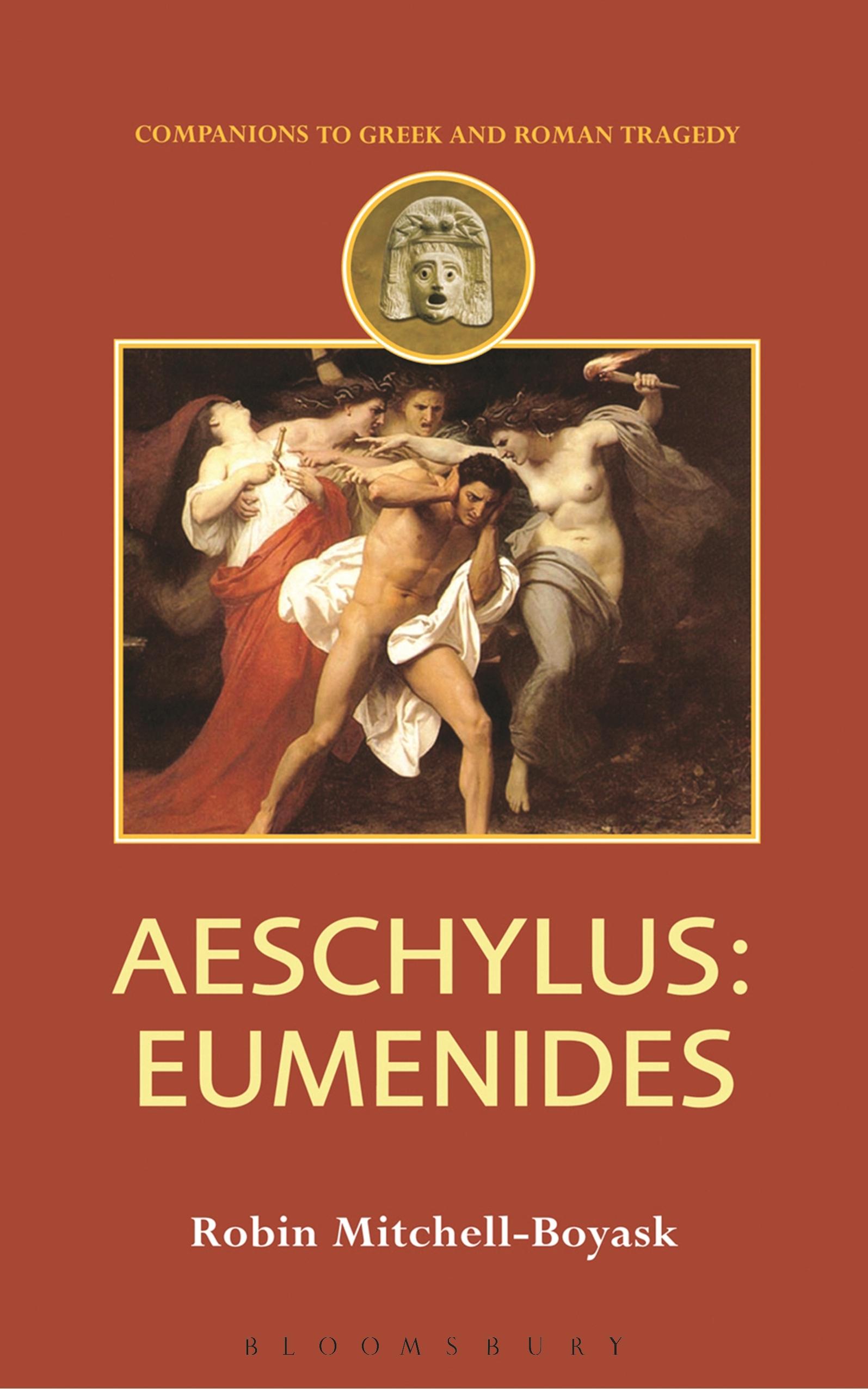
The "Eumenides", the concluding drama in Aeschylus' sole surviving trilogy, the "Oresteia", is not only one of the most admired Greek tragedies, but also one of the most controversial and contested, both to specialist scholars and public intellectuals. It stands at the crux of the controversies over the relationship between the fledgling democracy of Athens and the dramas it produced during the City Dionysia, and over the representation of women in the theatre and their implied status in Athenian society. The "Eumenides" enacts the trial of Agamemnon's son Orestes, who had been ordered under the threat of punishment by the god Apollo to murder his mother Clytemnestra, who had earlier killed Agamemnon.In the "Eumenides", Orestes, hounded by the Eumenides (Furies), travels first to Delphi to obtain ritual purgation of his mother's blood, and then, at Apollo's urging, to Athens to seek the help of Athena, who then decides herself that an impartial jury of Athenians should decide the matter. Aeschylus thus presents a drama that shows a growing awareness of the importance of free will in Athenian thought through the mythologized institution of the first jury trial.
Paga facilmente con carta, Klarna, Apple Pay o Google Pay. Non sei soddisfatto? Hai sempre 14 giorni per il rimborso. Leggi di più nei nostri termini. Per qualsiasi domanda, scrivici a hello@memmo.org.
Memmo rende lo studio più facile, ovunque tu sia nel mondo. Qui trovi i tuoi libri di testo e strumenti di studio intelligenti, tutto in un unico posto: riassunti, quiz, podcast e flashcard. E poi c'è Ted, il tuo compagno di studio che risponde a ogni tua domanda. Oltre 50.000 studenti studiano già qui: è stato creato per aiutarti a imparare più velocemente e a stressarti meno.