
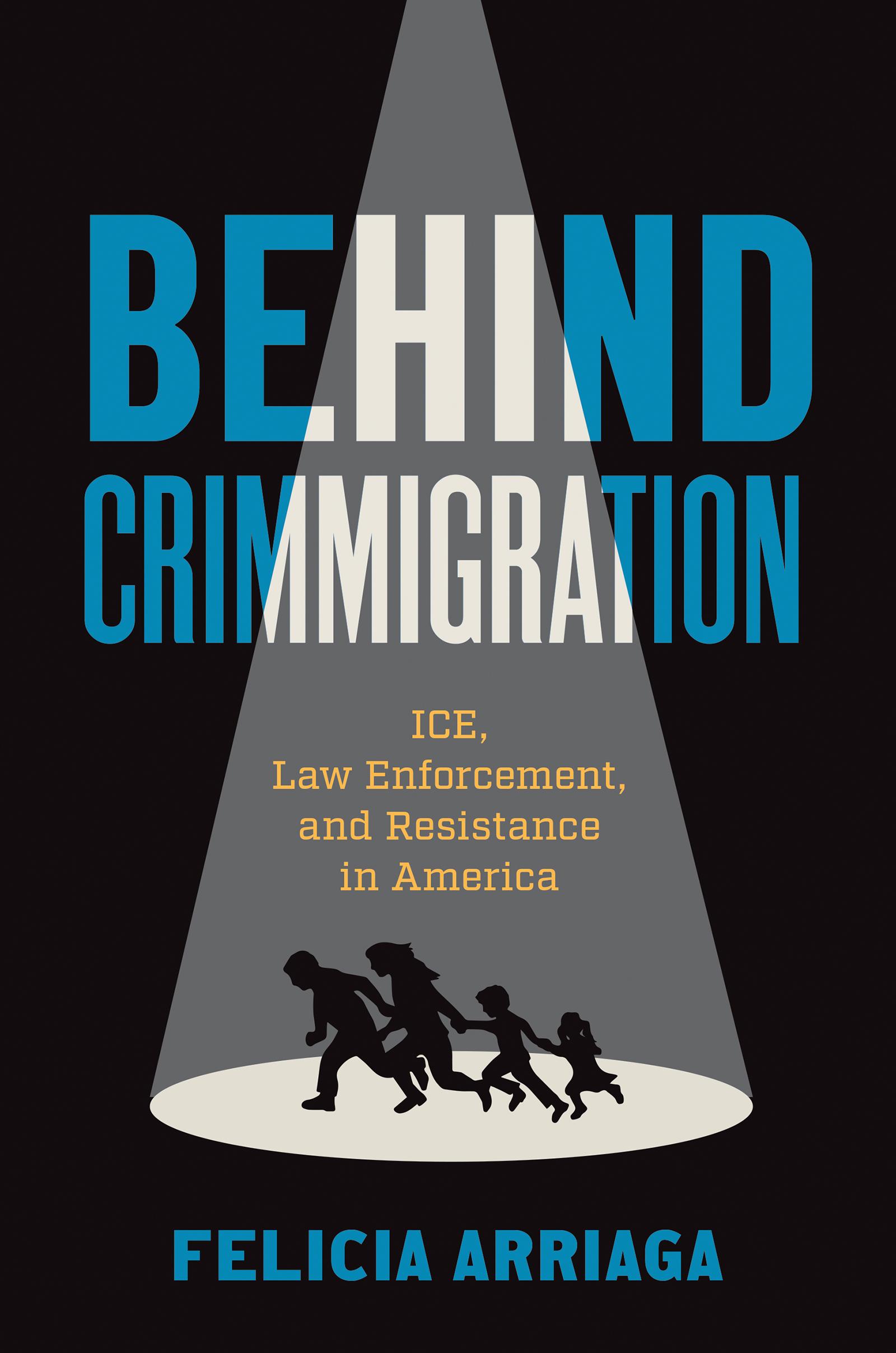
In recent years, dozens of counties in North Carolina have partnered with federal law enforcement in the criminalization of immigration—what many have dubbed “crimmigration.” Southern border enforcement still monopolizes the national immigration debate, but immigration enforcement has become common within the United States as well. While Immigration and Customs Enforcement (ICE) operations are a major part of American immigration enforcement, Felicia Arriaga maintains that ICE relies on an already well-established system—the use of local law enforcement and local governments to identify, incarcerate, and deport undocumented immigrants.
Arriaga contends that the long-term partnership between local sheriffs and immigration law enforcement in places like North Carolina has created a form of racialized social control of the Latinx community. Arriaga uses data from five county sheriff’s offices and their governing bodies to trace the creation and subsequent normalization of ICE and local law enforcement partnerships. Arriaga argues that the methods used by these partnerships to control immigration are employed throughout the United States, but they have been particularly visible in North Carolina, where the Latinx population increased by 111 percent between 2000 and 2010. Arriaga’s evidence also reveals how Latinx communities are resisting and adapting to these systems.
Arriaga contends that the long-term partnership between local sheriffs and immigration law enforcement in places like North Carolina has created a form of racialized social control of the Latinx community. Arriaga uses data from five county sheriff’s offices and their governing bodies to trace the creation and subsequent normalization of ICE and local law enforcement partnerships. Arriaga argues that the methods used by these partnerships to control immigration are employed throughout the United States, but they have been particularly visible in North Carolina, where the Latinx population increased by 111 percent between 2000 and 2010. Arriaga’s evidence also reveals how Latinx communities are resisting and adapting to these systems.
Paga facilmente con carta, Klarna, Apple Pay o Google Pay. Non sei soddisfatto? Hai sempre 14 giorni per il rimborso. Leggi di più nei nostri termini. Per qualsiasi domanda, scrivici a hello@memmo.org.
Memmo rende lo studio più facile, ovunque tu sia nel mondo. Qui trovi i tuoi libri di testo e strumenti di studio intelligenti, tutto in un unico posto: riassunti, quiz, podcast e flashcard. E poi c'è Ted, il tuo compagno di studio che risponde a ogni tua domanda. Oltre 50.000 studenti studiano già qui: è stato creato per aiutarti a imparare più velocemente e a stressarti meno.
Potrebbe interessarti anche
Acquista il libro0