
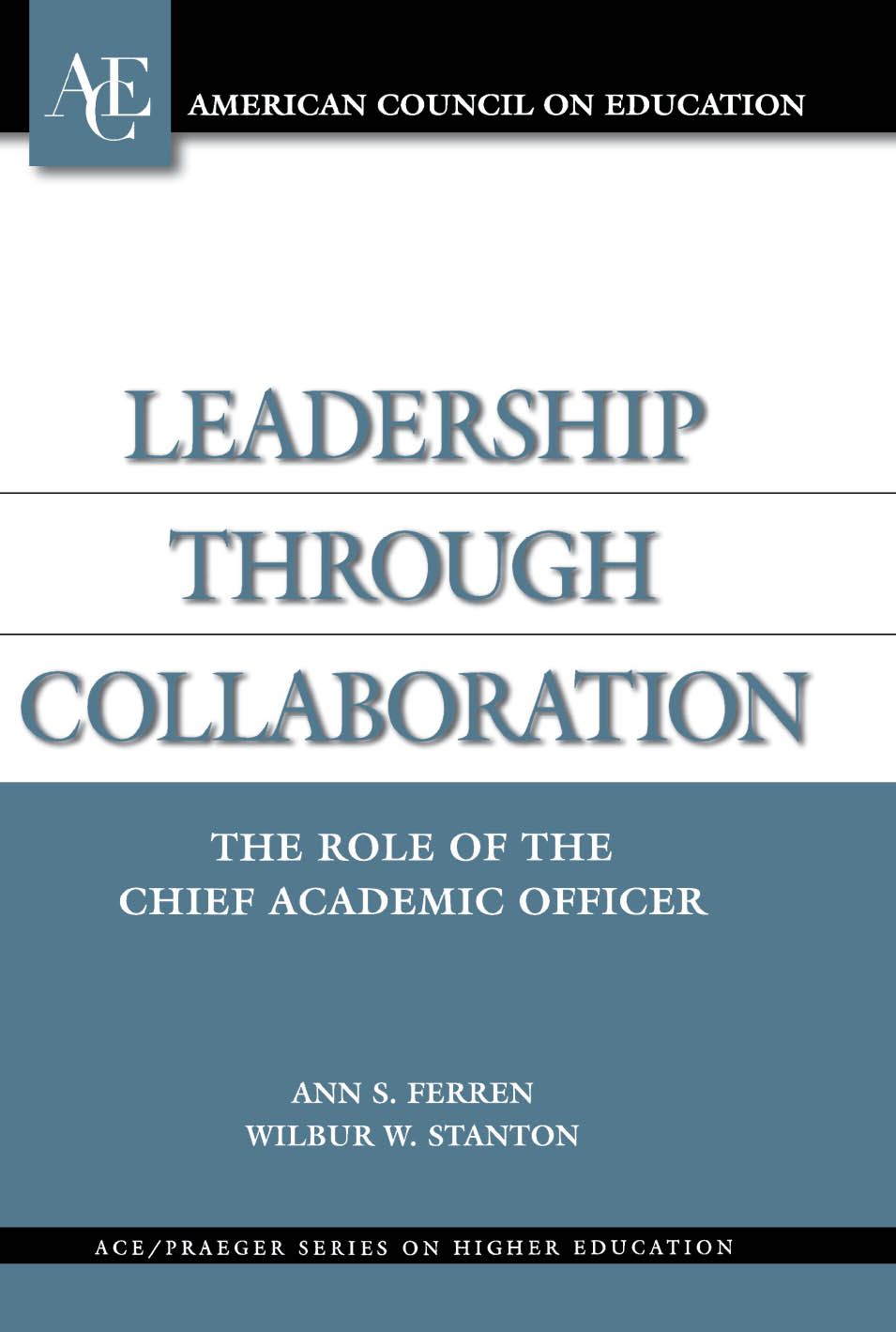
This book is organized around 11 topics, including the skills and personal qualities needed to provide effective academic leadership; strengthening the infrastructure for academic affairs through strategic planning, facilities planning, and technology integration; the importance of developing new resources and linking them to academic priorities; academic entrepreneurship; assessing academic quality and improving programs and services; continuous improvement; the central importance of investing in the faculty; and improving academic decisions.
The chief academic officer must be the voice for the campus's academic purposes and a source of energy in supporting the activities of others. Collaboration with colleagues across the institution is key to Ferren and Stanton's approach. Their experiences in administrative roles, ranging from department chair to provost, have provided them with the ability to conduct and utilize many studies, including budget adequacy modeling and salary equity studies. These are issues for which the authors have been responsible for implementation and decision-making, allowing them to understand that collaborative processes and partnerships-such as chairs with deans, deans with vice presidents, faculty with administrators, or the CAO with members of the president's cabinet-are as important as informed decision-making. Because CAOs are less likely to read what business officers and vice presidents for administration read, this book attempts to integrate differing institutional perspectives and explain processes and criteria. CAOs can tailor their decisions to institution circumstances and solve problems with greater insight.
The chief academic officer must be the voice for the campus's academic purposes and a source of energy in supporting the activities of others. Collaboration with colleagues across the institution is key to Ferren and Stanton's approach. Their experiences in administrative roles, ranging from department chair to provost, have provided them with the ability to conduct and utilize many studies, including budget adequacy modeling and salary equity studies. These are issues for which the authors have been responsible for implementation and decision-making, allowing them to understand that collaborative processes and partnerships-such as chairs with deans, deans with vice presidents, faculty with administrators, or the CAO with members of the president's cabinet-are as important as informed decision-making. Because CAOs are less likely to read what business officers and vice presidents for administration read, this book attempts to integrate differing institutional perspectives and explain processes and criteria. CAOs can tailor their decisions to institution circumstances and solve problems with greater insight.
Paga facilmente con carta, Klarna, Apple Pay o Google Pay. Non sei soddisfatto? Hai sempre 14 giorni per il rimborso. Leggi di più nei nostri termini. Per qualsiasi domanda, scrivici a hello@memmo.org.
Memmo rende lo studio più facile, ovunque tu sia nel mondo. Qui trovi i tuoi libri di testo e strumenti di studio intelligenti, tutto in un unico posto: riassunti, quiz, podcast e flashcard. E poi c'è Ted, il tuo compagno di studio che risponde a ogni tua domanda. Oltre 50.000 studenti studiano già qui: è stato creato per aiutarti a imparare più velocemente e a stressarti meno.