
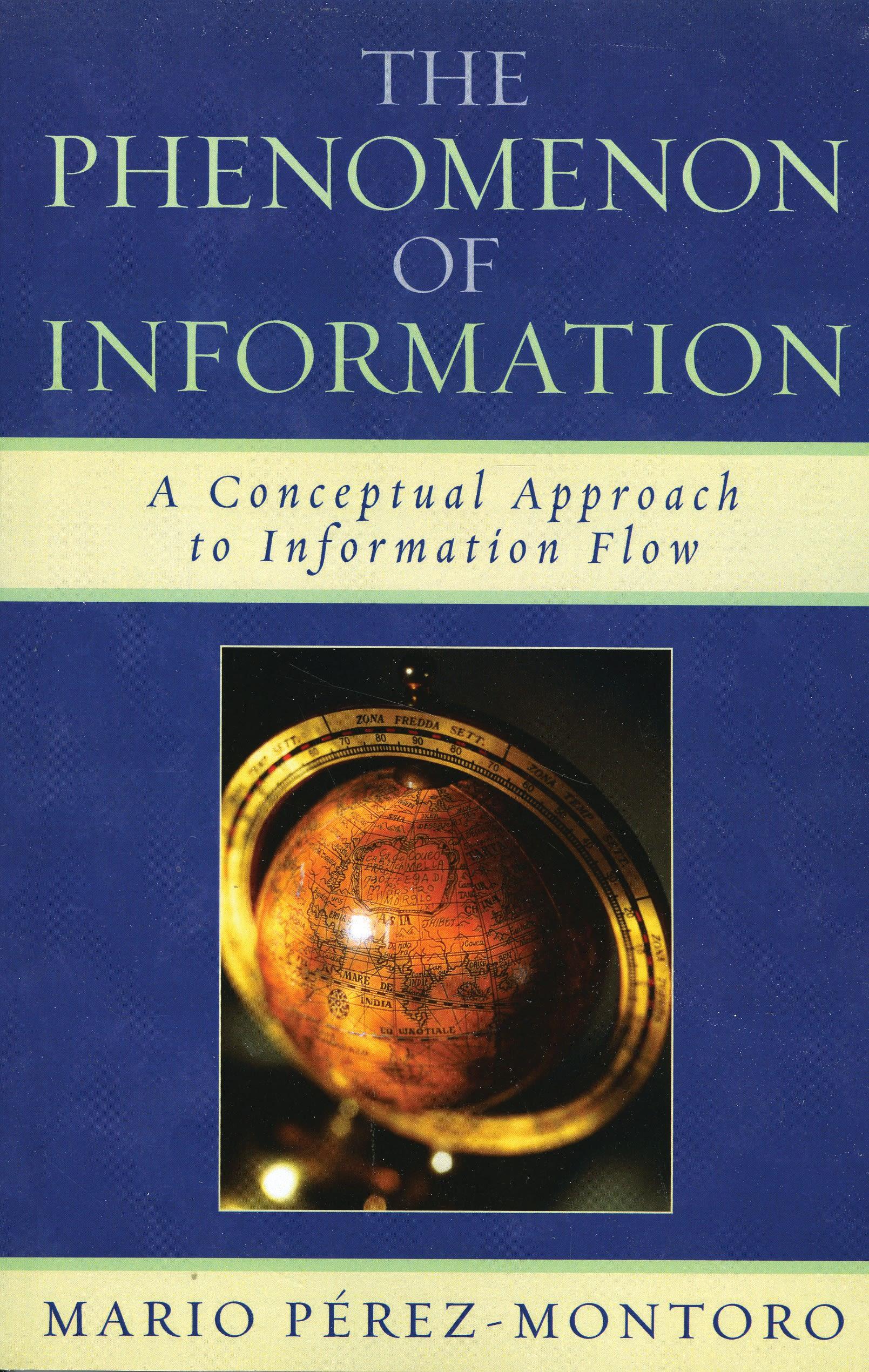
We are surrounded by information. Even the most routine situations in which we find ourselves conceal a hidden information flow. Every step we take, a host of signals meet us, providing information about what is happening in other parts of reality. The cherry tree in bloom reveals that spring has arrived. The footprint left on wet sand indicates that someone has walked along the beach. A red traffic light signals that we must bring our car to a halt.
In The Phenomenon of Information, author Mario Pérez-Montoro addresses the problems of providing a theoretical explanation of how a signal carries informational content, how to identify its characteristics, and how to define the mechanisms for describing it. To do this, Pérez-Montoro examines several theoretical approaches to the phenomenon of information: the mathematical theory of communication, Dretske's approach, and the relational theory of meaning. A critique of these efforts leads to the author's definition of informational content, named "the extensional approach," which is designed to overcome the conceptual limitations of the previous theories. The author proposes that his definition might serve as a basis on which a satisfactory analysis of the concept of information can be developed.
In The Phenomenon of Information, author Mario Pérez-Montoro addresses the problems of providing a theoretical explanation of how a signal carries informational content, how to identify its characteristics, and how to define the mechanisms for describing it. To do this, Pérez-Montoro examines several theoretical approaches to the phenomenon of information: the mathematical theory of communication, Dretske's approach, and the relational theory of meaning. A critique of these efforts leads to the author's definition of informational content, named "the extensional approach," which is designed to overcome the conceptual limitations of the previous theories. The author proposes that his definition might serve as a basis on which a satisfactory analysis of the concept of information can be developed.
Paga facilmente con carta, Klarna, Apple Pay o Google Pay. Non sei soddisfatto? Hai sempre 14 giorni per il rimborso. Leggi di più nei nostri termini. Per qualsiasi domanda, scrivici a hello@memmo.org.
Memmo rende lo studio più facile, ovunque tu sia nel mondo. Qui trovi i tuoi libri di testo e strumenti di studio intelligenti, tutto in un unico posto: riassunti, quiz, podcast e flashcard. E poi c'è Ted, il tuo compagno di studio che risponde a ogni tua domanda. Oltre 50.000 studenti studiano già qui: è stato creato per aiutarti a imparare più velocemente e a stressarti meno.