
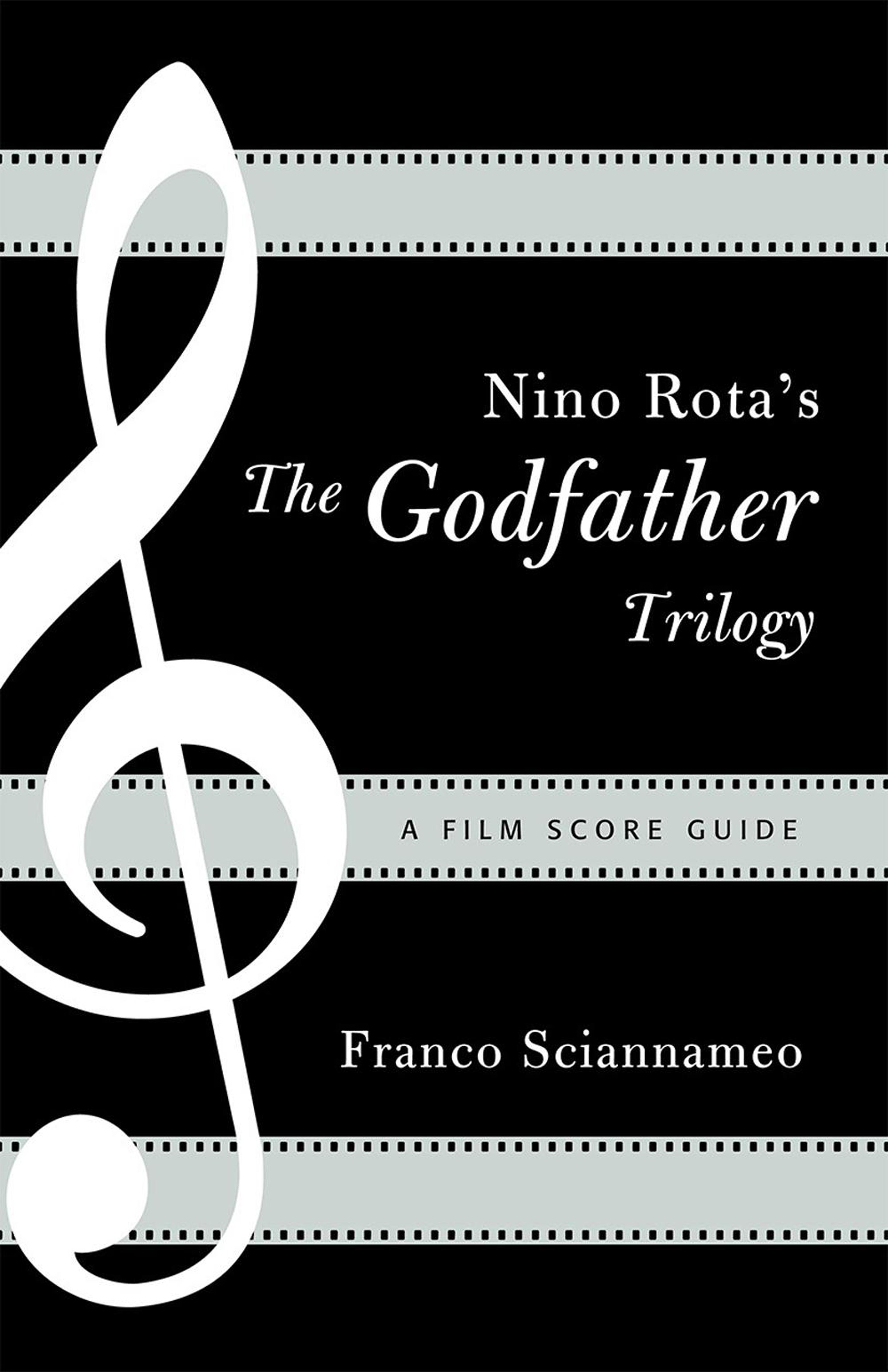
Released in 1972, 1974, and 1990 respectively, Francis Ford Coppola's three-part saga is one of the greatest artistic accomplishments (and financial successes) in the history of Hollywood cinema. The latest in Scarecrow's Film Score Guides series, Nino Rota's The Godfather Trilogy: A Film Score Guide discusses the events that led to the realization of the three films and studies and analyzes their music. Sciannameo reexamines The Godfather Trilogy from a variety of perspectives, with special focus on the music Rota composed to bind together approximately nine hours of cinematic narrative. Probing Rota's formation as a musician amidst the cultural climate established by Italian Fascism, Sciannameo examines Rota's initial stylistic adherence to the Mussolini-dictated or inspired concept of Italianness and then his return to a more congenial 19th-century formulaic vocabulary.
Sciannameo considers Rota's involvement with cinema and his collaboration with many celebrated directors, such as Luchino Visconti, Federico Fellini, Franco Zeffirelli, and Coppola, and deals with the sensitive issues of cultural analysis vis-à-vis the Mafia as a concept embedded within the Italian-American community. The book also discusses the sound of the Godfather films, describing and analyzing the musical subtexts underscoring a group of pivotal scenes. Relying substantially on Rota's notes, which are discussed here for the first time, the book reveals the composer's interpretation of Coppola's cinematic narrative and the scoring methodologies he employed.
Sciannameo considers Rota's involvement with cinema and his collaboration with many celebrated directors, such as Luchino Visconti, Federico Fellini, Franco Zeffirelli, and Coppola, and deals with the sensitive issues of cultural analysis vis-à-vis the Mafia as a concept embedded within the Italian-American community. The book also discusses the sound of the Godfather films, describing and analyzing the musical subtexts underscoring a group of pivotal scenes. Relying substantially on Rota's notes, which are discussed here for the first time, the book reveals the composer's interpretation of Coppola's cinematic narrative and the scoring methodologies he employed.
Paga facilmente con carta, Klarna, Apple Pay o Google Pay. Non sei soddisfatto? Hai sempre 14 giorni per il rimborso. Leggi di più nei nostri termini. Per qualsiasi domanda, scrivici a hello@memmo.org.
Memmo rende lo studio più facile, ovunque tu sia nel mondo. Qui trovi i tuoi libri di testo e strumenti di studio intelligenti, tutto in un unico posto: riassunti, quiz, podcast e flashcard. E poi c'è Ted, il tuo compagno di studio che risponde a ogni tua domanda. Oltre 50.000 studenti studiano già qui: è stato creato per aiutarti a imparare più velocemente e a stressarti meno.