
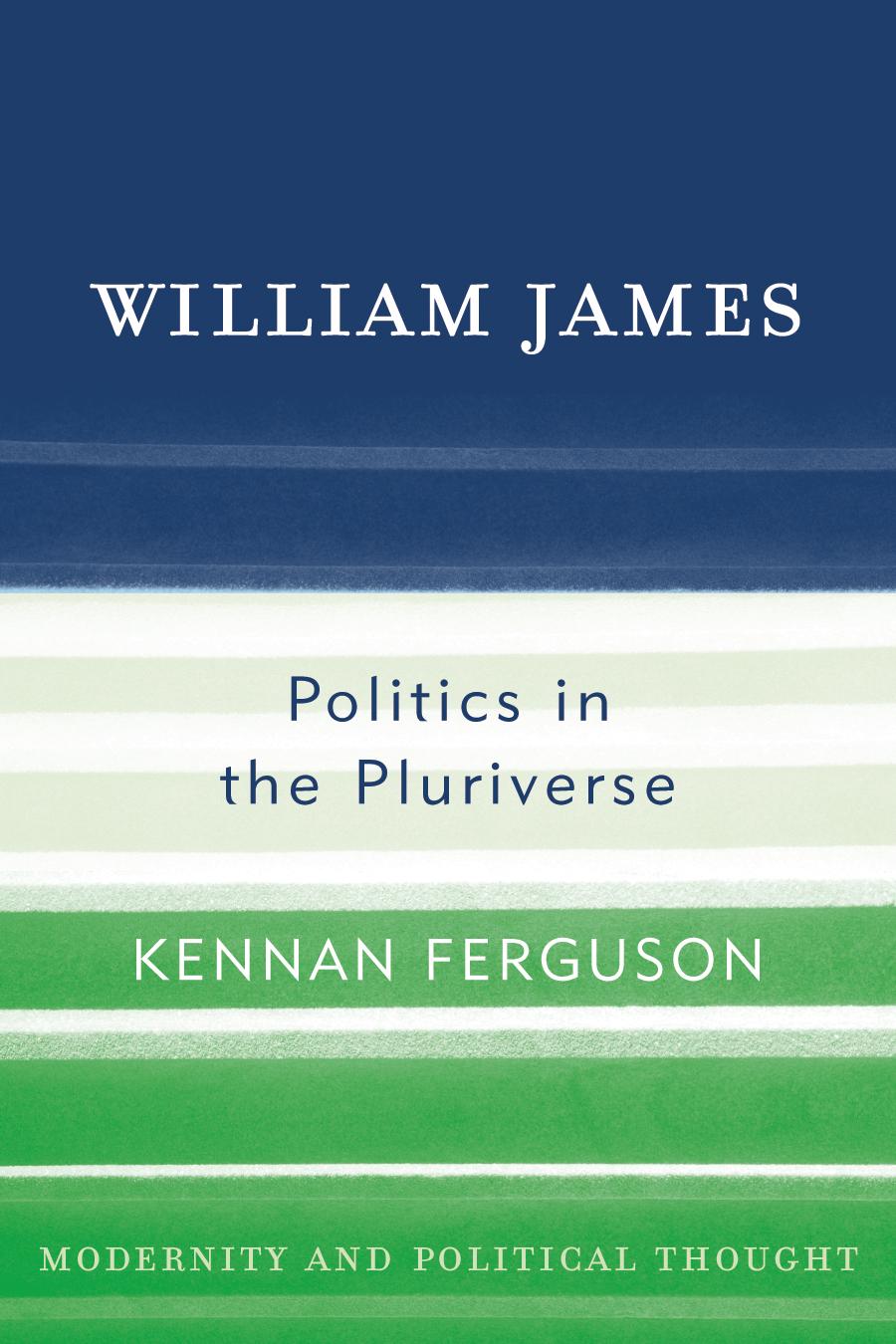
William James is known today strictly as a philosopher of pragmatism. Williams James: Politics in the Pluriverse challenges this understanding. Kennan Ferguson argues that James should instead be known as the progenitor of pluralism, one of the most influential and durable American political philosophies of the twentieth century.
James contended that engagement with the foreign, the difficult, and the uncomfortable makes us who we are. Rather than mitigating differences or attempting to resolve conflicts, he embraced them, wholeheartedly advocating the opportunity to be transformed. Pluralism, in the mind of the thinker who popularized the term, led to a more complex, more contentious, and far more interesting world.
Ferguson traces the historical importance and contemporary possibilities of pluralism's original political insight. In this important work he examines the trajectory of pluralism in the United States and England, the mutual influences of turn-of-the-century American and European philosophical traditions, and the relationship between pluralism and James's active anti-imperialism. James's unexpected political concepts and commitments both illuminate political philosophy of the 20th century and challenge contemporary assumptions about the desirability of unanimity. Pluralism, not unity, should be the goal of both politics and philosophy.
James contended that engagement with the foreign, the difficult, and the uncomfortable makes us who we are. Rather than mitigating differences or attempting to resolve conflicts, he embraced them, wholeheartedly advocating the opportunity to be transformed. Pluralism, in the mind of the thinker who popularized the term, led to a more complex, more contentious, and far more interesting world.
Ferguson traces the historical importance and contemporary possibilities of pluralism's original political insight. In this important work he examines the trajectory of pluralism in the United States and England, the mutual influences of turn-of-the-century American and European philosophical traditions, and the relationship between pluralism and James's active anti-imperialism. James's unexpected political concepts and commitments both illuminate political philosophy of the 20th century and challenge contemporary assumptions about the desirability of unanimity. Pluralism, not unity, should be the goal of both politics and philosophy.
Paga facilmente con carta, Klarna, Apple Pay o Google Pay. Non sei soddisfatto? Hai sempre 14 giorni per il rimborso. Leggi di più nei nostri termini. Per qualsiasi domanda, scrivici a hello@memmo.org.
Memmo rende lo studio più facile, ovunque tu sia nel mondo. Qui trovi i tuoi libri di testo e strumenti di studio intelligenti, tutto in un unico posto: riassunti, quiz, podcast e flashcard. E poi c'è Ted, il tuo compagno di studio che risponde a ogni tua domanda. Oltre 50.000 studenti studiano già qui: è stato creato per aiutarti a imparare più velocemente e a stressarti meno.