
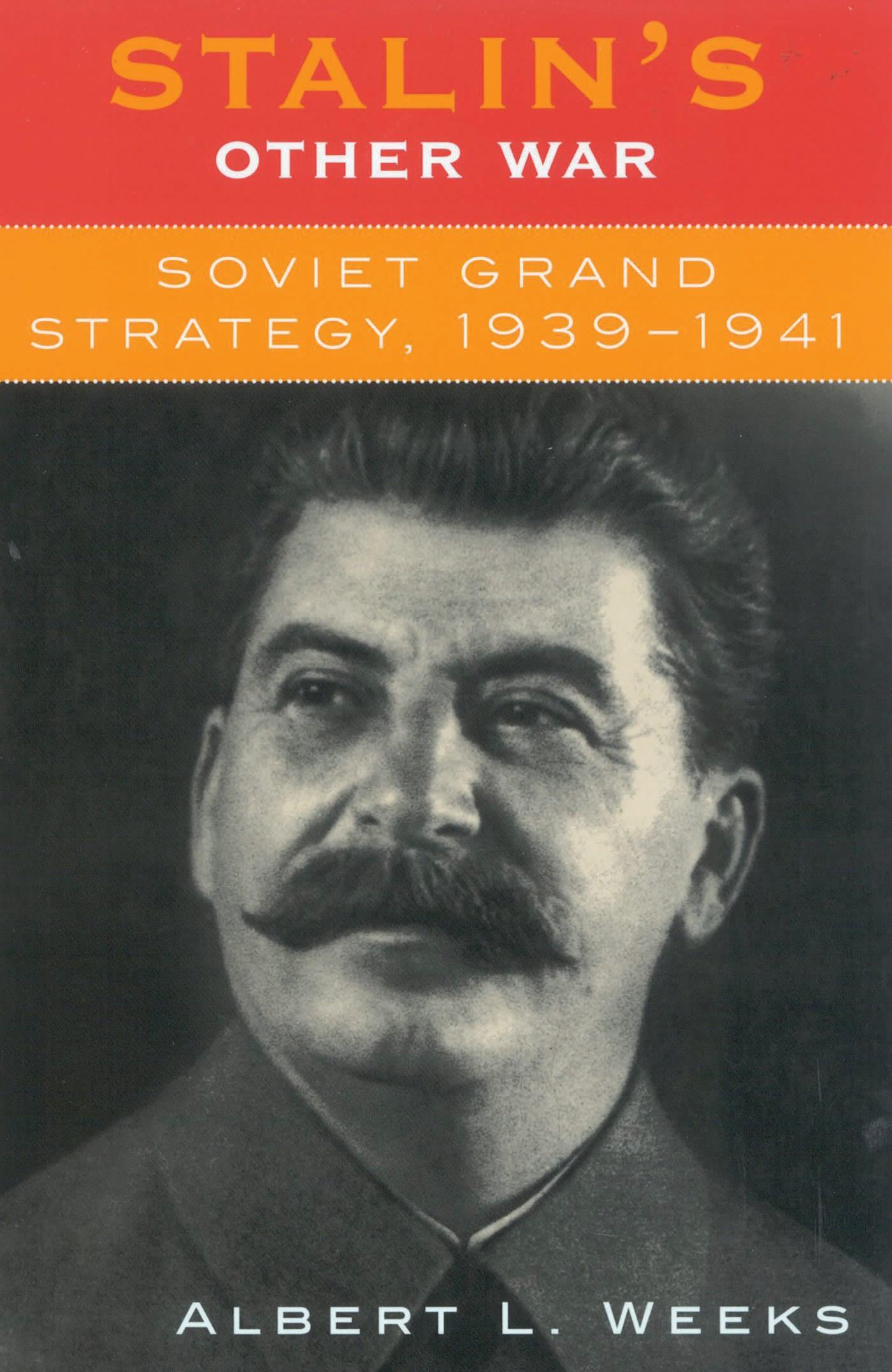
On June 22, 1941, just less than two years after signing the Nazi-Soviet Agreements, Adolf Hitler's German army invaded the Soviet Union. The attack hardly came as a surprise to Josef Stalin; in fact, history has long held that Stalin spent the two intervening years building up his defenses against a Nazi attack. With the gradual declassifying of former Soviet documents, though, historians are learning more and more about Stalin's grand plan during the years 1939-1941.
Longtime Soviet expert Albert L. Weeks has studied the newly-released information and come to a different conclusion about the Soviet Union's pre-war buildup-it was not precaution against German invasion at all. In fact, Weeks argues, the evidence now suggests Soviet mobilization was aimed at an eventual invasion of Nazi Germany. The Soviets were quietly biding their time between 1939 and 1941, allowing the capitalist powers to destroy one another, all the while preparing for their own Westward march. Stalin, Weeks shows, wasn't waiting for a Nazi attack-Hitler simply beat him to the punch.
Longtime Soviet expert Albert L. Weeks has studied the newly-released information and come to a different conclusion about the Soviet Union's pre-war buildup-it was not precaution against German invasion at all. In fact, Weeks argues, the evidence now suggests Soviet mobilization was aimed at an eventual invasion of Nazi Germany. The Soviets were quietly biding their time between 1939 and 1941, allowing the capitalist powers to destroy one another, all the while preparing for their own Westward march. Stalin, Weeks shows, wasn't waiting for a Nazi attack-Hitler simply beat him to the punch.
Paga facilmente con carta, Klarna, Apple Pay o Google Pay. Non sei soddisfatto? Hai sempre 14 giorni per il rimborso. Leggi di più nei nostri termini. Per qualsiasi domanda, scrivici a hello@memmo.org.
Memmo rende lo studio più facile, ovunque tu sia nel mondo. Qui trovi i tuoi libri di testo e strumenti di studio intelligenti, tutto in un unico posto: riassunti, quiz, podcast e flashcard. E poi c'è Ted, il tuo compagno di studio che risponde a ogni tua domanda. Oltre 50.000 studenti studiano già qui: è stato creato per aiutarti a imparare più velocemente e a stressarti meno.