
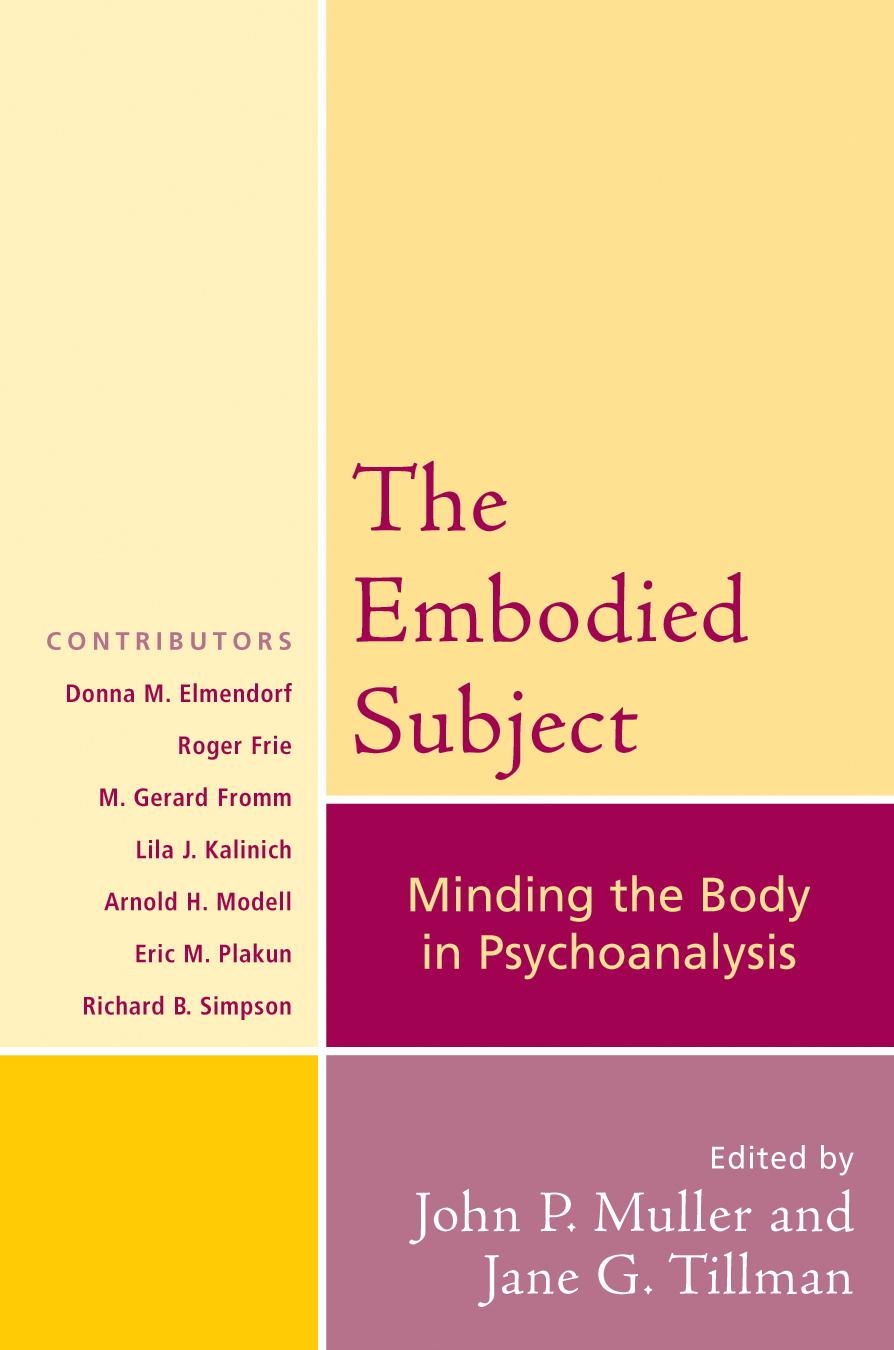
This volume addresses the topic of embodiment in psychoanalysis from both theoretical and clinical points of view. Freud's development of a psychoanalytic theory and treatment originated from his consideration of neurology, aphasia, and the great range of embodied signs constituting the hysterical neuroses. Symptoms and signs, Freud noted in 1895, "join in the conversation" by taking bodily form. The body and the mind form a nexus, which is the proper area of study for psychoanalysis.
Because this is a vast field of inquiry, a pluralistic perspective is taken by this collection of papers, ranging from philosophic and semiotic understandings of the body, to Freudian, Lacanian, feminist, and object relations hypotheses. Clinical phsnomena such as self-mutilation, fantasy about the body and its representations and meanings, enactment, sexuality, and psychotic fragmentation are addressed in an attempt to extend our understanding of the psychoanalytic traditions that have evolved in relation to Freud's discoveries.
This volume includes representative work from established psychoanalysts (Kalinich, Modell), psychoanalysts with sophisticated philosophical grounding (Frie, Simpson), and clinicians working with severely disturbed patients (Elmendorf, Plakun, Tillman, Fromm).
Because this is a vast field of inquiry, a pluralistic perspective is taken by this collection of papers, ranging from philosophic and semiotic understandings of the body, to Freudian, Lacanian, feminist, and object relations hypotheses. Clinical phsnomena such as self-mutilation, fantasy about the body and its representations and meanings, enactment, sexuality, and psychotic fragmentation are addressed in an attempt to extend our understanding of the psychoanalytic traditions that have evolved in relation to Freud's discoveries.
This volume includes representative work from established psychoanalysts (Kalinich, Modell), psychoanalysts with sophisticated philosophical grounding (Frie, Simpson), and clinicians working with severely disturbed patients (Elmendorf, Plakun, Tillman, Fromm).
Paga facilmente con carta, Klarna, Apple Pay o Google Pay. Non sei soddisfatto? Hai sempre 14 giorni per il rimborso. Leggi di più nei nostri termini. Per qualsiasi domanda, scrivici a hello@memmo.org.
Memmo rende lo studio più facile, ovunque tu sia nel mondo. Qui trovi i tuoi libri di testo e strumenti di studio intelligenti, tutto in un unico posto: riassunti, quiz, podcast e flashcard. E poi c'è Ted, il tuo compagno di studio che risponde a ogni tua domanda. Oltre 50.000 studenti studiano già qui: è stato creato per aiutarti a imparare più velocemente e a stressarti meno.