
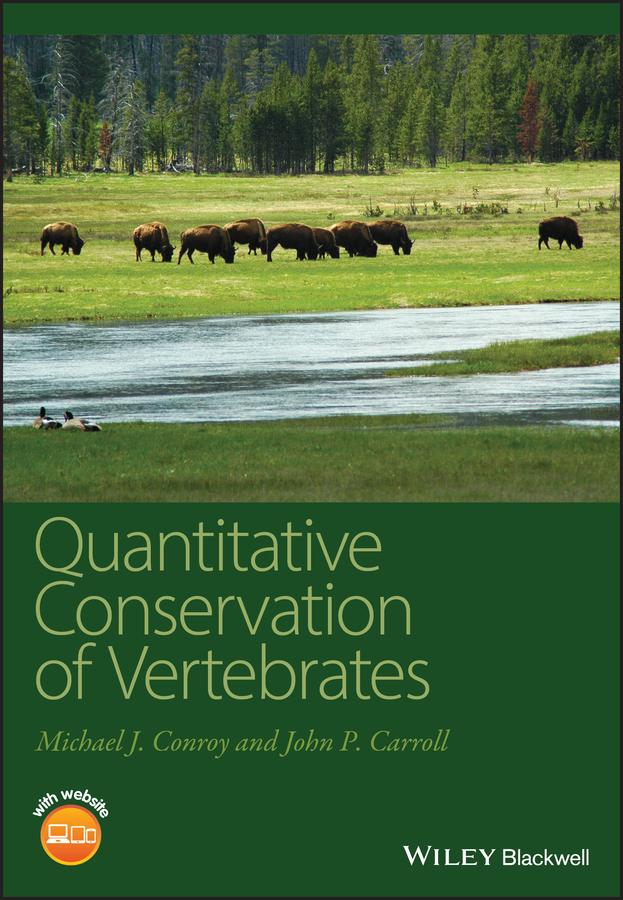
Part I provides a basic background in population and community modeling. It introduces statistical models, and familiarizes the reader with important concepts in the design of monitoring and research programs. These programs provide the essential data that guide conservation decision making. Part II covers the principal methods used to estimate abundance, occupancy, demographic parameters, and community parameters, including occupancy sampling, sample counts, distance sampling, and capture-mark-recapture (for both closed and open populations). Emphasis is placed on practical aspects of designing and implementing field studies, and the proper analysis of data. Part III introduces structured decision making and adaptive management, in which predictive models are used to inform conservation decision makers on appropriate decisions in the face of uncertainty—with the goal of reducing uncertainty through monitoring and research. A detailed case study is used to illustrate each of these themes.
Numerous worked examples and accompanying electronic material (on a website - http://www.blackwellpublishing.com/conroy - and accompanying CD) provide the details of model construction and application, and data analysis.
Paga facilmente con carta, Klarna, Apple Pay o Google Pay. Non sei soddisfatto? Hai sempre 14 giorni per il rimborso. Leggi di più nei nostri termini. Per qualsiasi domanda, scrivici a hello@memmo.org.
Memmo rende lo studio più facile, ovunque tu sia nel mondo. Qui trovi i tuoi libri di testo e strumenti di studio intelligenti, tutto in un unico posto: riassunti, quiz, podcast e flashcard. E poi c'è Ted, il tuo compagno di studio che risponde a ogni tua domanda. Oltre 50.000 studenti studiano già qui: è stato creato per aiutarti a imparare più velocemente e a stressarti meno.