
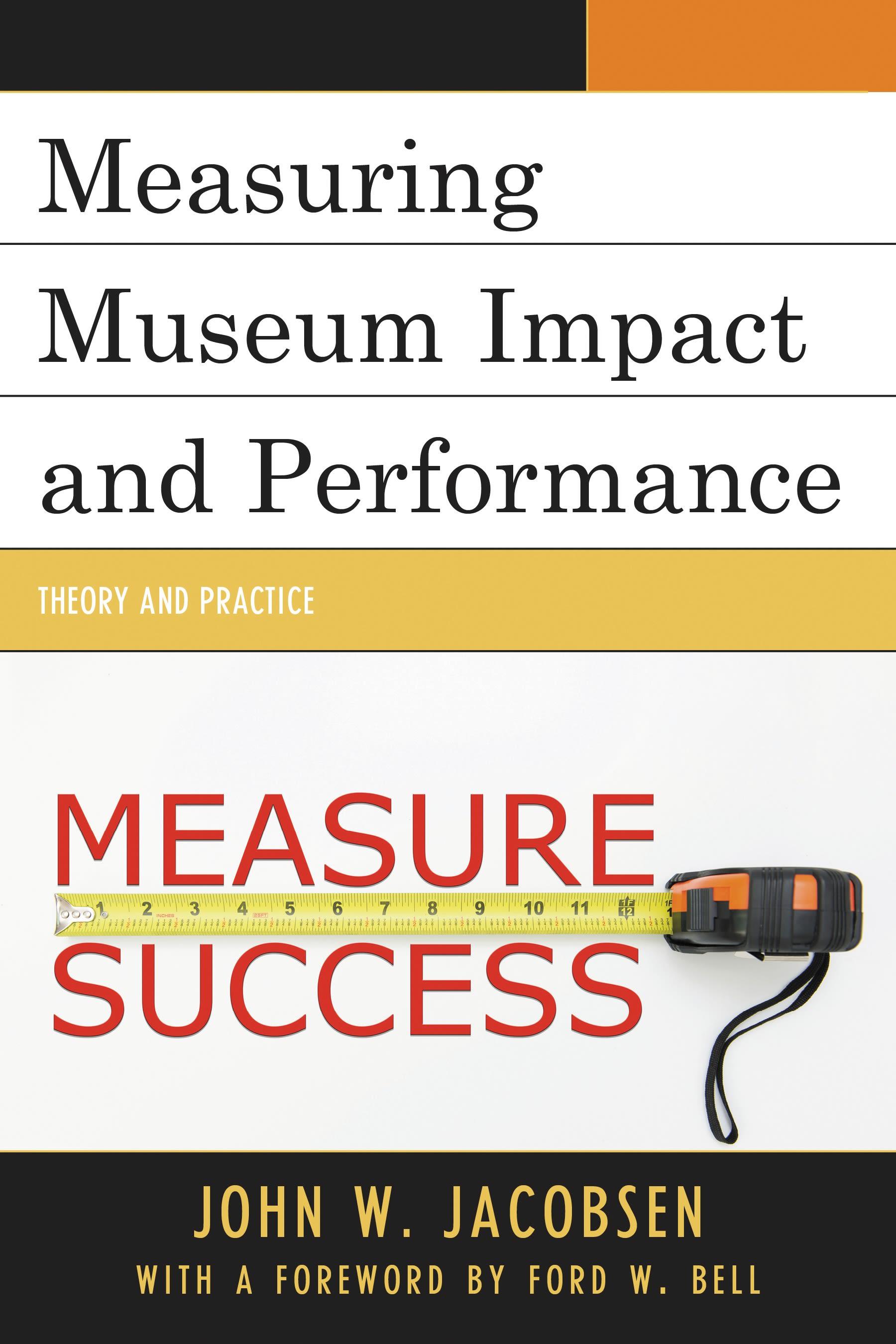
Based on extensive research and decades of experience, museum analyst and planner John W. Jacobsen provides both the theoretical underpinnings and the operational pragmatics of measuring any museum's intentional impact and performance by using 1,025 indicators drawn from 51 expert sources. Measuring Museum Impact and Performance: Theory and Practice provides museum professionals internationally with a clear, very open process that will improve their museum's value and performance by selecting indicators that monitor whether they are realizing their desired public, private, personal and institutional values. The book is not prescriptive, but liberating, as the framework recognizes that each museum needs to decide on its own purposes and priorities.
The book is organized in two parts: "Part 1: Theory" is scholarly and builds on the museum field’s rich literature; and "Part 2: Practice" provides step-by-step methods for any museum to set up its own dashboard of prioritized impact and performance indicators. Substantive attachments include: the list of the 51 source documents for the MIIP indicators; definitions of terms and data fields; a long list of precedented museum impacts; measurement formulas and worksheet templates, filled in for a sample museum; and the MIIP 1.0 database available online.
Readers will get the following benefits:
A literature review of prior work on measuring museum valueAn analysis of eleven well-established evaluation frameworks that synthesize into a revolutionary, yet practical, Museum Theory of ActionA robust and searchable menu of 1,025 existing and aspirational indicators (the MIIP 1.0 database) that you can use to start your own selectionAn analysis of the MIIP database using the Theory of Action that reveals 14 areas of potential museum impacts and benefitsA process to select and prioritize your museum’s intentional purposes and desired impactsA process to determine, measure and compare your museum’s key performance indicators (KPIs) A process to set-up and conduct peer museum comparisonsProcedures and examples of how to capture and report data used in your selected indicatorsPrinciples for using indicator data to inform museum management decisions
The book is organized in two parts: "Part 1: Theory" is scholarly and builds on the museum field’s rich literature; and "Part 2: Practice" provides step-by-step methods for any museum to set up its own dashboard of prioritized impact and performance indicators. Substantive attachments include: the list of the 51 source documents for the MIIP indicators; definitions of terms and data fields; a long list of precedented museum impacts; measurement formulas and worksheet templates, filled in for a sample museum; and the MIIP 1.0 database available online.
Readers will get the following benefits:
A literature review of prior work on measuring museum valueAn analysis of eleven well-established evaluation frameworks that synthesize into a revolutionary, yet practical, Museum Theory of ActionA robust and searchable menu of 1,025 existing and aspirational indicators (the MIIP 1.0 database) that you can use to start your own selectionAn analysis of the MIIP database using the Theory of Action that reveals 14 areas of potential museum impacts and benefitsA process to select and prioritize your museum’s intentional purposes and desired impactsA process to determine, measure and compare your museum’s key performance indicators (KPIs) A process to set-up and conduct peer museum comparisonsProcedures and examples of how to capture and report data used in your selected indicatorsPrinciples for using indicator data to inform museum management decisions
Paga facilmente con carta, Klarna, Apple Pay o Google Pay. Non sei soddisfatto? Hai sempre 14 giorni per il rimborso. Leggi di più nei nostri termini. Per qualsiasi domanda, scrivici a hello@memmo.org.
Memmo rende lo studio più facile, ovunque tu sia nel mondo. Qui trovi i tuoi libri di testo e strumenti di studio intelligenti, tutto in un unico posto: riassunti, quiz, podcast e flashcard. E poi c'è Ted, il tuo compagno di studio che risponde a ogni tua domanda. Oltre 50.000 studenti studiano già qui: è stato creato per aiutarti a imparare più velocemente e a stressarti meno.