
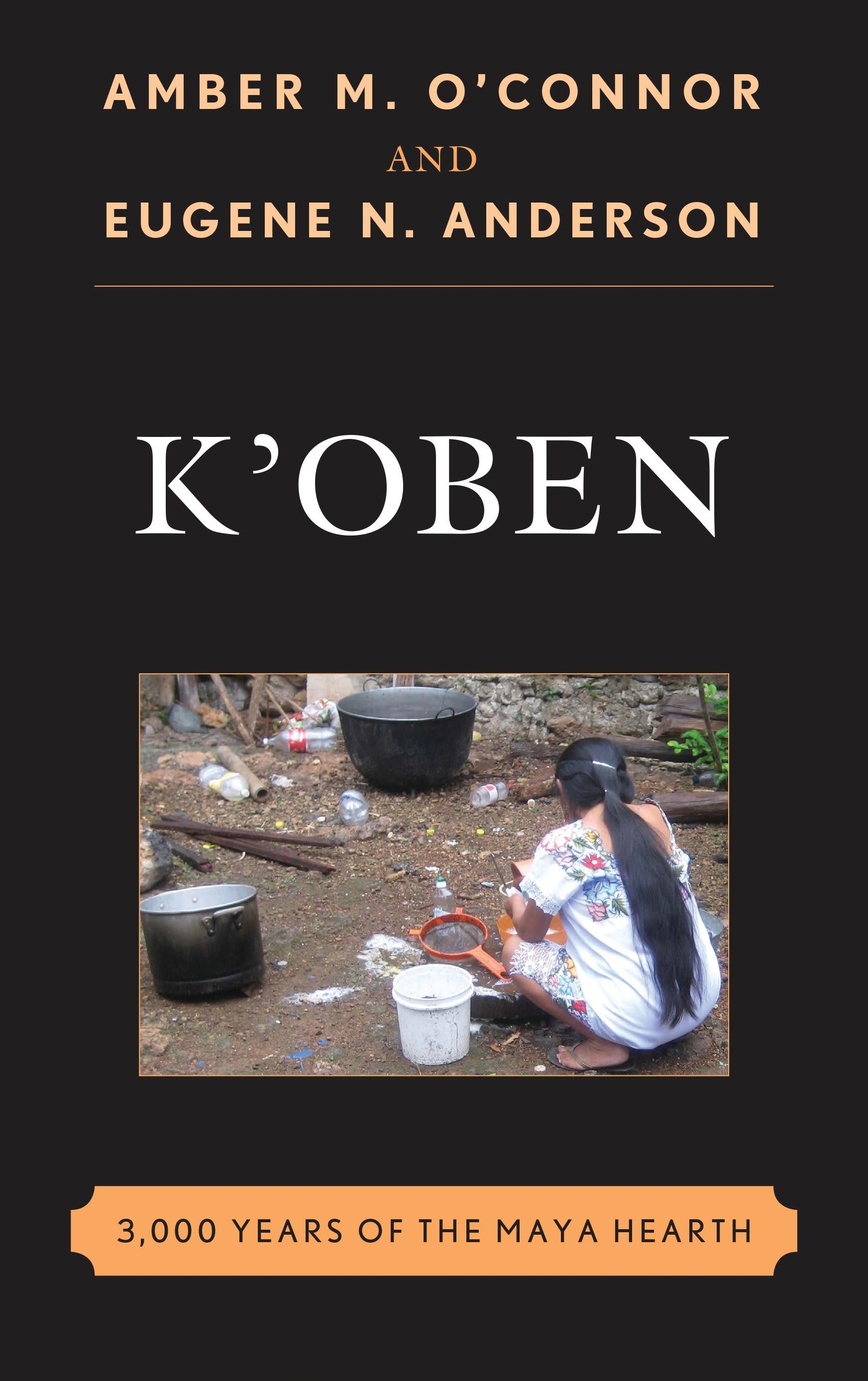
K’Oben traces the Maya kitchen and its associated hardware, ingredients, and cooking styles from the earliest times for which we have archaeological evidence through today’s culinary tourism in the area. It focuses not only on what was eaten and how it was cooked, but the people involved: who grew or sourced the foods, who cooked them, who ate them. Additionally, the authors examine how Maya foodways and the people involved fit into the social system, particularly in how food is incorporated into culture, economy, and society.
The authors provide a detailed literature review of hard-to-find sources including: out of print centuries old cookbooks, archaeological field notes, ethnographies and ethnohistories out of circulation and not available in English, thesis documents only available in Spanish and in university archives as well as current field research on the Maya.
The more recent Maya foodways can be studied from cookbooks, ethnographies and ethnohistorical documentation. Between the two of us, we have assembled a small but representative collection of cookbooks, some self-published and rare, that were available in Merida and elsewhere in Mexico during the late 20th century. Some are quite old, and all reflect local traditional foodways.
Geographically, the book concentrates on Yucatan, Tabasco and Chiapas in Mexico, but will include Pre-Classic and Classic evidence from Guatemala and El Salvador, whose foodways are influenced by Maya traditions.
The authors provide a detailed literature review of hard-to-find sources including: out of print centuries old cookbooks, archaeological field notes, ethnographies and ethnohistories out of circulation and not available in English, thesis documents only available in Spanish and in university archives as well as current field research on the Maya.
The more recent Maya foodways can be studied from cookbooks, ethnographies and ethnohistorical documentation. Between the two of us, we have assembled a small but representative collection of cookbooks, some self-published and rare, that were available in Merida and elsewhere in Mexico during the late 20th century. Some are quite old, and all reflect local traditional foodways.
Geographically, the book concentrates on Yucatan, Tabasco and Chiapas in Mexico, but will include Pre-Classic and Classic evidence from Guatemala and El Salvador, whose foodways are influenced by Maya traditions.
Paga facilmente con carta, Klarna, Apple Pay o Google Pay. Non sei soddisfatto? Hai sempre 14 giorni per il rimborso. Leggi di più nei nostri termini. Per qualsiasi domanda, scrivici a hello@memmo.org.
Memmo rende lo studio più facile, ovunque tu sia nel mondo. Qui trovi i tuoi libri di testo e strumenti di studio intelligenti, tutto in un unico posto: riassunti, quiz, podcast e flashcard. E poi c'è Ted, il tuo compagno di studio che risponde a ogni tua domanda. Oltre 50.000 studenti studiano già qui: è stato creato per aiutarti a imparare più velocemente e a stressarti meno.