
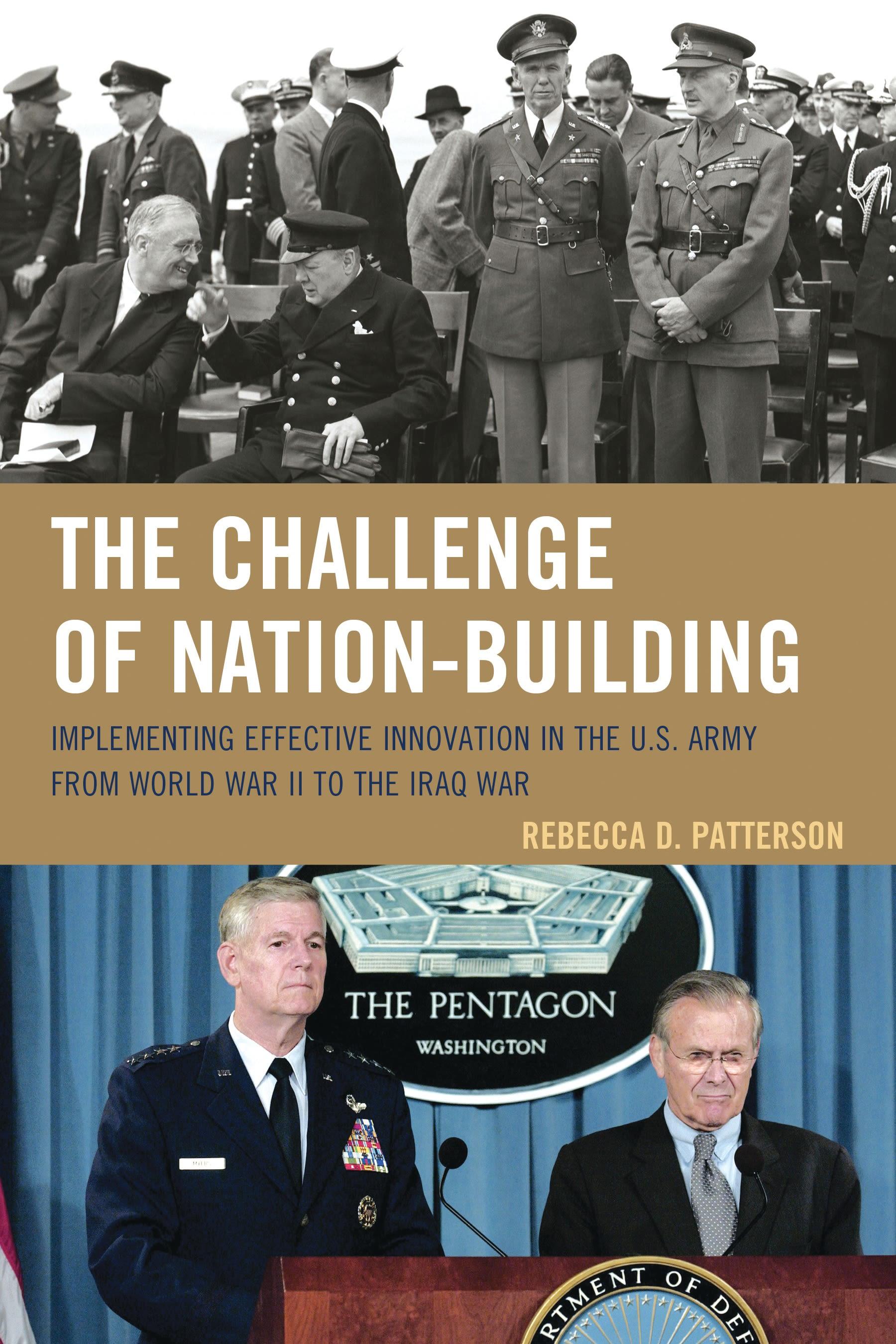
In the last decades, the United States Army has often been involved in missions other than conventional warfare. These include low-intensity conflicts, counterinsurgency operations, and nation-building efforts. Although non-conventional warfare represents the majority of missions executed in the past sixty years, the Army still primarily plans, organizes, and trains to fight conventional ground wars. Consequently, in the last ten years, there has been considerable criticism regarding the military’s inability to accomplish tasks other than conventional war. Failed states and the threat they represent cannot be ignored or solved with conventional military might. In order to adapt to this new reality, the U.S. Army must innovate.
This text examines the conditions that have allowed or prevented the U.S. Army to innovate for nation-building effectively. By doing so, it shows how military leadership and civil-military relations have changed. Nation-building refers to a type of military occupation where the goal is regime change or survival, a large number of ground troops are deployed, and both military and civilian personnel are used in the political administration of an occupied country, with the goals of establishing a productive economy and a stable government. Such tasks have always been a challenge for the U.S. military, which is not normally equipped or trained to undertake them.
Using military effectiveness as the measurement of innovative success, the book analyzes several U.S. nation-building cases, including post World War II Germany, South Korea from 1945-1950, the Vietnam War, and Operation Iraqi Freedom. By doing so, it reveals the conditions that enabled military innovation in one unique case (Germany) while explaining what prevented it in the others. This variation of effectiveness leads to examine prevailing military innovation theories, threat-based accounts, quality of military organizations, and civil-military relations. This text comes at a critical time as the U.S. military faces dwindling resources and tough choices about its force structure and mission orientation. It will add to the growing debate about the role of civilians, military reformers, and institutional factors in military innovation and effectiveness.
This text examines the conditions that have allowed or prevented the U.S. Army to innovate for nation-building effectively. By doing so, it shows how military leadership and civil-military relations have changed. Nation-building refers to a type of military occupation where the goal is regime change or survival, a large number of ground troops are deployed, and both military and civilian personnel are used in the political administration of an occupied country, with the goals of establishing a productive economy and a stable government. Such tasks have always been a challenge for the U.S. military, which is not normally equipped or trained to undertake them.
Using military effectiveness as the measurement of innovative success, the book analyzes several U.S. nation-building cases, including post World War II Germany, South Korea from 1945-1950, the Vietnam War, and Operation Iraqi Freedom. By doing so, it reveals the conditions that enabled military innovation in one unique case (Germany) while explaining what prevented it in the others. This variation of effectiveness leads to examine prevailing military innovation theories, threat-based accounts, quality of military organizations, and civil-military relations. This text comes at a critical time as the U.S. military faces dwindling resources and tough choices about its force structure and mission orientation. It will add to the growing debate about the role of civilians, military reformers, and institutional factors in military innovation and effectiveness.
Pagine: 290
Categoria: Statsvetenskap & Politik
e-ISBN: 9781442236950
Peso di spedizione: 1.2 kg
Spedito in: 1-2 giorni
Paga facilmente con carta, Klarna, Apple Pay o Google Pay. Non sei soddisfatto? Hai sempre 14 giorni per il rimborso. Leggi di più nei nostri termini. Per qualsiasi domanda, scrivici a hello@memmo.org.
Memmo rende lo studio più facile, ovunque tu sia nel mondo. Qui trovi i tuoi libri di testo e strumenti di studio intelligenti, tutto in un unico posto: riassunti, quiz, podcast e flashcard. E poi c'è Ted, il tuo compagno di studio che risponde a ogni tua domanda. Oltre 50.000 studenti studiano già qui: è stato creato per aiutarti a imparare più velocemente e a stressarti meno.