
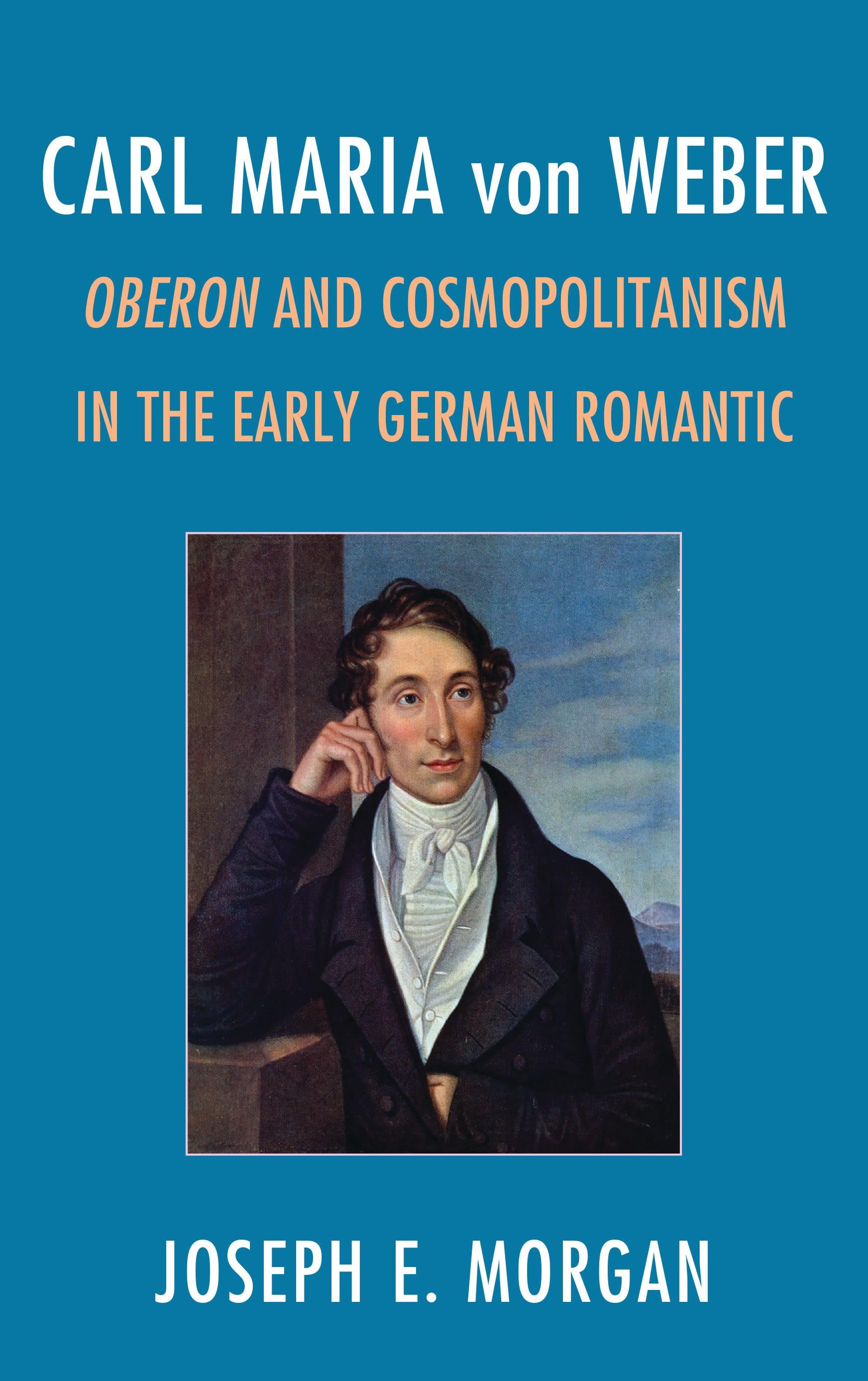
Renowned music historian Philipp Spitta has written that “of all the German musicians of the 19th century, none has exercised a greater influence over his own generation and that succeeding it than Weber.” Spitta’s statement reflects Weber’s popularity at the end of the nineteenth 19th century—both for his place as a foundational figure of German Romantic opera and for his role in the early German Nationalist movement in music. Indeed, Weber’s Der Freischütz is still considered the first German Romantic opera, enjoying a place of privilege in the modern operatic repertoire with performances held the world over and at least two cinematic productions.
Despite its enormous popularity throughout the 19th nineteenth century, however, Weber’s swan song, Oberon, has remained separate from the mainstream thrust of our modern understanding of German Romantic opera. In Carl Maria von Weber: Oberon and the Cosmopolitanism in the Early German Romantic, music historian and theorist Joseph E. Morgan reassesses Weber’s work and aesthetics not just for their influence but also as an expression of the aesthetics and cosmopolitanism that underlay the early Romantic and Nationalist movement in Germany.
In a discussion with analyses that features nearly one- hundred musical examples, Morgan tracks the development of Weber’s musical style across his career. The investigation culminates with Weber’s last and long-misunderstood work, explaining its thematic and harmonic organization, its stylistic idiosyncrasies, and the tenuous place that it holds on the margins of the operatic canon. The discussion is enhanced and corroborated by frequent attention to correlating developments in other art from the period, including painting, poetry, and literature.
This text will be of interest to students, scholars, and connoisseurs wishing to acquire a new insight on the performance, reception, and aesthetics of early German Romantic opera. Further, because of the interdisciplinary nature of the investigation, anyone researching the early Romantic and Nationalist movement in Germany will also certainly find valuable insights in this book.
Despite its enormous popularity throughout the 19th nineteenth century, however, Weber’s swan song, Oberon, has remained separate from the mainstream thrust of our modern understanding of German Romantic opera. In Carl Maria von Weber: Oberon and the Cosmopolitanism in the Early German Romantic, music historian and theorist Joseph E. Morgan reassesses Weber’s work and aesthetics not just for their influence but also as an expression of the aesthetics and cosmopolitanism that underlay the early Romantic and Nationalist movement in Germany.
In a discussion with analyses that features nearly one- hundred musical examples, Morgan tracks the development of Weber’s musical style across his career. The investigation culminates with Weber’s last and long-misunderstood work, explaining its thematic and harmonic organization, its stylistic idiosyncrasies, and the tenuous place that it holds on the margins of the operatic canon. The discussion is enhanced and corroborated by frequent attention to correlating developments in other art from the period, including painting, poetry, and literature.
This text will be of interest to students, scholars, and connoisseurs wishing to acquire a new insight on the performance, reception, and aesthetics of early German Romantic opera. Further, because of the interdisciplinary nature of the investigation, anyone researching the early Romantic and Nationalist movement in Germany will also certainly find valuable insights in this book.
Paga facilmente con carta, Klarna, Apple Pay o Google Pay. Non sei soddisfatto? Hai sempre 14 giorni per il rimborso. Leggi di più nei nostri termini. Per qualsiasi domanda, scrivici a hello@memmo.org.
Memmo rende lo studio più facile, ovunque tu sia nel mondo. Qui trovi i tuoi libri di testo e strumenti di studio intelligenti, tutto in un unico posto: riassunti, quiz, podcast e flashcard. E poi c'è Ted, il tuo compagno di studio che risponde a ogni tua domanda. Oltre 50.000 studenti studiano già qui: è stato creato per aiutarti a imparare più velocemente e a stressarti meno.