
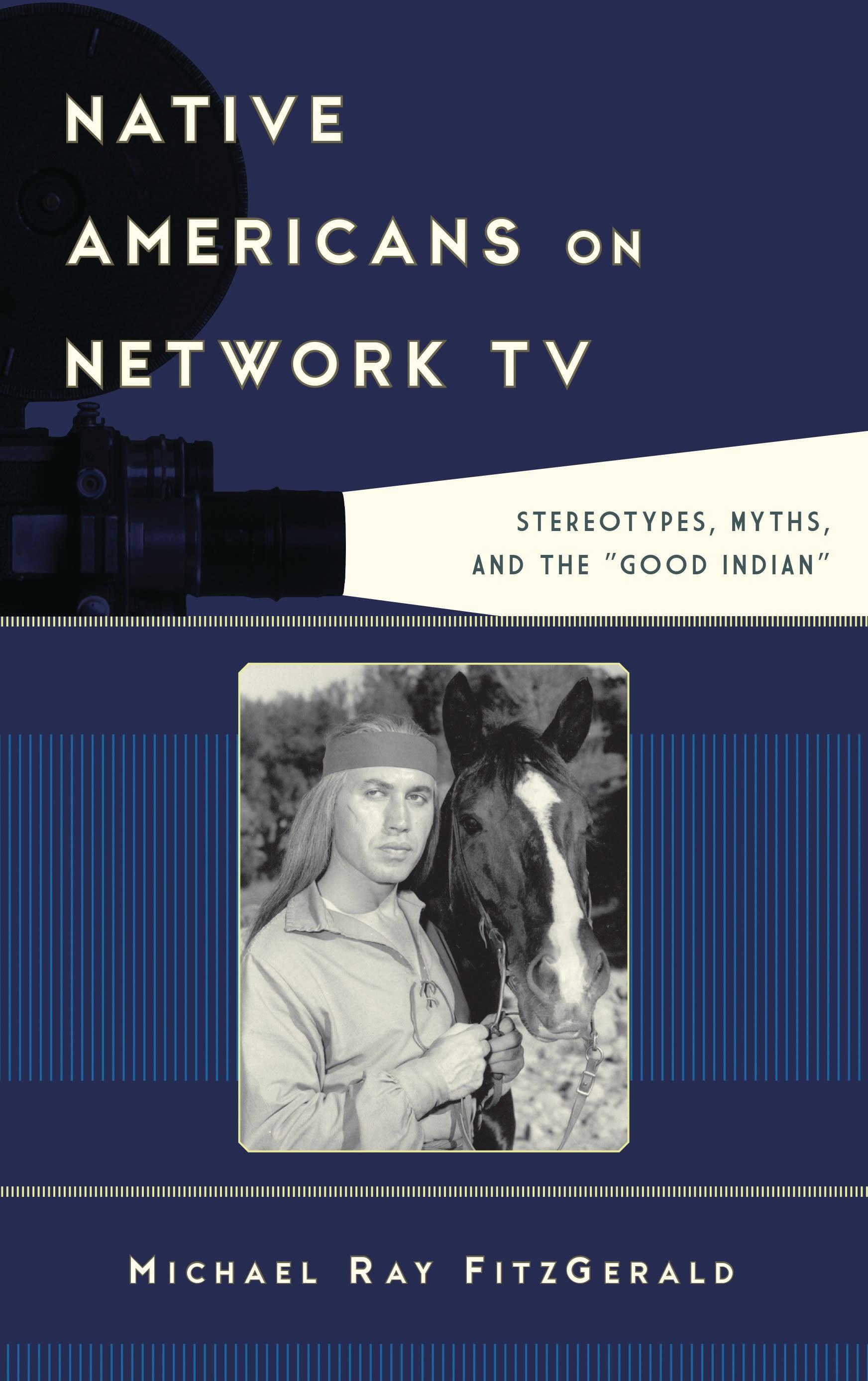
The American Indian has figured prominently in many films and television shows, portrayed variously as a villain, subservient friend, or a hapless victim of progress. Many Indian stereotypes that were derived from European colonial discourse—some hundreds of years old—still exist in the media today. Even when set in the contemporary era, novels, films, and programs tend to purvey rehashed tropes such as Pocahontas or man Friday.
In Native Americans on Network TV: Stereotypes, Myths, and the “Good Indian,” Michael Ray FitzGerald argues that the colonial power of the U.S. is clearly evident in network television’s portrayals of Native Americans. FitzGerald contends that these representations fit neatly into existing conceptions of colonial discourse and that their messages about the “Good Indian” have become part of viewers’ understandings of Native Americans. In this study, FitzGerald offers close examinations of such series as The Lone Ranger, Daniel Boone, Broken Arrow, Hawk, Nakia, and Walker, Texas Ranger.
By examining the traditional role of stereotypes and their functions in the rhetoric of colonialism, the volume ultimately offers a critical analysis of images of the “Good Indian”—minority figures that enforce the dominant group’s norms. A long overdue discussion of this issue, Native Americans on Network TV will be of interest to scholars of television and media studies, but also those of Native American studies, subaltern studies, and media history.
In Native Americans on Network TV: Stereotypes, Myths, and the “Good Indian,” Michael Ray FitzGerald argues that the colonial power of the U.S. is clearly evident in network television’s portrayals of Native Americans. FitzGerald contends that these representations fit neatly into existing conceptions of colonial discourse and that their messages about the “Good Indian” have become part of viewers’ understandings of Native Americans. In this study, FitzGerald offers close examinations of such series as The Lone Ranger, Daniel Boone, Broken Arrow, Hawk, Nakia, and Walker, Texas Ranger.
By examining the traditional role of stereotypes and their functions in the rhetoric of colonialism, the volume ultimately offers a critical analysis of images of the “Good Indian”—minority figures that enforce the dominant group’s norms. A long overdue discussion of this issue, Native Americans on Network TV will be of interest to scholars of television and media studies, but also those of Native American studies, subaltern studies, and media history.
Pagine: 278
Categoria: Film- & Medievetenskap
e-ISBN: 9781442229624
Peso di spedizione: 1.2 kg
Spedito in: 1-2 giorni
Paga facilmente con carta, Klarna, Apple Pay o Google Pay. Non sei soddisfatto? Hai sempre 14 giorni per il rimborso. Leggi di più nei nostri termini. Per qualsiasi domanda, scrivici a hello@memmo.org.
Memmo rende lo studio più facile, ovunque tu sia nel mondo. Qui trovi i tuoi libri di testo e strumenti di studio intelligenti, tutto in un unico posto: riassunti, quiz, podcast e flashcard. E poi c'è Ted, il tuo compagno di studio che risponde a ogni tua domanda. Oltre 50.000 studenti studiano già qui: è stato creato per aiutarti a imparare più velocemente e a stressarti meno.