
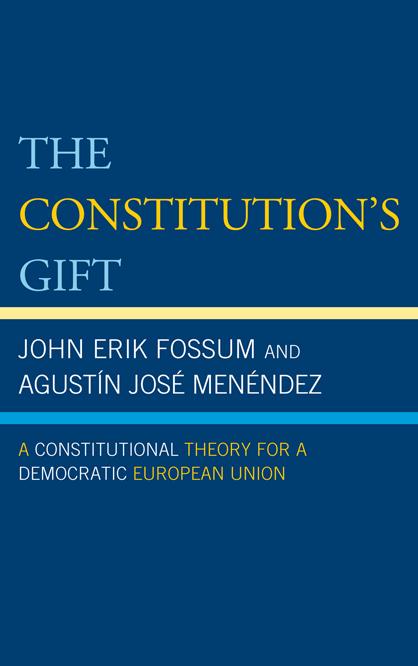
This authoritative study considers all aspects of the European Union's distinctive constitution since its inception. A unique political animal, the EU has given rise to important constitutional conundrums and paradoxes that John Erik Fossum and Agustín José Menéndez explore in detail. The authors consider the process of forging the EU's constitution and the set of fundamental norms that define the institutional structure, the decision-making procedures, and the foundations of the Union's democratic legitimacy. Their analysis illuminates the distinctive features of the EU's pluralist constitutional construct but also the interesting parallels to the Canadian constitutional experience and provides the tools to understand the Union's development, especially during the Laeken (2001–2005) and Lisbon (2007–2009) processes of constitutional reform.
The authors' original theory of constitutional synthesis captures the distinctive traits of the European Union as a polity. It explains why and how the European Communities were established as the first constitutional union of constitutional states wherein integration would be steered by law, not power politics or imperialism. Similarly, it presents the European Union as one of the few examples of a polity that has transcended the paradigm of the nation-state (and perhaps even that of the state). Locating the substance and process of Lisbon in its proper constitutional context, Fossum and Menéndez explain why this should be seen as a new beginning of the Union's constitutional season, not its end. Offering the first history of European constitutional law that is both theoretically informed and normatively grounded, their book will be essential reading for all readers interested in the process and theory of European integration.
The authors' original theory of constitutional synthesis captures the distinctive traits of the European Union as a polity. It explains why and how the European Communities were established as the first constitutional union of constitutional states wherein integration would be steered by law, not power politics or imperialism. Similarly, it presents the European Union as one of the few examples of a polity that has transcended the paradigm of the nation-state (and perhaps even that of the state). Locating the substance and process of Lisbon in its proper constitutional context, Fossum and Menéndez explain why this should be seen as a new beginning of the Union's constitutional season, not its end. Offering the first history of European constitutional law that is both theoretically informed and normatively grounded, their book will be essential reading for all readers interested in the process and theory of European integration.
Pagine: 314
Categoria: Statsvetenskap & Politik
e-ISBN: 9781442208575
Peso di spedizione: 1.2 kg
Spedito in: 1-2 giorni
Paga facilmente con carta, Klarna, Apple Pay o Google Pay. Non sei soddisfatto? Hai sempre 14 giorni per il rimborso. Leggi di più nei nostri termini. Per qualsiasi domanda, scrivici a hello@memmo.org.
Memmo rende lo studio più facile, ovunque tu sia nel mondo. Qui trovi i tuoi libri di testo e strumenti di studio intelligenti, tutto in un unico posto: riassunti, quiz, podcast e flashcard. E poi c'è Ted, il tuo compagno di studio che risponde a ogni tua domanda. Oltre 50.000 studenti studiano già qui: è stato creato per aiutarti a imparare più velocemente e a stressarti meno.