
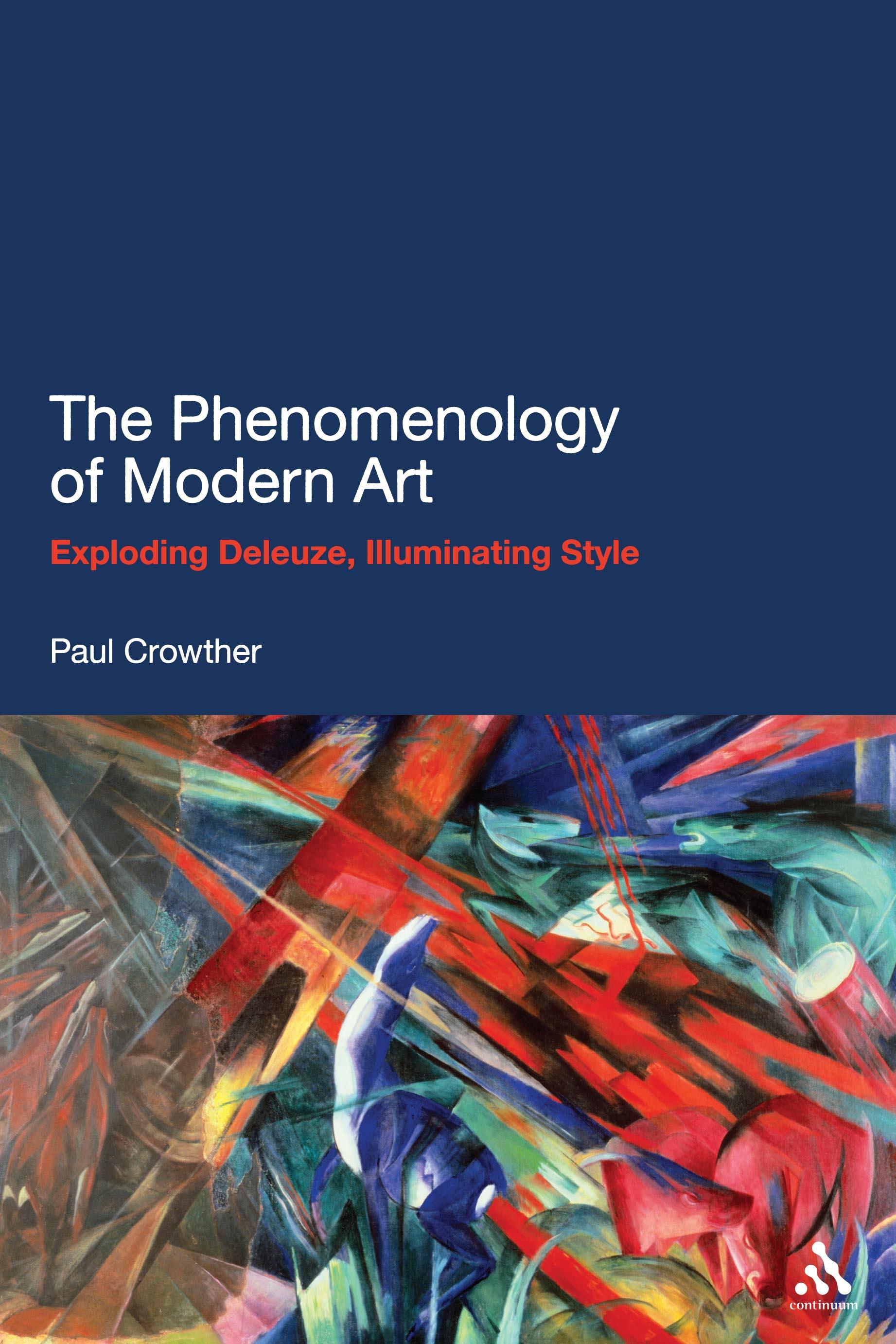
As a philosophical approach, phenomenology is concerned with structure in how phenomena are experienced. The Phenomenology of Modern Art uses phenomenological insights to explain the significance of style in modern art, most notably in Impressionism, Expressionism, Cezanne and Cubism, Duchampian conceptualism and abstract art.
Paul Crowther explores this thematic approach in a new way, addressing specific visual artworks and tendencies in detail and introduces a new methodology - post-analytic phenomenology. It is this more critical, post-analytic orientation that allows the book to utilise some unexpected phenomenological resources. Gilles Deleuze, rarely associated with phenomenology, in fact employs an overriding phenomenological orientation in his focus on modern art. Crowther uses Deleuze's important phenomenological insights as a starting point and goes on to develop arguments found in two other thinkers, Nietzsche and Merleau-Ponty, as well as addressing those figures and tendencies in relation to whom twentieth-century critical appropriations of Kant have been most influential. Accompanied by illustrations, the book offers the first sustained phenomenological approach to modern art.
Paul Crowther explores this thematic approach in a new way, addressing specific visual artworks and tendencies in detail and introduces a new methodology - post-analytic phenomenology. It is this more critical, post-analytic orientation that allows the book to utilise some unexpected phenomenological resources. Gilles Deleuze, rarely associated with phenomenology, in fact employs an overriding phenomenological orientation in his focus on modern art. Crowther uses Deleuze's important phenomenological insights as a starting point and goes on to develop arguments found in two other thinkers, Nietzsche and Merleau-Ponty, as well as addressing those figures and tendencies in relation to whom twentieth-century critical appropriations of Kant have been most influential. Accompanied by illustrations, the book offers the first sustained phenomenological approach to modern art.
Paga facilmente con carta, Klarna, Apple Pay o Google Pay. Non sei soddisfatto? Hai sempre 14 giorni per il rimborso. Leggi di più nei nostri termini. Per qualsiasi domanda, scrivici a hello@memmo.org.
Memmo rende lo studio più facile, ovunque tu sia nel mondo. Qui trovi i tuoi libri di testo e strumenti di studio intelligenti, tutto in un unico posto: riassunti, quiz, podcast e flashcard. E poi c'è Ted, il tuo compagno di studio che risponde a ogni tua domanda. Oltre 50.000 studenti studiano già qui: è stato creato per aiutarti a imparare più velocemente e a stressarti meno.