
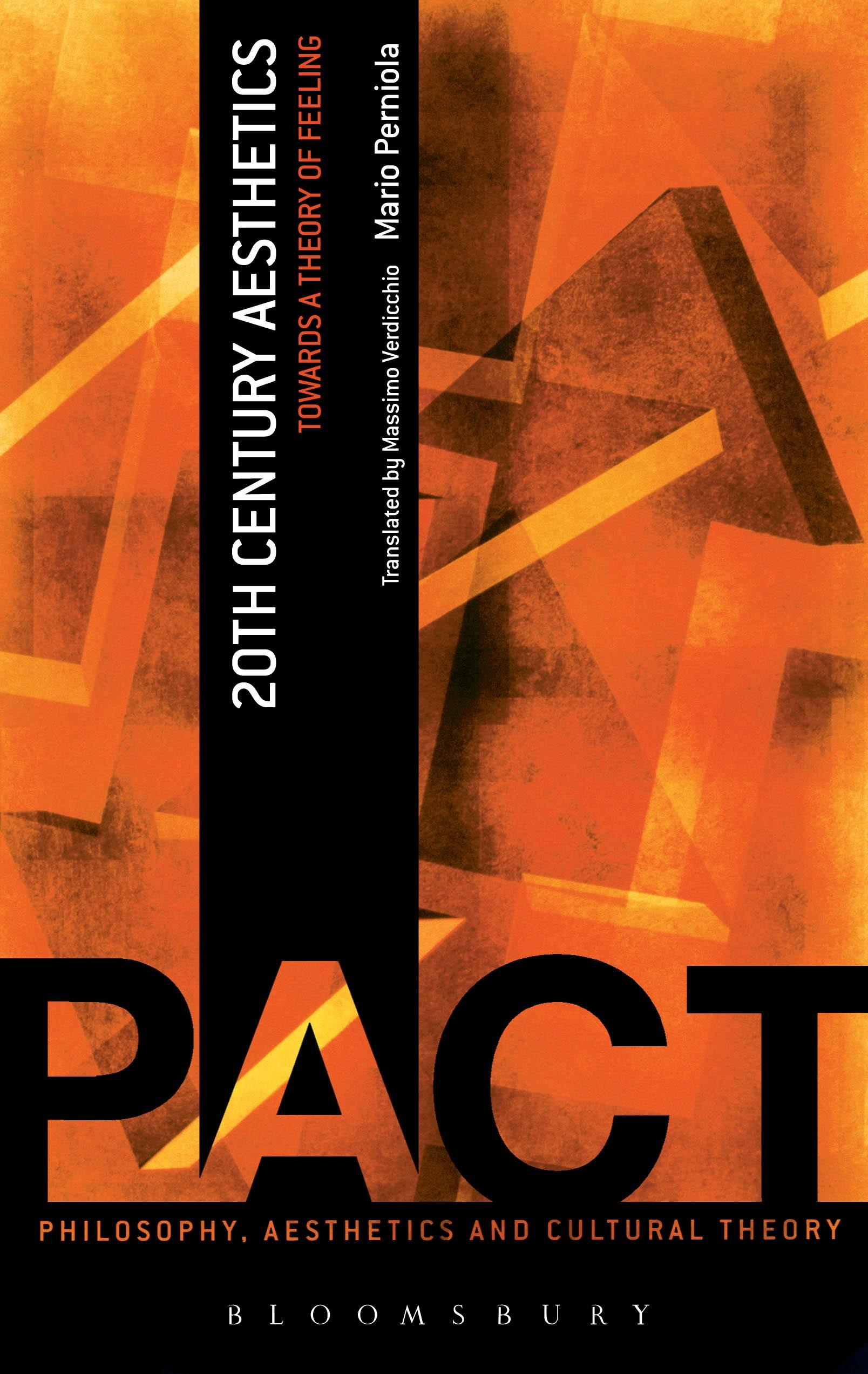
In our contemporary age aesthetics seems to crumble and no longer be reducible to a coherent image. And yet given the vast amount of works in aesthetics produced in the last hundred years, this age could be defined “the century of aesthetics”.
20th Century Aesthetics is a new account of international aesthetic thought by Mario Perniola, one of Italy's leading contemporary thinkers. Starting from four conceptual fields – life, form, knowledge, action - Perniola identifies the lines of aesthetic reflection that derive from them and elucidates them with reference to major authors: from Dilthey to Foucault (aesthetics of life), from Wölfflin to McLuhan and Lyotard (aesthetics of form), from Croce to Goodman (aesthetics and knowledge), from Dewey to Bloom (aesthetics and action). There is also a fifth one that touches on the sphere of affectivity and emotionality, and which comes to aesthetics from thinkers like Freud, Heidegger, Wittgenstein, Lacan, Derrida and Deleuze. The volume concludes with an extensive sixth chapter on Japanese, Chinese, Indian, Islamic, Brazilian, South Korean and South East Asian aesthetic thought and on the present decline of Western aesthetic sensibility.
20th Century Aesthetics is a new account of international aesthetic thought by Mario Perniola, one of Italy's leading contemporary thinkers. Starting from four conceptual fields – life, form, knowledge, action - Perniola identifies the lines of aesthetic reflection that derive from them and elucidates them with reference to major authors: from Dilthey to Foucault (aesthetics of life), from Wölfflin to McLuhan and Lyotard (aesthetics of form), from Croce to Goodman (aesthetics and knowledge), from Dewey to Bloom (aesthetics and action). There is also a fifth one that touches on the sphere of affectivity and emotionality, and which comes to aesthetics from thinkers like Freud, Heidegger, Wittgenstein, Lacan, Derrida and Deleuze. The volume concludes with an extensive sixth chapter on Japanese, Chinese, Indian, Islamic, Brazilian, South Korean and South East Asian aesthetic thought and on the present decline of Western aesthetic sensibility.
Paga facilmente con carta, Klarna, Apple Pay o Google Pay. Non sei soddisfatto? Hai sempre 14 giorni per il rimborso. Leggi di più nei nostri termini. Per qualsiasi domanda, scrivici a hello@memmo.org.
Memmo rende lo studio più facile, ovunque tu sia nel mondo. Qui trovi i tuoi libri di testo e strumenti di studio intelligenti, tutto in un unico posto: riassunti, quiz, podcast e flashcard. E poi c'è Ted, il tuo compagno di studio che risponde a ogni tua domanda. Oltre 50.000 studenti studiano già qui: è stato creato per aiutarti a imparare più velocemente e a stressarti meno.